
Simulation · A game by CUBE4ARTS
Minimal Factory
16 real industrial sites, five levers: every change shows at once what gets made and what sells.
01
The tapping
Pig iron runs down the runner into the torpedo car.
02
Fire and smoke
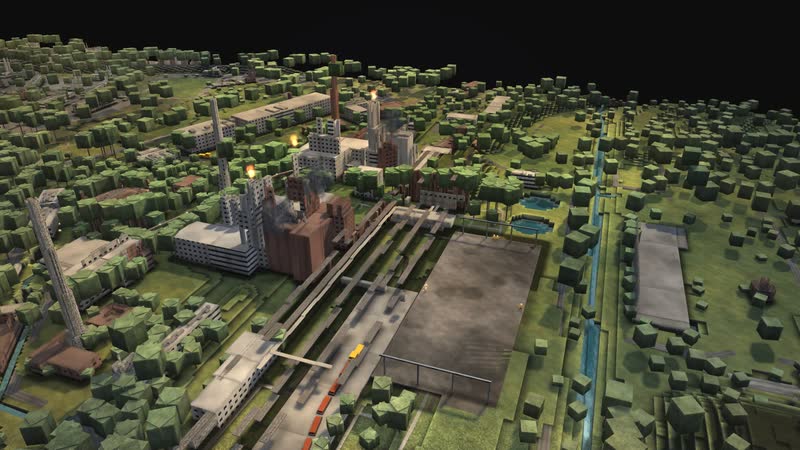
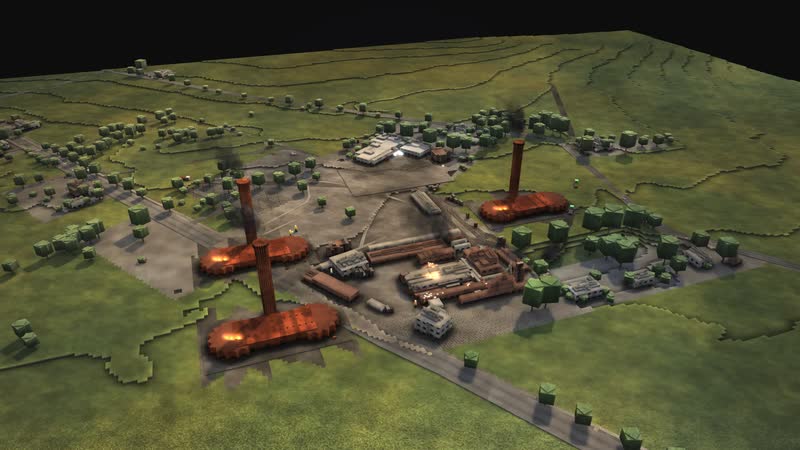
Top-gas flares and smoke plumes above the blast furnaces.
03
Water at the quay
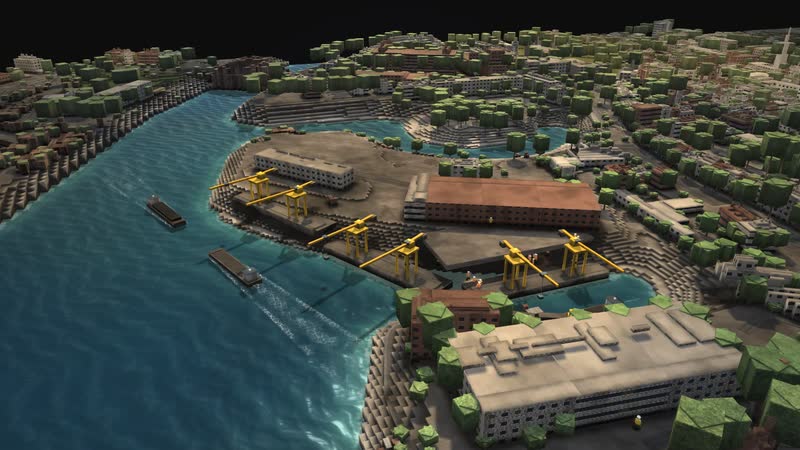
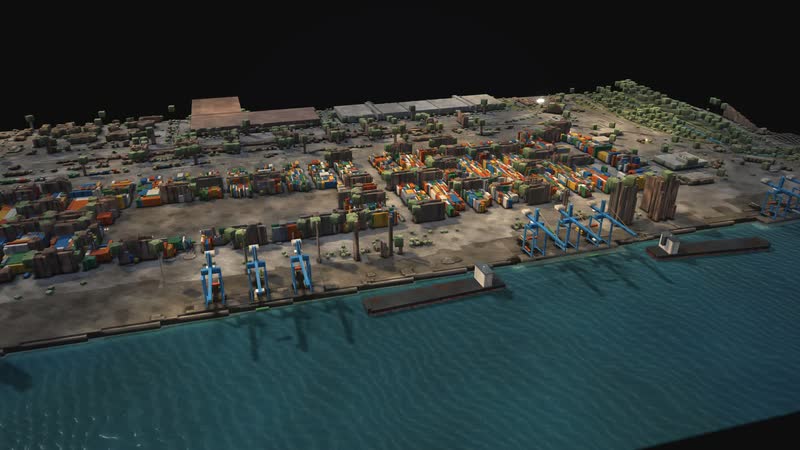
Waves, foam along the shore and portal cranes in the harbour.
04
Inside the hall
The tour leads through the halls to the marriage of body and engine.
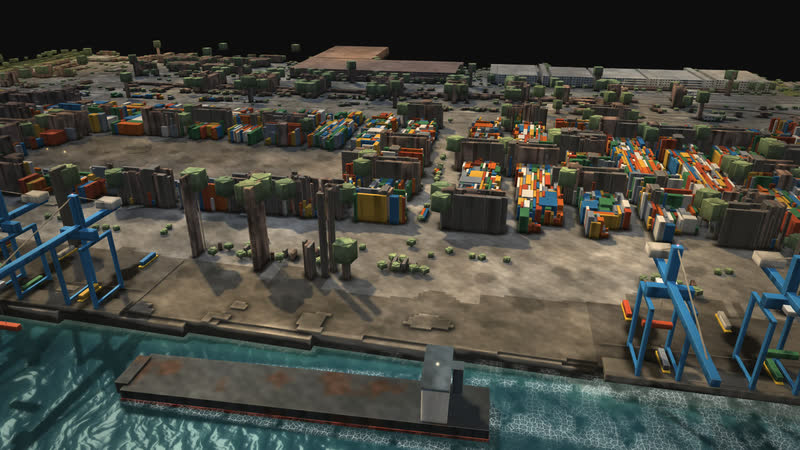
05
The yard
Container cranes and stacks at Hamburg-Altenwerder.
06
Robot cells
Welding robots and driverless transporters in the Düsseldorf future factory.
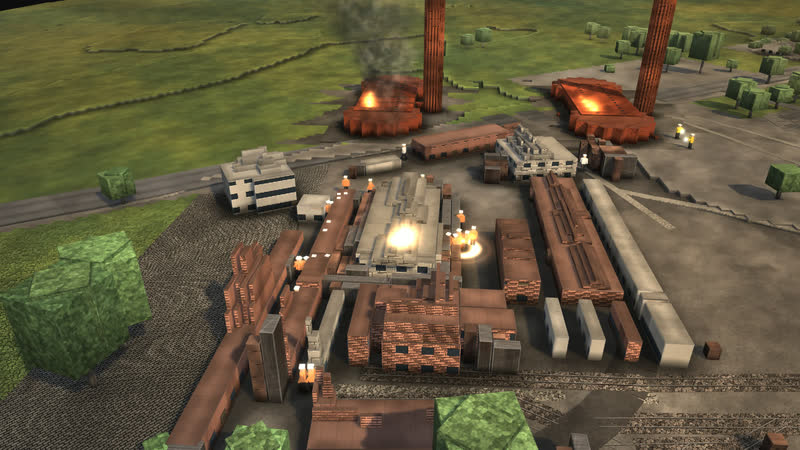
07
The ring kiln
The fire zone moves on while bricks stack up in the yard.
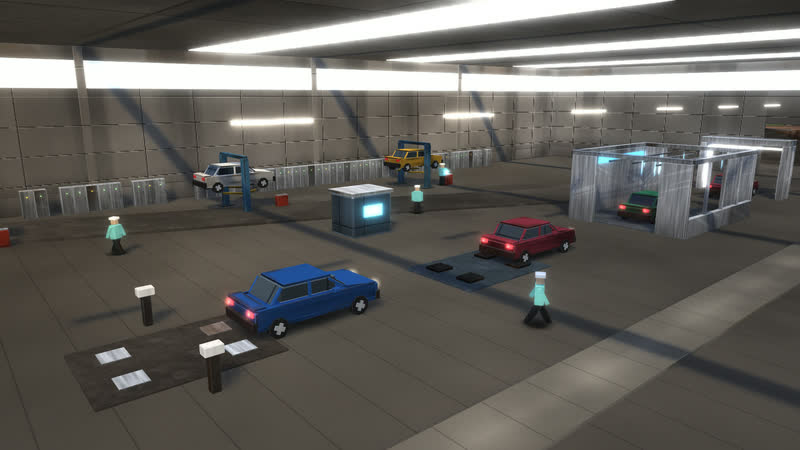
08
The test area
Rolling road, rain booth, light tunnel: every car gets tested.
What you can understand here
-
Sixteen real sites
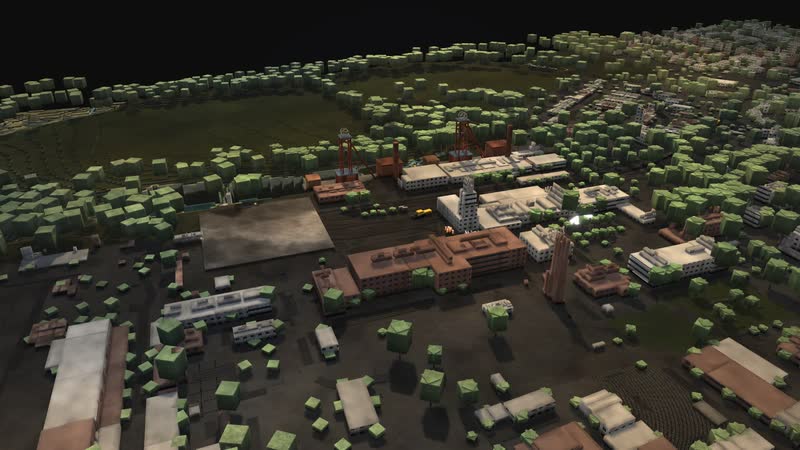
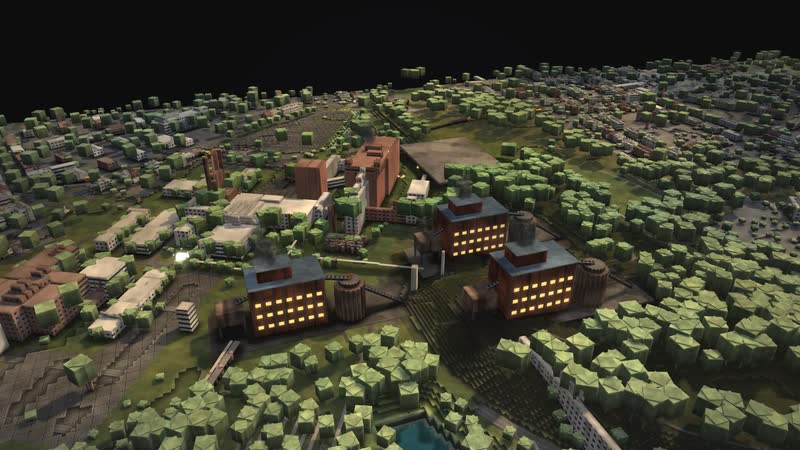
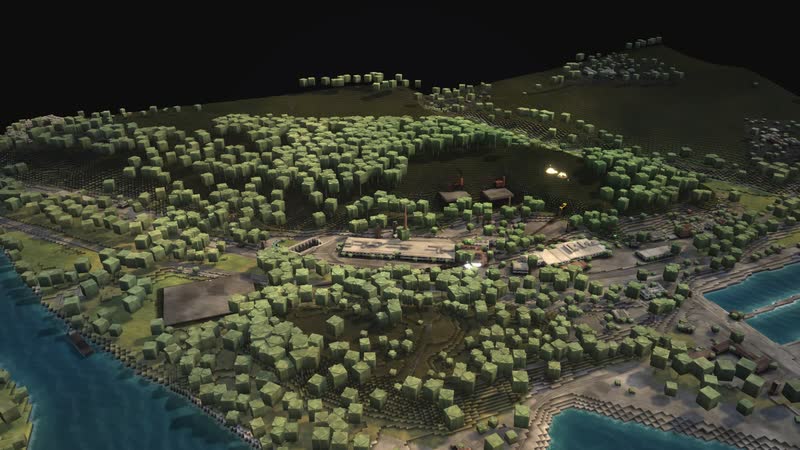
Blast furnaces, collieries, car plants, harbours and shipyards, each one where it really stands, its surroundings from official elevation data. You see how varied industry is and how it sits in town and landscape.
-
How a blast furnace runs
Blower, hot-blast stoves, burden and tapping explain themselves on the Henrichshütte plant. You see why a change at the top only arrives at the bottom a minute later.
-
From sheet to car
The tour of the Bochum car plant runs from the press shop through body shop and paint to the marriage and final test. At each stop one sentence explains what happens there.
-
Five levers, one works
The demo changes investment, workforce and market at Kokerei Hansa and shows where each acts. You see why a new plant loses money without people and buyers.
Background
See how production and plants work, from the blast furnace to the car plant and the container terminal. Five levers show at once what investment, workforce, supply, quality and market do.
Made for museums, schools and anyone interested in industrial heritage. Left alone, the program demonstrates itself and explains where each lever acts. It runs in the browser; the password is available on request.
The surroundings come from official elevation data and OpenStreetMap. Plants, processes and figures are our own simplified interpretation from public sources, not an exact simulation of operations and not a cooperation with the sites.
Trailer
16 sites in Germany
Every site has the same five levers and a task of its own, from “run the works” to “build ships”. The Bochum car plant and the Düsseldorf future factory show production from the inside.
Iron and steel
-
Henrichshütte Hattingen · blast furnace and ironworks
A blast furnace as a model you can walk through: wind, hot-blast stoves, burden and tapping, plus steelworks, rolling mill and works railway, on the real terrain of the Ruhr valley.
-
Meiderich ironworks · blast furnaces in Duisburg-Nord
Three blast furnaces of an ironworks as a model: blast furnace gas flare above, tapping into torpedo cars below, plus burden bunker and blower house in Landschaftspark Duisburg-Nord.
-
Bruckhausen · rolling hot strip
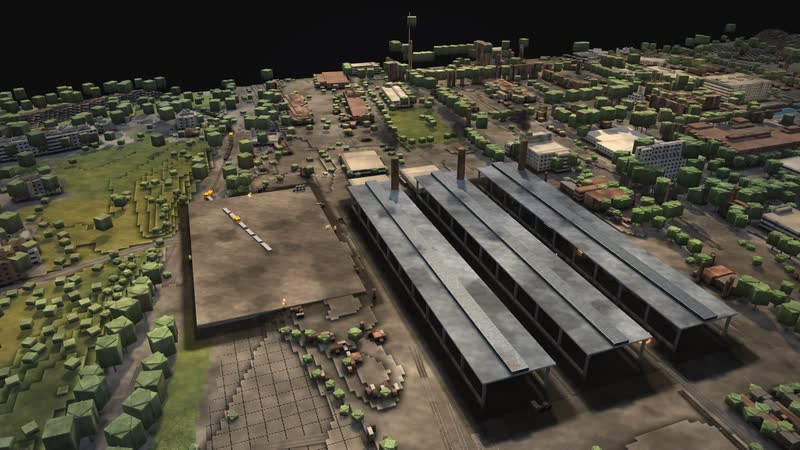
A hot strip mill as a model: pusher furnace, roughing and finishing stands and coiler turn glowing slabs into coils, at the steel site in northern Duisburg.
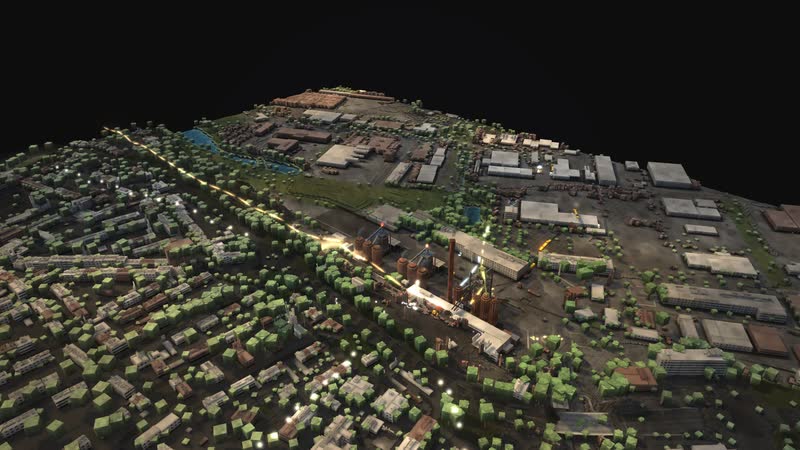
Ruhr area
-
Bochum car plant · from sheet metal to the car train
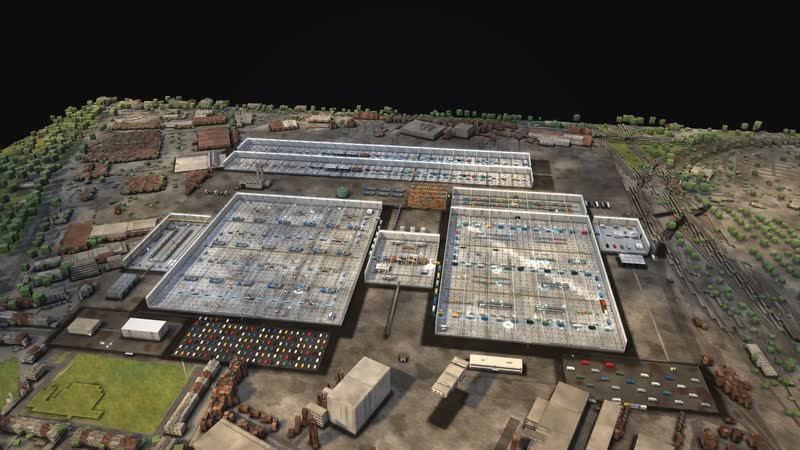
A car plant as a model you can walk through: press shop, body shop, paint shop, assembly and test field, plus a plant tour in 16 stops up to the “marriage” and the car train.
-
Hansa coking plant · coal becomes coke
A coking plant as a model you can walk through: charging car, pusher machine, quenching car and quenching tower, plus coal tower, compressor house and coke stockpile, on the real terrain in Dortmund-Huckarde.
-
Zollern colliery · hoisting coal
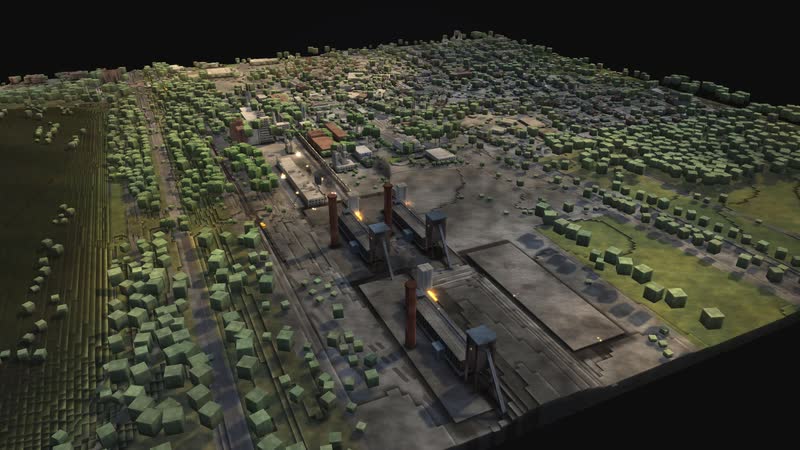
A showpiece colliery as a model: winding towers, sheaves, winding engine and cages in the shaft, plus machine hall and pay hall on the real terrain in Dortmund-Bövinghausen.
-
Zollverein · coal washery
A coal washery as a model: belts, screens and water, the loading bunker above the track, plus Shaft XII and the coking plant on the real terrain in Essen.
-
Oberhausen gas holder · gas storage
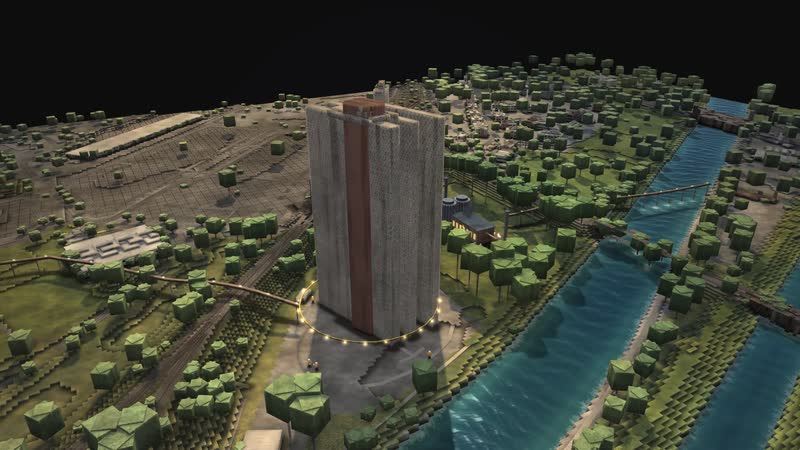
A disc-type gas holder as a model: a buffer between ironworks and consumers, with scrubbers, compressors, light ring and flare, on the real terrain in Oberhausen.
-
Nachtigall colliery · coal from the adit
An adit colliery as a model: tub trains roll out of the hill to the coal depot on the Ruhr, where the Ruhr barges are loaded, in the Muttental in Witten.
Ports and waterways
-
Ruhrort harbour · ship and rail transfer
An inland harbour as a model: quays with gantry cranes, grabs above the ships, storage yard and coal trains, at the mouth of the Ruhr into the Rhine.
-
Henrichenburg boat lift · lifting ships
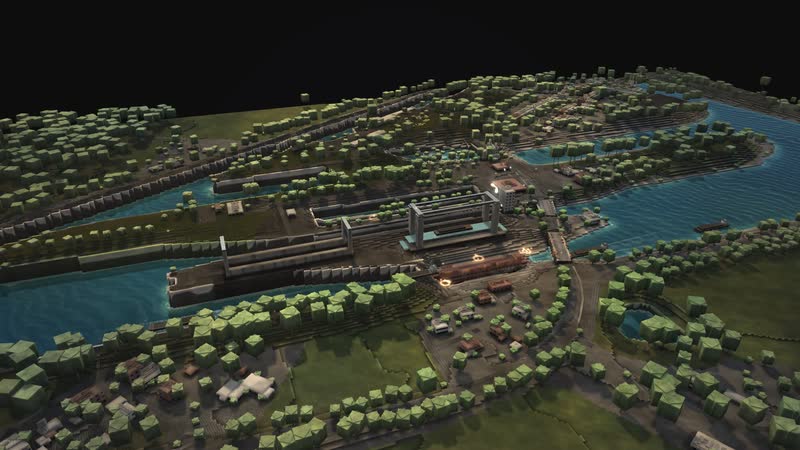
Boat lift and shaft lock as a model: on the Dortmund-Ems Canal in Waltrop, ships overcome 14 m in height between lower and upper water.
Ports and coast
-
Hamburg-Altenwerder · container terminal
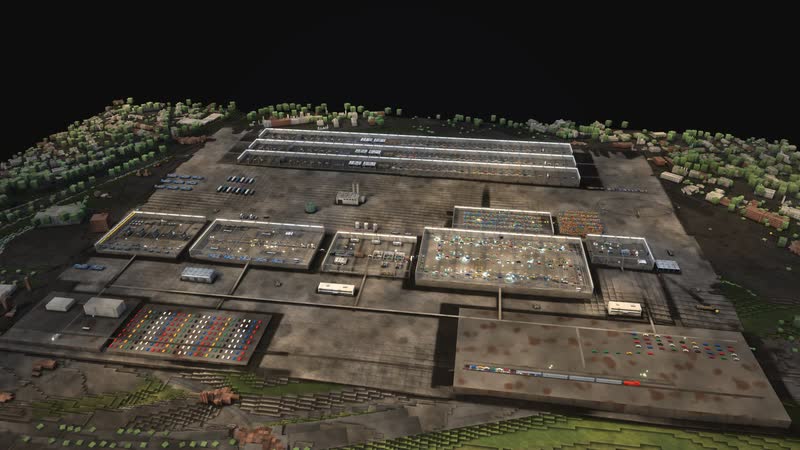
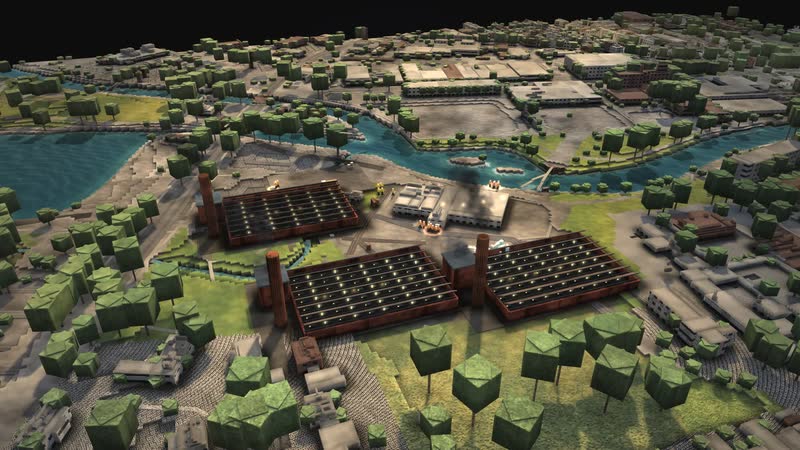
An automated container terminal as a model: container gantry cranes above the ship, driverless transport vehicles in the yard, freight trains and trucks at the container rail terminal.
-
Papenburg shipyard · shipbuilding in the building dock
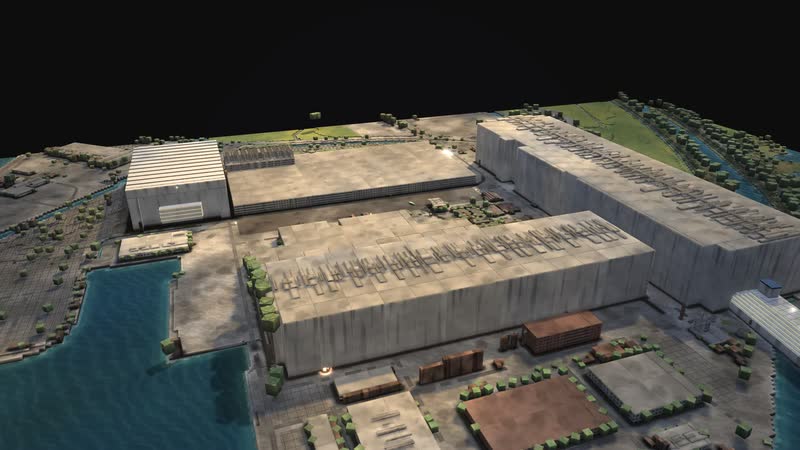
Shipbuilding in a covered building dock as a model: cruise ships grow from prefabricated blocks, block transporters run, welding light flashes behind the hall door, on the Ems in Papenburg.
Plays everywhere
-
Desktop
Drag to rotate, right-drag to pan, wheel to zoom, click to select. 0 opens the works, digits the tiles (Henrichshütte 1–4, H furnace, Space taphole; car plants 1–6, T factory tour; others 1–4). In the works arrows for the levers, Tab and Enter for buttons, O overview, Esc closes panel, then menu.
-
Phone: works and gestures
Tap WORKS: at the top the chain Suppliers → Plant → Good → Stockpile → Market, below it the five levers and, in large type, the result per day. Drag to rotate, two fingers to pan, pinch to zoom; tap empty space to close. Portrait and landscape, no app.
-
Phone: stations and report
Tap a machine, area or hall in the picture – whatever belongs to it appears; in the hall and works cards “Factory tour” starts the walk-through. At the Henrichshütte take a station in the dock “By hand”, then “Hand to foreman”. The line at the top says what jams, with result and stockpile.
Minimal Factory…
More +−
In Minimal Factory you steer 16 real sites in Germany, teeming with activity – on real terrain from official elevation data, built of cuboids in materials such as brick, concrete, sheet metal, rust and paint, with fire, smoke and rolling waves. No order, no rounds: all of them share the same five levers – investment, workforce, supply, quality and market. Every change shows at once output, sales, stockpile and the result per day in euros, plus success from 0 to 100; 10 seconds are one working day. Investment builds out visibly: up to three blast furnaces at the Henrichshütte in Hattingen, as in the 1960s, four lines at the car plant in Bochum-Laer, three in the future factory in Düsseldorf, elsewhere coke oven batteries, shafts, washeries, blast furnaces, compressors, quays with cranes, rolling mills, lifts and locks, adits, weaving sheds, ring kilns, container cranes or building docks. Real monuments come to life, the stockpiles fill, and trains, trucks, ships and pipelines run with the volume. When something breaks down at the Henrichshütte, the area flashes red and fitters come. The car plants show production from the inside, from the coil to the first start, the future factory robot cells, driverless transport vehicles, drones and a robot dog; a factory tour travels at eye level from station to station.
The surroundings are not invented: terrain, buildings, trees, streets and tracks come from official elevation data by Geobasis NRW, LGV Hamburg and LGLN Niedersachsen and from OpenStreetMap. The plants are independent, simplified interpretations based on publicly available information: figures and prices as orders of magnitude, times heavily shortened, halls and processes interpreted – not a faithful simulation of operations, and no cooperation with the sites named. The real Henrichshütte, founded in 1854 and last tapped in 1987, is today the LWL Museum Henrichshütte. The Bochum car plant built cars from 1962 to 2014; today the site is MARK 51°7. The plant in Düsseldorf has built vans since 1962 and is in operation. Each introduction tells past and present under “The real site”, with sources. The game speaks German and English and runs right in your browser, with no download and no app; the password is available on request.
How to play
More +−
- Pick one of the 16 sites on the title page – each shows its task, such as “run the works” (Henrichshütte), “build cars” (Bochum car plant), “make coke” (Kokerei Hansa), “handle containers” (Altenwerder) or “build ships” (Papenburg shipyard). Before you start, the introduction shows “The real site” with sources.
- No order, no rounds: tap WORKS. All 16 sites have the same five levers, the chain Suppliers → Plant → Good → Stockpile → Market and, in large type, the result per day in m €, at small sites in k €. The economy runs fast: 10 seconds are one working day.
- Investment builds out the plant: Bochum car plant 1 to 4 lines, future factory 1 to 3, Henrichshütte 1 to 3 furnaces. In the car plants more money builds further lines on the north site, less makes them disappear – and every line costs money each day. At the other 13 sites, depending on the place, coke oven batteries, shafts, washeries, compressors, quays with cranes, rolling mills, lifts and locks, adits, weaving sheds, ring kilns or building docks grow; real monuments such as the blast furnaces at Meiderich come to life.
- Workforce in five steps: 2,000 to 10,400 at the Bochum car plant, 1,200 to 6,000 in the future factory, 3,500 to 13,000 at the Henrichshütte. Too few and lines stand still (“Too few people”); too many cost wages without output.
- Supply tight, normal or double: if it falls short, the parts store empties, then material is missing. Quality low, normal or high: less scrap costs inspection and maintenance – at the Henrichshütte low quality also means more breakdowns, which flash red.
- Market: slump, normal or boom – demand comes from outside. Build more than sells and the stockpile grows; when it is full, the surplus goes at a 40 % discount. Build too little and the stockpile covers the gap first, then orders are lost.
- The line at the top says what jams – “It fits”, “Too few people”, “Material missing”, “Too much built” or “Market wants more” – and the chain frames that spot in orange; with it the result, the cash and the last eight days. An ironworks only pays with volume: try a second furnace.
- At the top right is success from 0 to 100: today’s result compared with the best possible at this market – 100 means you cannot do better. From 75 the figure is green, below 40 orange, and it flashes when it jumps.
- At the Henrichshütte the foreman runs stations 1 Blowers, 2 Stoves, 3 Burden and 4 Tapping of furnace 3. Step in and the station shows “By hand” instead of “Foreman runs it” until the foreman takes over again – “Hand to foreman” gives it back at once.
- Factory tour at the Bochum car plant and in the future factory: the button in the hall and works cards or key T starts it. The camera travels through the halls from station to station – 16 in Bochum, 10 in Düsseldorf – with one sentence each. ◀ ▶ to step, ❚❚ to pause, ✕ to end.
- If nobody touches the camera, it slowly circles the site after a few seconds. After 75 seconds without input – 40 in museum mode – the demo begins: it sets the levers, shows with a ring where they act, lets the stockpile grow in a slump and then moves on to the next site. Any touch takes over at once: “You are in control”.
Minimal Factory
16 real industrial sites, five levers: every change shows at once what gets made and what sells.
cube4tec.de/spiele/minimal-factory/