
Simulation · Minimal Factory · Ruhr area
Oberhausen gas holder · gas storage
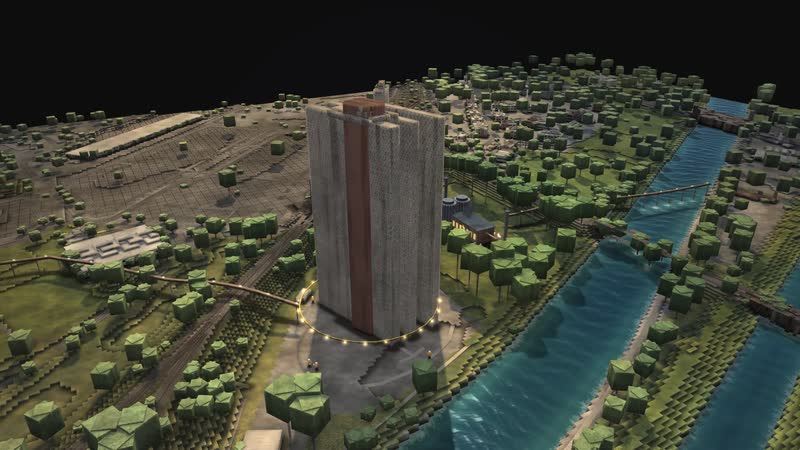
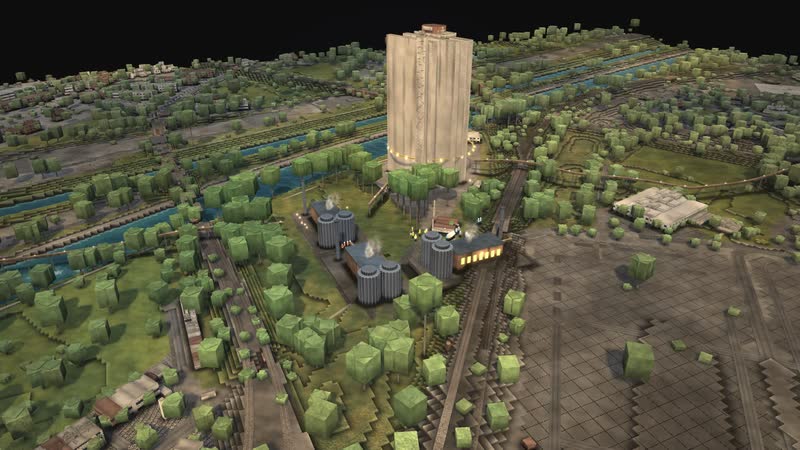
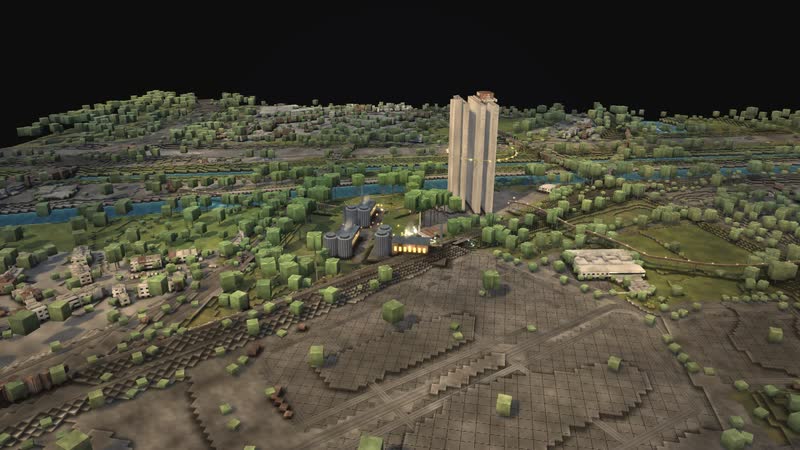
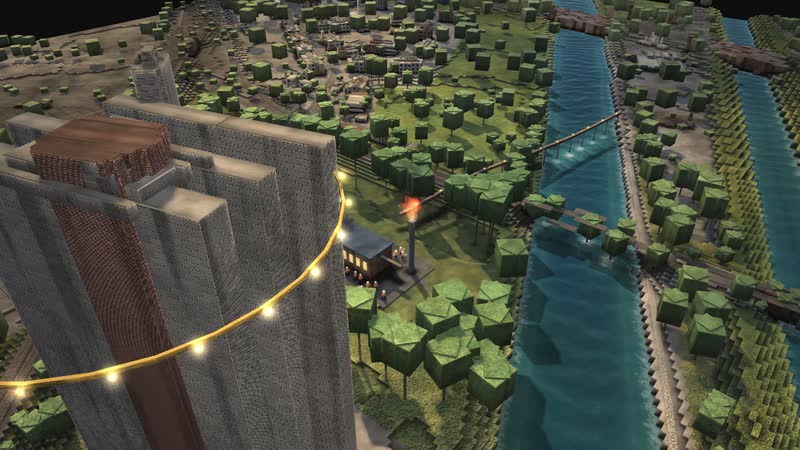
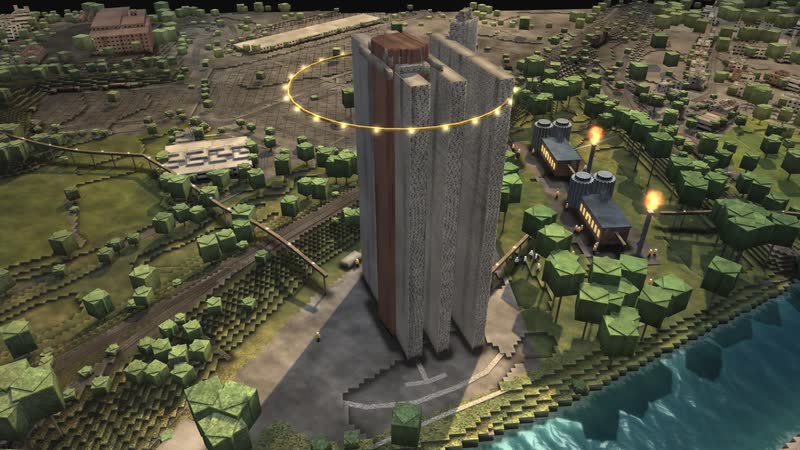
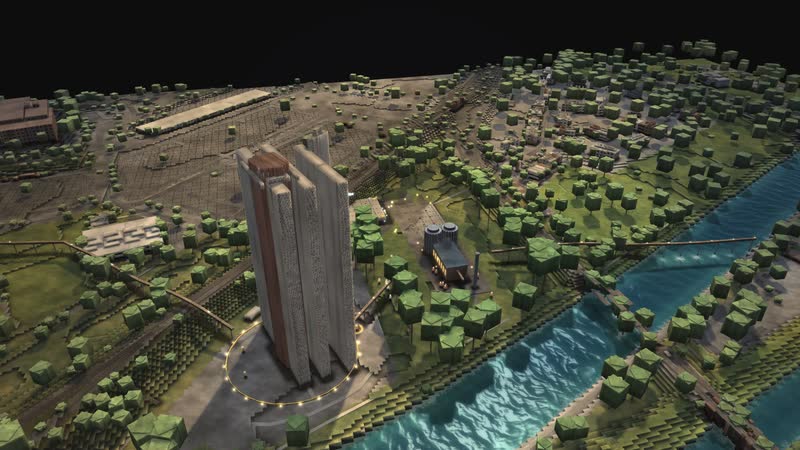
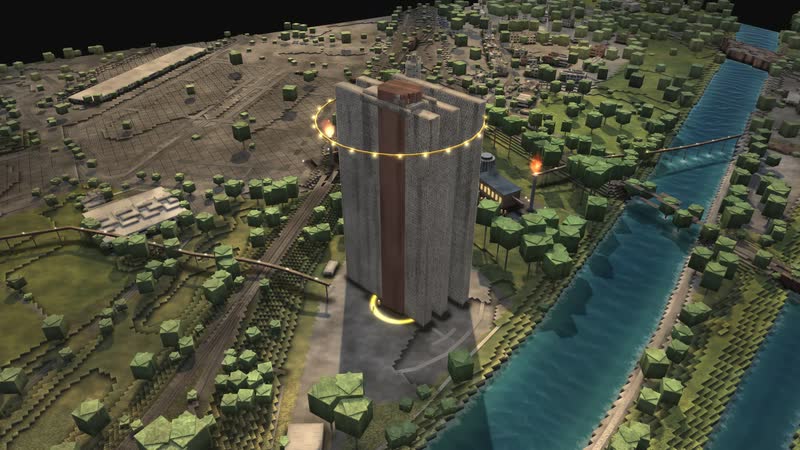
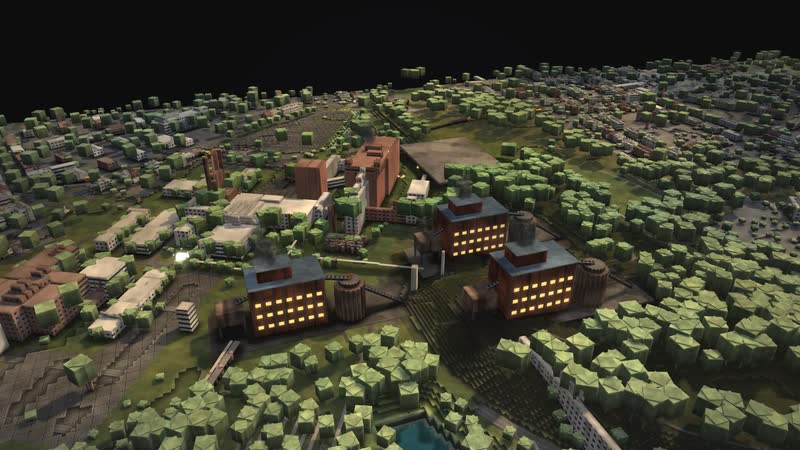
A disc-type gas holder as a model: a buffer between ironworks and consumers, with scrubbers, compressors, light ring and flare, on the real terrain in Oberhausen.
Trailer
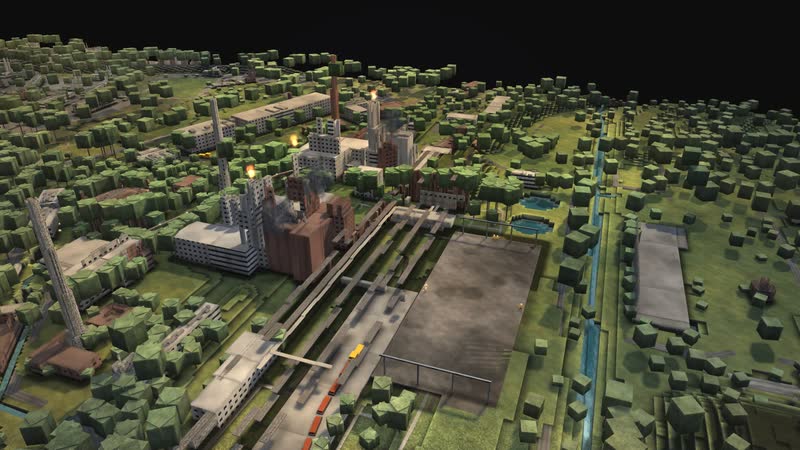
Real are location, terrain, surroundings and the gas holder itself (official NRW elevation data, OpenStreetMap). The compressors are interpreted; quantities, processes and times are model values. With your data, the model shows your site and your processes.
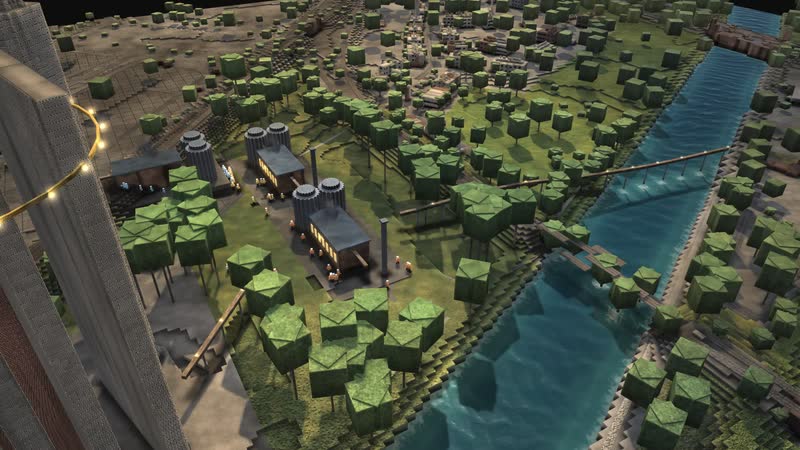
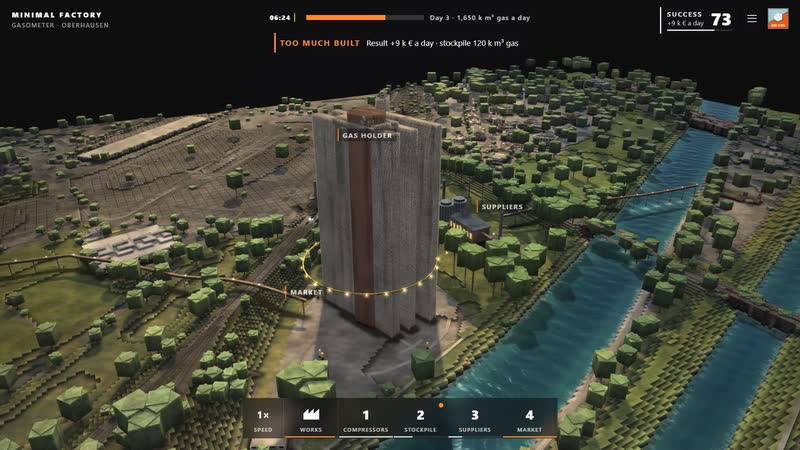
The large disc-type gas holder in Oberhausen stands as a block model on its real terrain: a buffer between the ironworks that supplies gas and the consumers. Blast furnace gas arrives from the ironworks through a pipeline, scrubbers clean it, compressors push it into the grid to rolling mills and town. A light ring shows how high the disc stands.
What nobody takes lifts the disc. When the gas holder is full, the flare burns and the gas is lost; in the model that is the emergency sale. Five controls – investment (one to three compressors), workforce, supply, quality and market – show at once what follows.
Real are location, terrain, surroundings and the gas holder itself from official NRW elevation data and OpenStreetMap. The compressors are interpreted; quantities, processes and times are model values, and one working day lasts ten seconds. The page is for museums and exhibitions, schools and universities, industrial heritage and local history.
From raw material to product
- 01
supply – top gas from the ironworks (pipeline)
- 02
compressors – scrubbers clean the top gas, compressors push it into the grid
- 03
gas holder – takes in what is not sold
- 04
dispatch – gas for rolling mills and town (pipeline)
01
A site at work
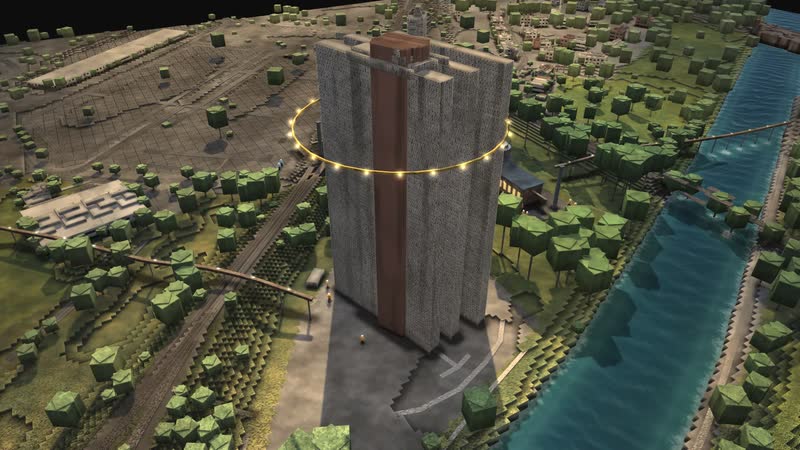
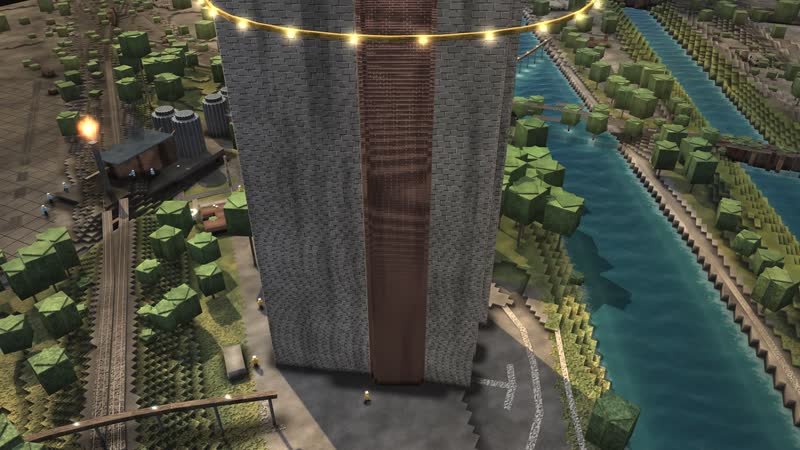
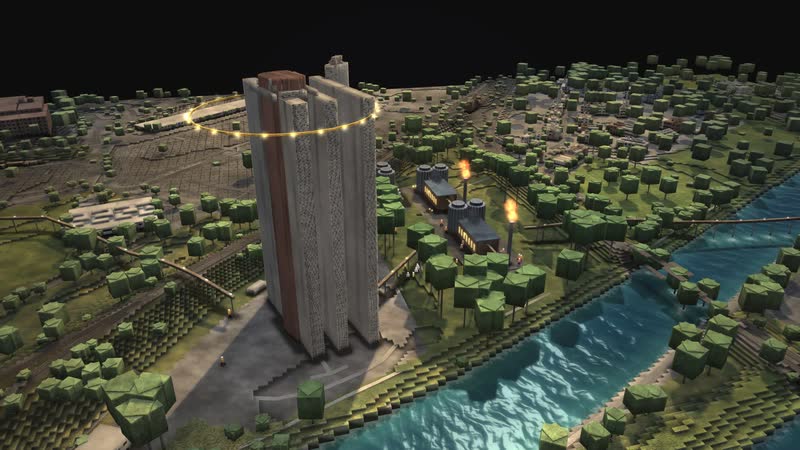
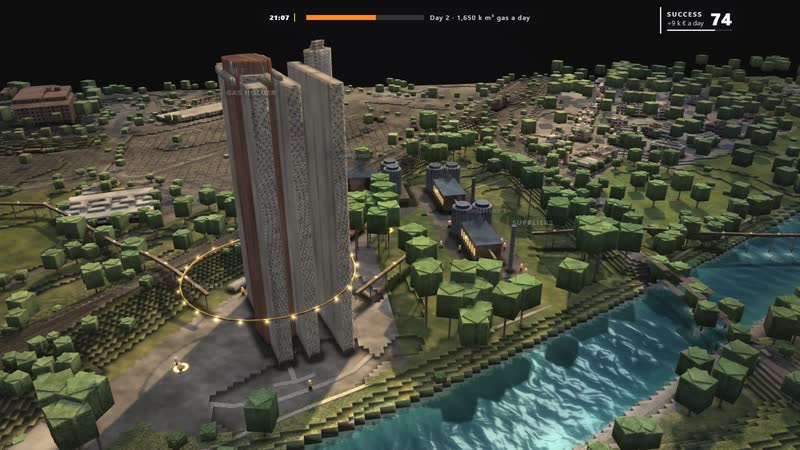
Oberhausen gas holder: The large disc gas holder in Oberhausen as a buffer between ironworks and consumers: a ring of light shows how high the disc floats on the gas.
02
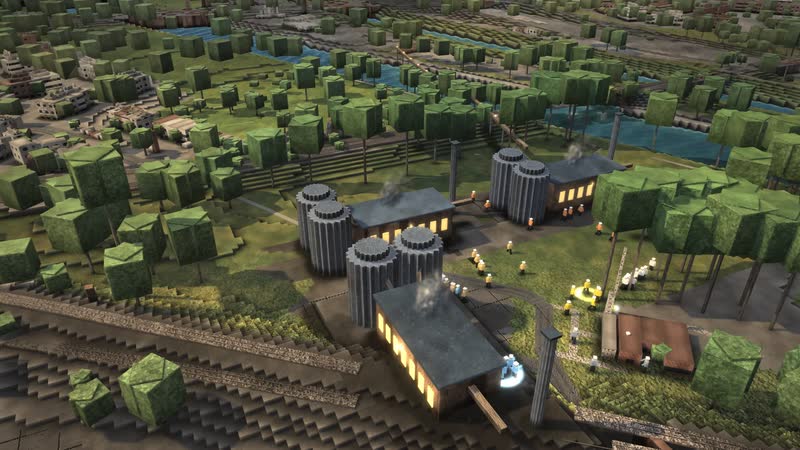
Compressor 2 (expansion, interpreted)
Compressor 2 (expansion, interpreted) – only appears with more investment and runs only with enough people and materials.
What is shown – why – for whom
| What is shown | Why | For whom |
|---|---|---|
| Disc-type gas holder with light ring | WhyShows how the disc floats on the gas and rises with the fill level. | For whommuseum, teaching |
| Blast furnace gas pipeline from the ironworks | WhyShows where the gas comes from. | For whomteaching, history of technology |
| Gas scrubbers and compressors | WhyShows how the gas is cleaned and pushed into the grid. | For whomteaching, history of technology |
| Gas pipeline to rolling mills and town | WhyShows where the gas goes and that the market only takes what it needs. | For whommuseum, exhibition |
| Flare when the holder is full | WhyShows what happens when nobody takes the gas: it is lost. | For whommuseum, economics teaching |
| Terrain and surroundings in Oberhausen | WhyShows where the gas holder stands in the Ruhr area. | For whomlocal history, exhibition |
| Five controls with output, holder level and daily result | WhyShows connections in operations, not operating figures. | For whomeconomics teaching |
03
At the gate
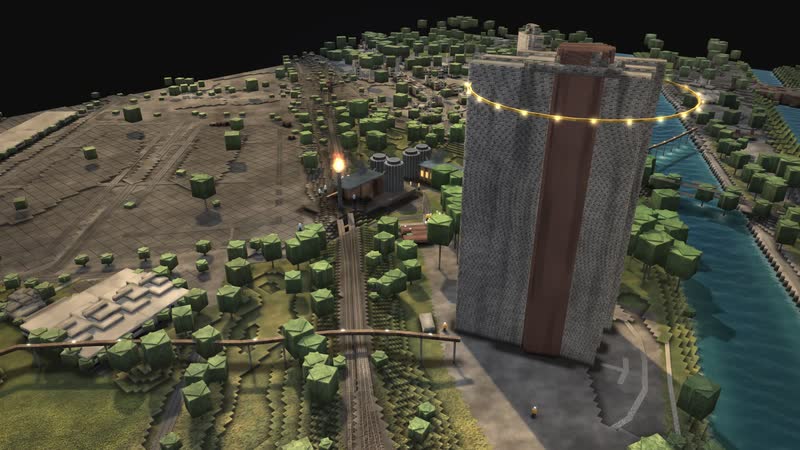
At the gate – the shifts arrive here, paths lead to the plants, the workshop and the break area.
04
Five levers, one works
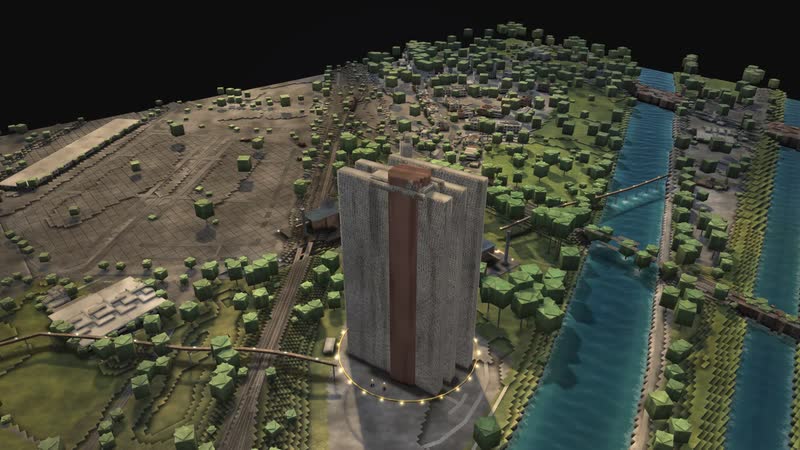
Full investment – three compressors: capacity for the boom, but only with enough people and materials.
Films from the model
-
Above Oberhausen gas holder
A flight across the whole site: low approach, Compressor 1, then across the works to the long shot – everything moving, with the sound of the works.
-
From raw material to product
The works’ chain in one flight – supply (top gas from the ironworks (pipeline)), compressors, gas holder, dispatch: station by station.
-
A working day in time-lapse
In time-lapse working days pass in seconds: shifts at the gate, traffic on the supply and dispatch routes, the stockpile (gas holder) changing along.
-
A works grows
Investment step by step: new compressors appear, the workforce grows with them, then more supply and a boom in the market.
-
Bottleneck – the works respond
First materials run short and the plant only runs in part, then the market takes too little and the stockpile fills up – in the boom the works recover.
-
Using the software
With the full interface: open the works, set investment and market, look at stockpile and plant – every lever acts at once.
Facilities and areas in the model
-
Compressors
Gas cleaning and compressors: scrubbers clean the top gas, compressors push it into the grid. What nobody takes lifts the disc in the gas holder – when it is full, the flare burns: the gas is lost. In the game: all 3 as expansion (interpreted).
-
Gas holder
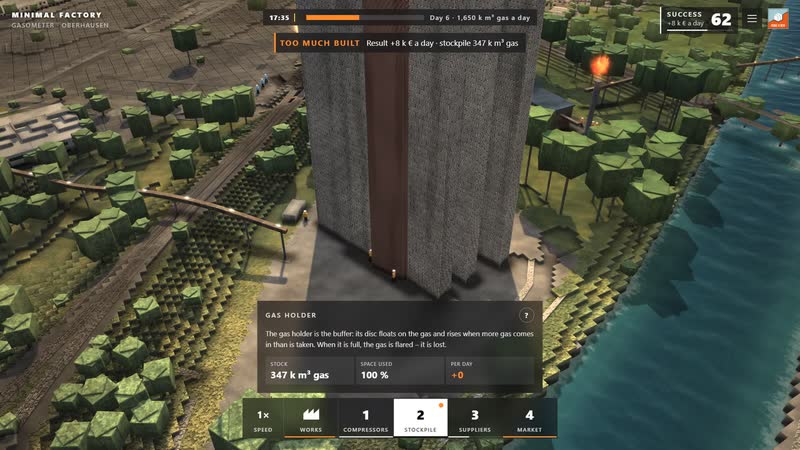
The gas holder is the buffer: its disc floats on the gas and rises when more gas comes in than is taken. When it is full, the gas is flared – it is lost.
-
Supply
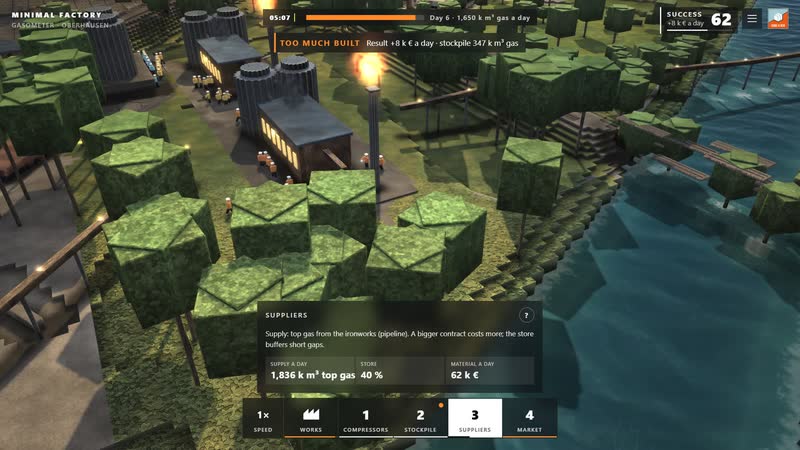
Top gas from the ironworks (pipeline). A bigger contract costs more, the store buffers short gaps.
-
Dispatch
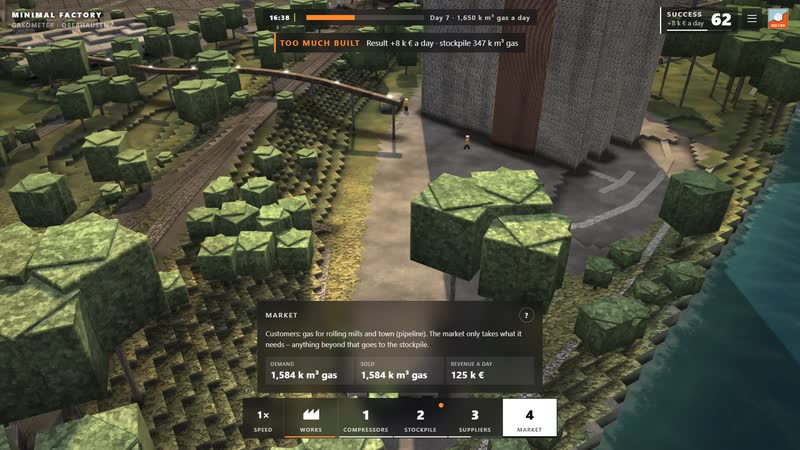
Gas for rolling mills and town (pipeline). The market only takes what it needs.
05
When things get tight
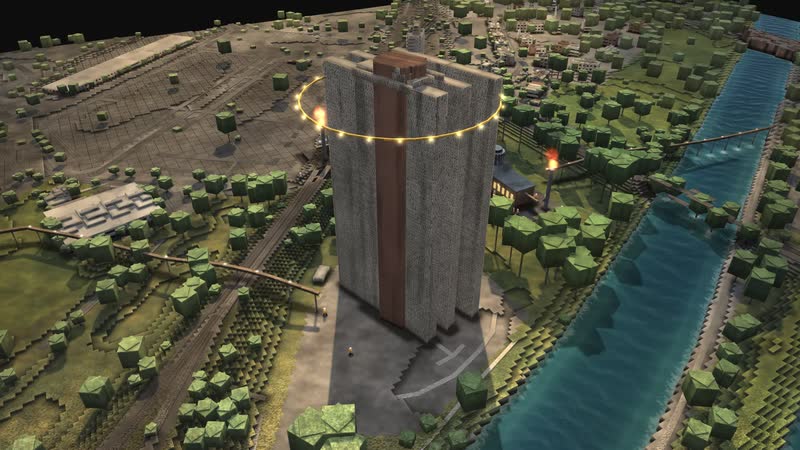
Gas holder full – the disc is at the top and the flare burns: the gas is lost.
06
Far out near Oberhausen
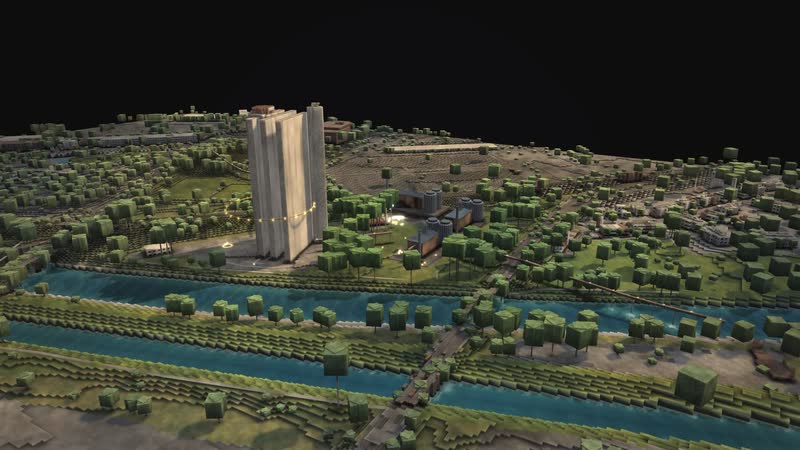
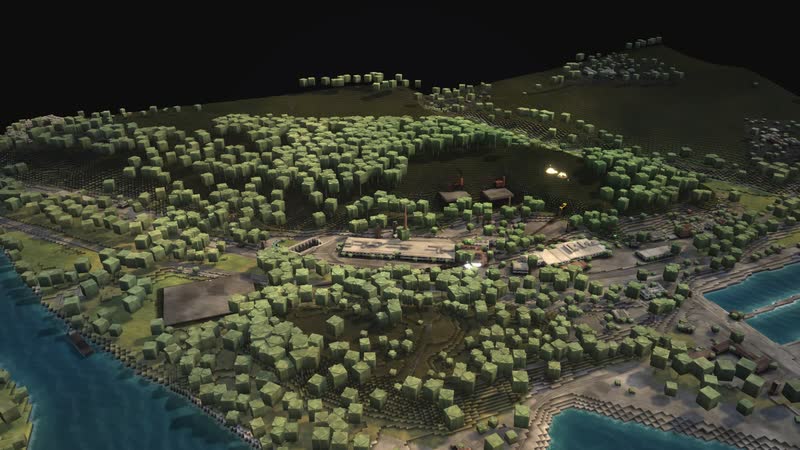
Far out near Oberhausen – terrain, houses and trees come from official elevation data; at the edge the world fades softly into the dark.
Processes in the model
From raw material to product
- 01supply – top gas from the ironworks (pipeline)
- 02compressors – scrubbers clean the top gas, compressors push it into the grid
- 03gas holder – takes in what is not sold
- 04dispatch – gas for rolling mills and town (pipeline)
Expansion
- 01raise investment by one step
- 02another compressor is built on its plot
- 03set the workforce to match, otherwise it only runs in part
- 04the market decides whether it pays – success in one number at the top
Bottleneck and recovery
- 01supply short – the store empties
- 02materials missing – the plants only run in part
- 03market in a slump – the stockpile grows until the fire sale
- 04boom – the stockpile empties, the result rises
What the model can be used for
-
Museum and exhibition
The holder explains itself at the light ring: the disc rises when more gas arrives than is taken,. When it is full, the flare burns.
For whommuseums, visitor centres, exhibitions
-
School and university
How does a disc-type gas holder work, and what happens when more gas arrives than is taken? Terms like blast furnace gas, gas scrubber, compressor and buffer sit where they belong.
For whomschools, universities, vocational training
-
Industrial heritage and local history
Why did the Ruhr area need gas storage? The gas holder stands between ironworks, rolling mills and town on the real terrain, with the gas pipeline as the visible link.
For whomindustrial heritage, city marketing, local history societies
-
Understanding operations
Investment, workforce, supply, quality and market act at once on output, holder level and result. It becomes visible why a buffer absorbs fluctuations, but only until it is full.
For whomeconomics teaching, further training
07
Compressor 1 at work
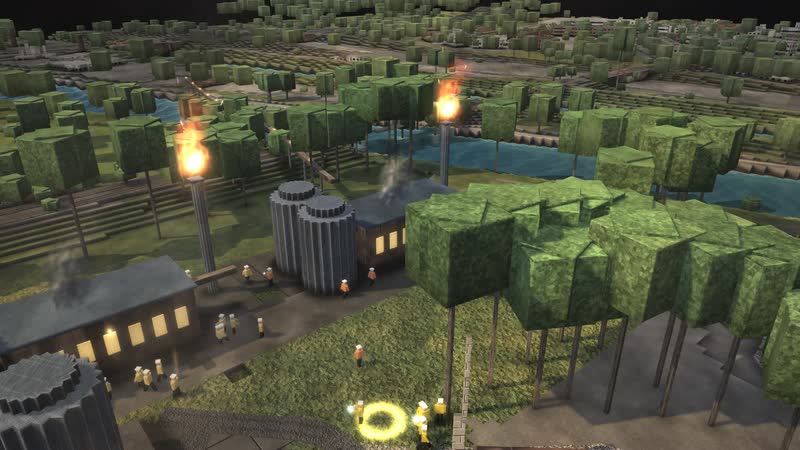
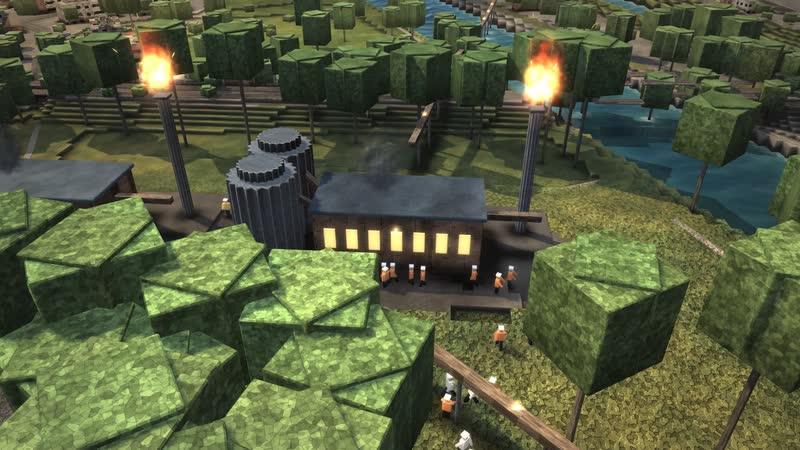
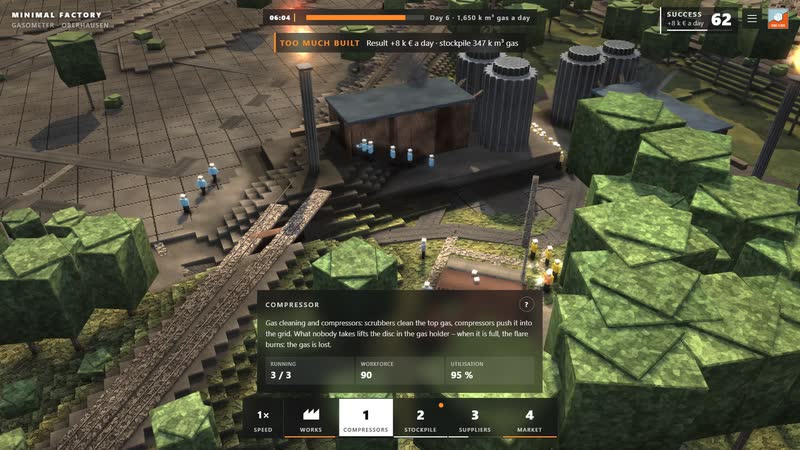
Compressor 1 at work – scrubbers clean the top gas, compressors push it into the grid; the machines run with the works’ utilisation.
08
The whole software
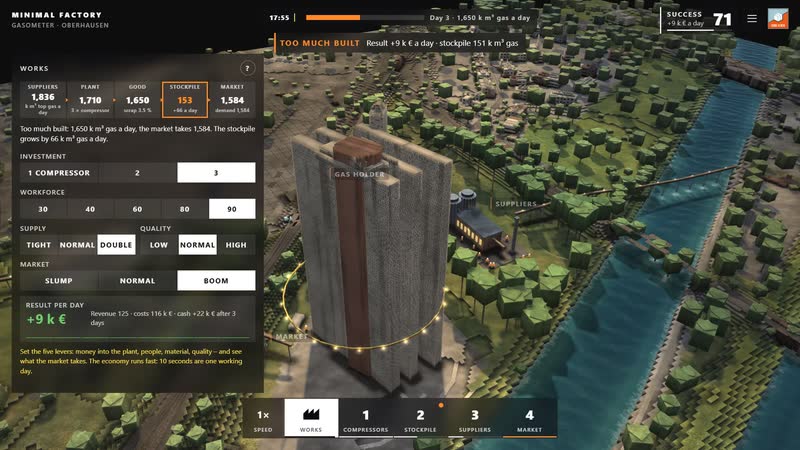
Running the works – five levers: investment, workforce, supply, quality and market; the chain shows at once what follows.
What you can change
Controls
- Investment: Number of compressors (1 to 3): more money builds more, less shuts them down; without more people they only run in part.
- Workforce: Enough people for all compressors – output rises, and so does success. Too many people cost wages without more output.
- Supply: More material arrives – the plant no longer has to wait. Levels short, normal and double; supply security costs money.
- Quality: More quality means less scrap and fewer breakdowns but costs testing and maintenance (levels low, normal, high).
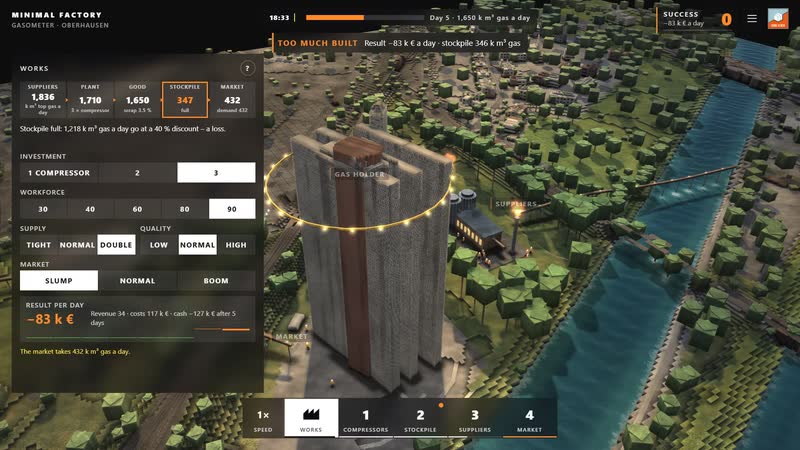
- Market: Slump, normal or boom. In a slump more is made than sold: the stockpile grows and success drops. In a boom the market takes more: the stockpile empties and success rises.
Disruptions
- Too few people: Workers are missing, part of the plant stands still.
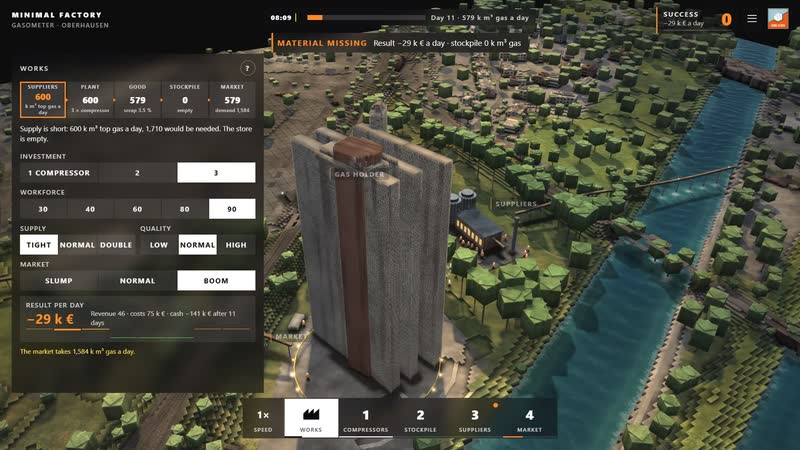
- Material missing: Supply is not enough; once the store is empty the plants only run in part (message: “Parts store empty – supply is short”).
- Too much built: More is made than the market takes: the stockpile grows; when it is full the surplus goes at a 40 % discount (message: “Stockpile full – fire sale at a discount”).
- Market wants more: Demand is greater than the works can make; once the stockpile is empty orders are lost (message: “Stockpile empty – orders are lost”).
- Gas holder full: The flare burns, the gas is lost – the fire sale of the model.
What the model brings
-
01
The real terrain as a stage
Gas holder, pipelines and surroundings stand on terrain from official elevation data. You show the site as it lies, not as a diagram.
-
02
A buffer made visible
The light ring shows the fill level. You understand why a holder stands between supplier and consumers.
-
03
Surplus without damage
The gas holder is full, the flare burns, the gas is lost. You see what a surplus costs, and set it back.
-
04
For big screens and the browser
Runs in the browser and on large projections. A working day in fast motion lasts ten seconds.
-
Oberhausen gas holder: The large disc gas holder in Oberhausen as a buffer between ironworks and consumers: a ring of light shows how high the disc floats on the gas. -
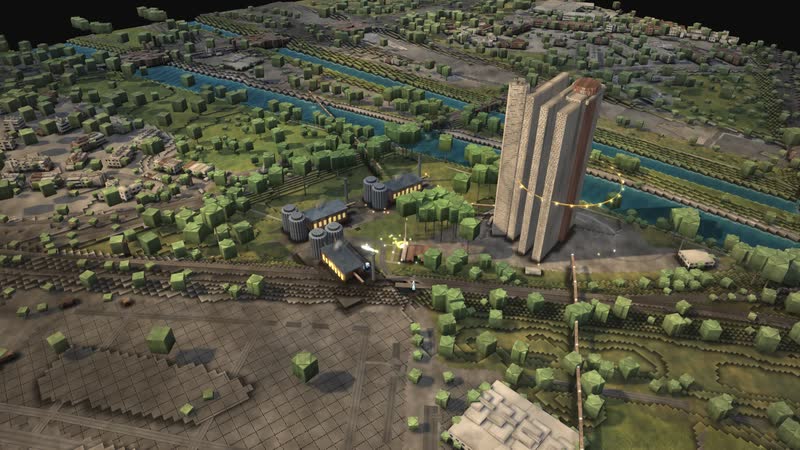
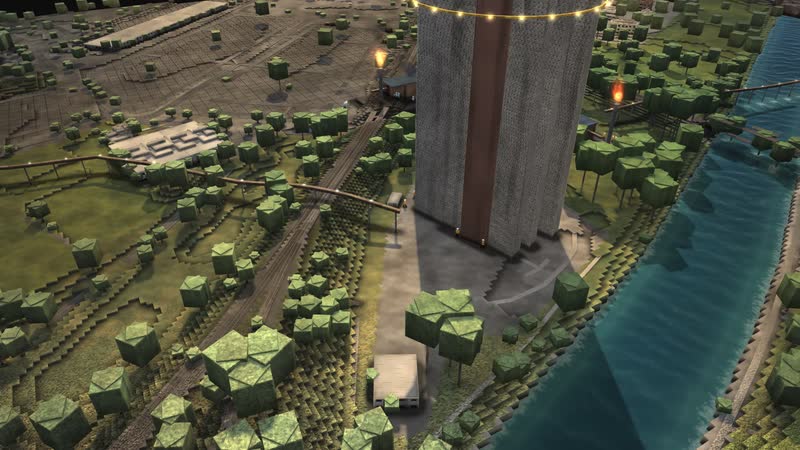
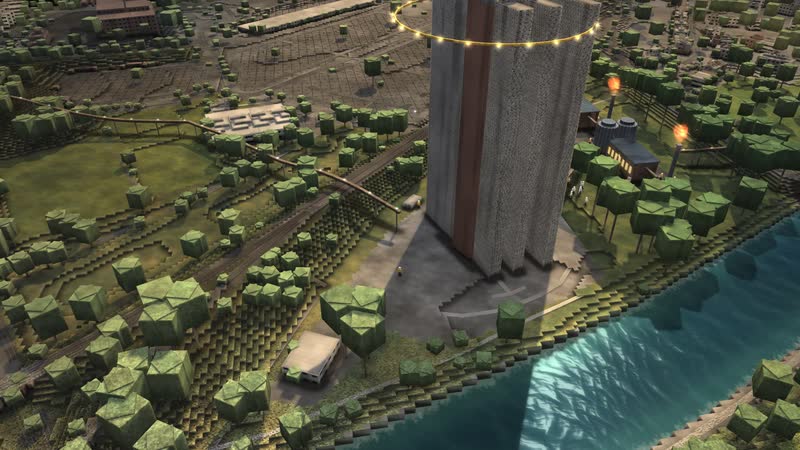
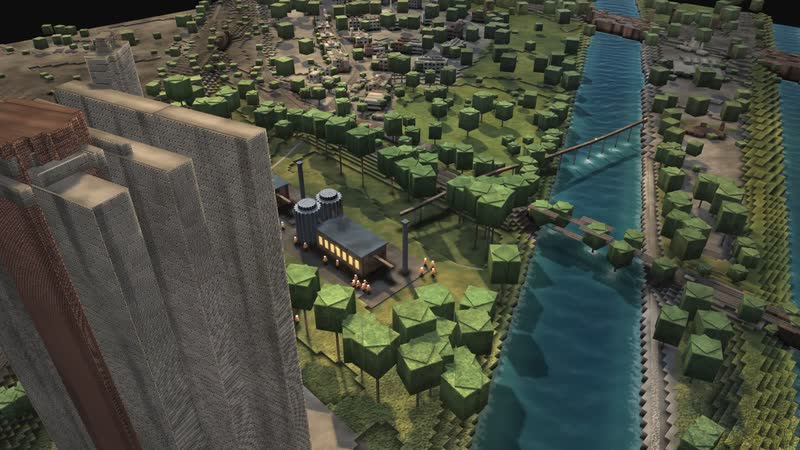
Oberhausen gas holder from the other side – the same site in the afternoon sun from the south-west, with long shadows of halls and structures. -
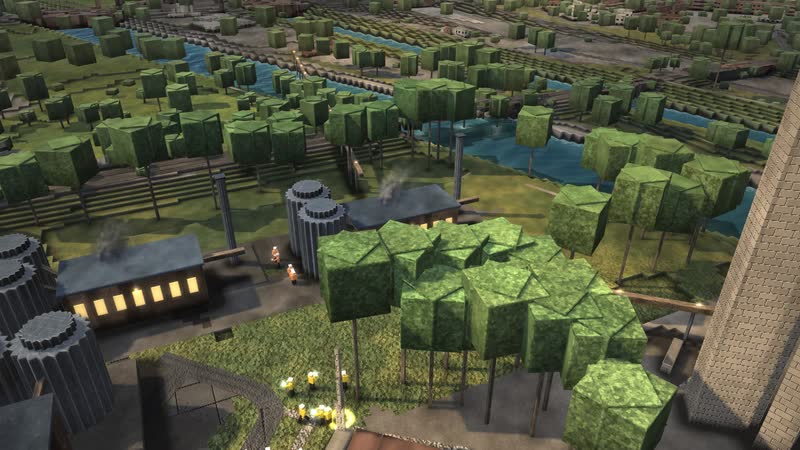
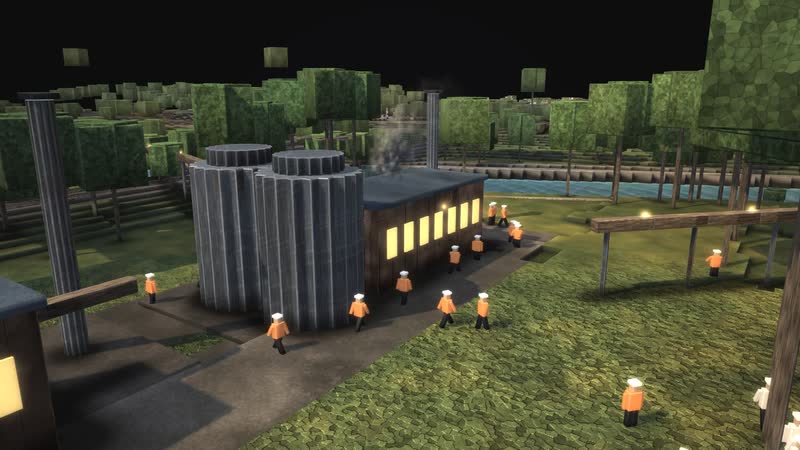
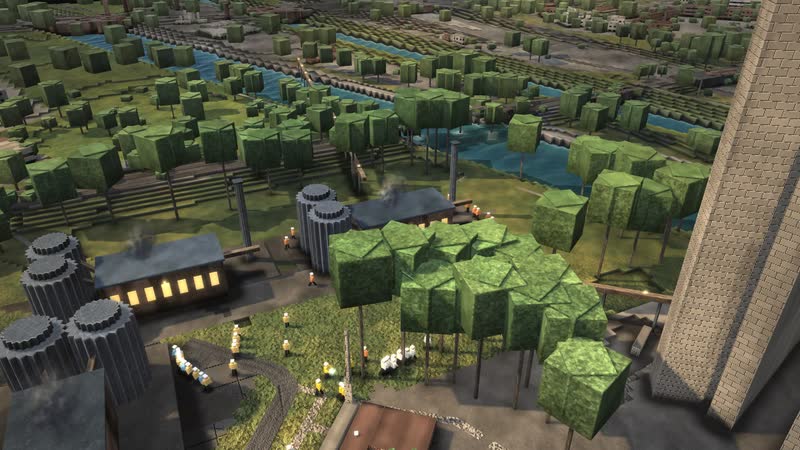
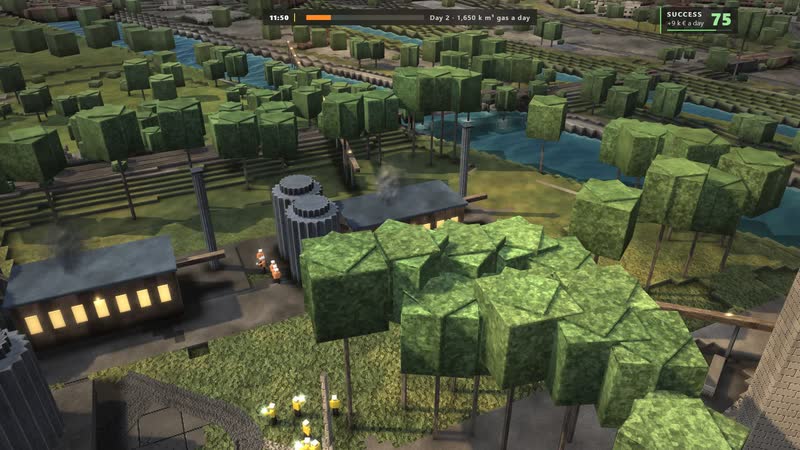
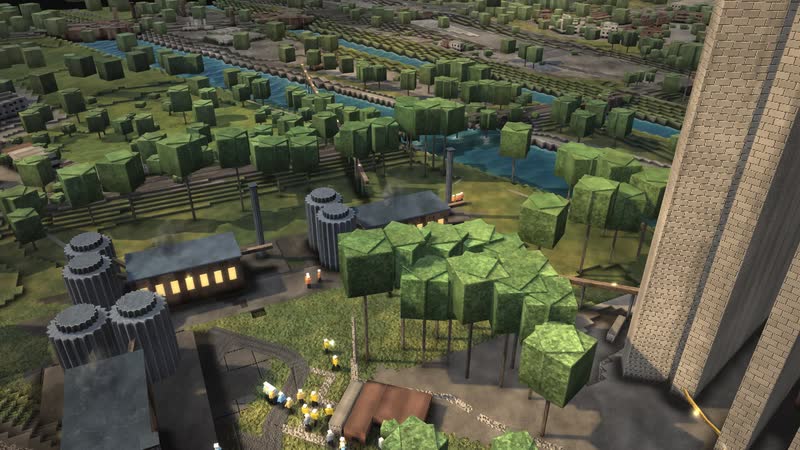
Medium long shot – Compressor 1: scrubbers clean the top gas, compressors push it into the grid. -
Far out near Oberhausen – terrain, houses and trees come from official elevation data; at the edge the world fades softly into the dark. -
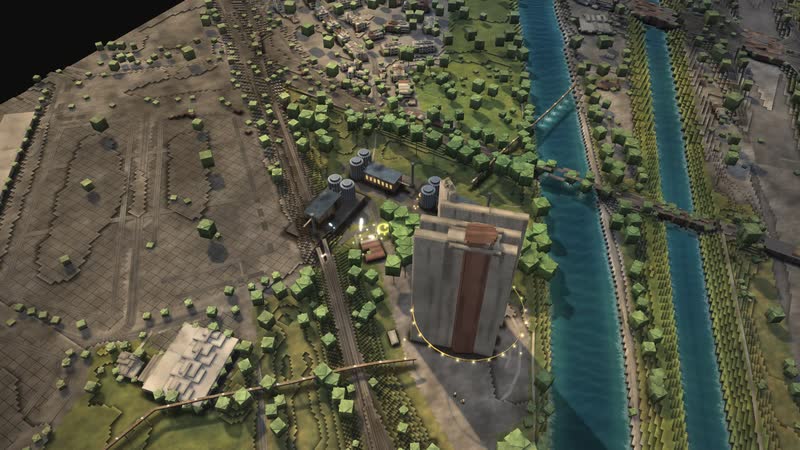
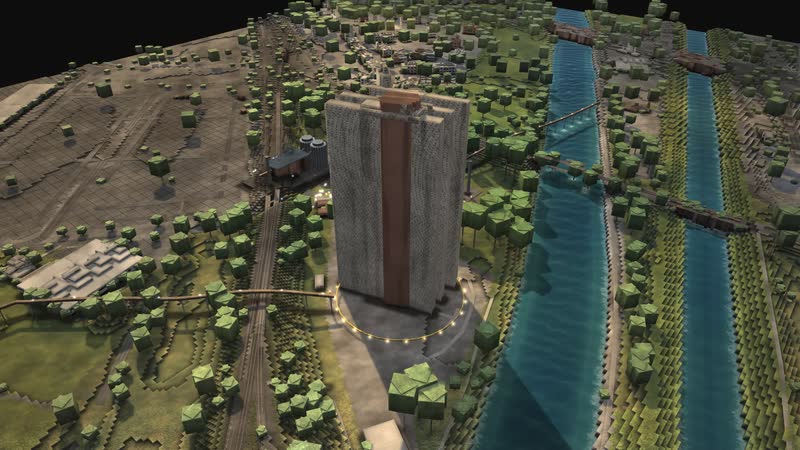
From above – Oberhausen gas holder as a model of blocks: every cell a block, buildings and terrain from elevation data and OpenStreetMap. -
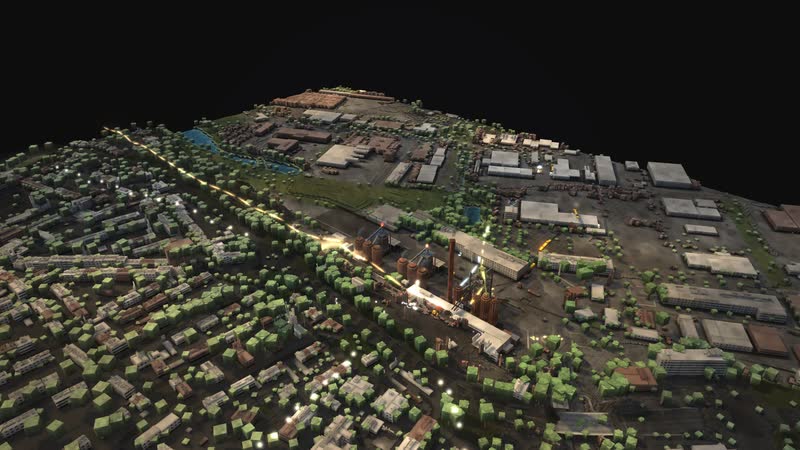
Oberhausen gas holder from above at an angle – supply, compressors, gas holder and dispatch at a glance. -
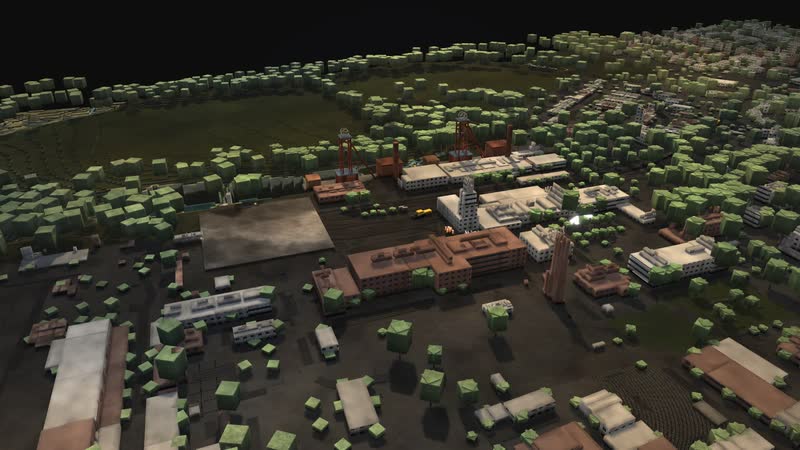
All around Oberhausen: streets, tracks and water from OpenStreetMap, houses and trees from the elevation data – only the plant in the middle is built specially. -
At eye level – Compressor 1, as close as from the fence. -
Compressor 1 – Gas cleaning and compressors: scrubbers clean the top gas, compressors push it into the grid. What nobody takes lifts the disc in the gas holder – when it is full, the flare burns: the gas is lost. -
Compressor 2 (expansion, interpreted) – only appears with more investment and runs only with enough people and materials. -
Gas holder – The gas holder is the buffer: its disc floats on the gas and rises when more gas comes in than is taken. When it is full, the gas is flared – it is lost. -
Supply – top gas from the ironworks (pipeline): a bigger contract costs more, the store buffers short gaps. -
Dispatch – gas for rolling mills and town (pipeline): the market only takes what it needs. -
Compressor 1 close up – scrubbers clean the top gas, compressors push it into the grid. -
Gas holder close up – the disc rises when more gas arrives than is taken. -
Supply in full swing – top gas from the ironworks (pipeline); the bigger the contract, the more is on the move. -
Compressor 1 at work – scrubbers clean the top gas, compressors push it into the grid; the machines run with the works’ utilisation. -
Gas holder in day-to-day operation – the disc rises when more gas arrives than is taken. -
Dispatch – gas for rolling mills and town (pipeline); in a boom more is on the move, in a slump less. -
At the gate – the shifts arrive here, paths lead to the plants, the workshop and the break area. -
Full steam – all three compressors running, the market booming: supply and dispatch routes are at their busiest. -
Small investment – only Compressor 1 runs, the other plots lie ready as marked foundations. -
Full investment – three compressors: capacity for the boom, but only with enough people and materials. -
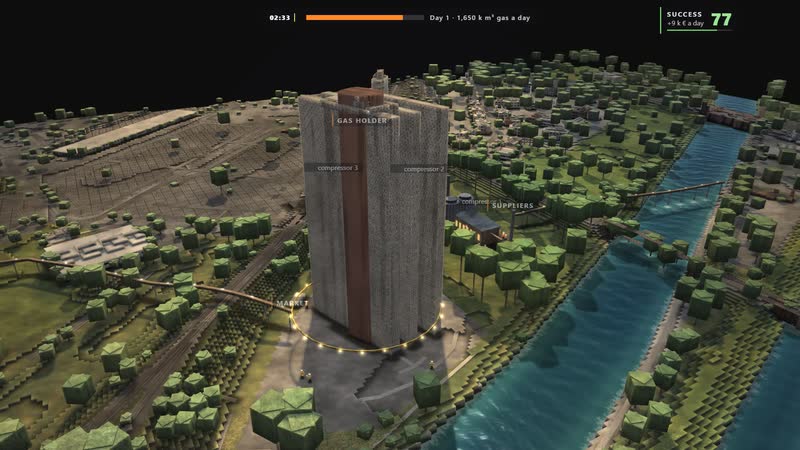
Every facility labelled – compressor 1 to 3, gas holder, supplier and market; at the top the working day with the daily output, on the right success in one number. -
Compressor 1 labelled – name and number right in the picture. -
Success in one number – 100 means it cannot get better in this market; below it the result per day, at the top the output per working day. -
Where a lever acts, a ring lights up – here after a change in the market: gas holder. -
Materials missing – supply is short, the store is empty: the compressors only run in part, the supply route is quiet. -
Gas holder full – the disc is at the top and the flare burns: the gas is lost. -
Too few people – the workforce is not enough for all compressors, part of the plant stands still. -
Boom – the market takes more than is being made: the stockpile empties, the dispatch route is busy. -
The whole software – at the top the working day with clock and output, on the right success in one number, below the tiles for works and facilities. -
Running the works – five levers: investment, workforce, supply, quality and market; the chain shows at once what follows. -
One lever, visible at once – market set to slump: the status line explains the bottleneck, the stockpile grows, the daily result drops. -
Facility card – compressor: in operation, workforce and utilisation, plus one sentence on what happens there. -
Stockpile card – gas holder: stock, space used and growth per day. -
Supplier card – delivery per day, store and material costs per day. -
Market card – demand, sold and turnover per day. -
Bottleneck in orange – supply is not enough: the line at the top and the works status say in one sentence what is missing. -
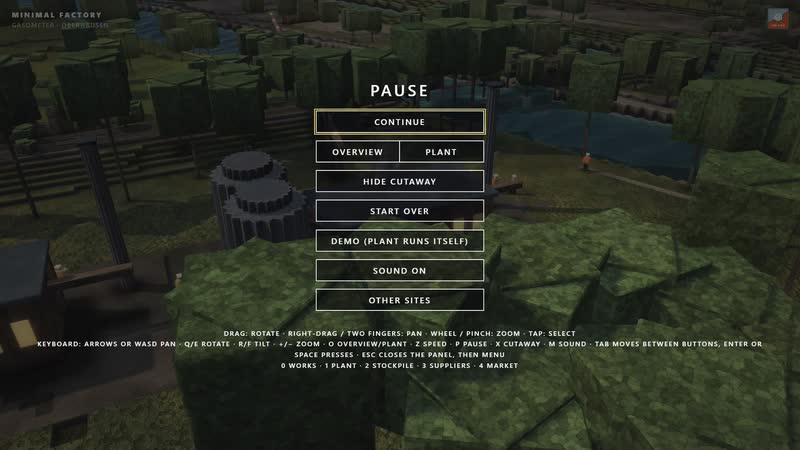
The menu – overview and plant, cutaway, restart, demo, sound and other sites, below the controls for mouse, touch and keyboard. -
Sixteen real sites – blast furnaces, collieries, car plants, harbours and a shipyard, each where it really stands.
Your site as a model
Would you like to show your plant, your museum or your industrial site like this? Write to us or call. We will send you the password for starting it on request.
cube4tec.de/spiele/minimal-factory/
Ask about this
Minimal Factory: Gasometer Oberhausen · Gasspeicher
Basis and limits
Real are the location, terrain and buildings in Oberhausen (official NRW elevation data and OpenStreetMap). The plant in the middle is our own simplified interpretation: quantities, processes, times and prices are model assumptions; the economy runs in time-lapse (10 seconds are one working day). Not a simulation of real operations and no cooperation with the site.
Public sources the model is based on:
- Wikipedia (German), article on the site: Gasometer Oberhausen
- Website of the site
- Geobasis NRW: digital surface and terrain models DOM1/DGM1 (Data licence Germany – Zero – 2.0)
- OpenStreetMap contributors (ODbL 1.0): streets, tracks, water, land use
More places in the model
-
Bochum car plant · from sheet metal to the car train
A car plant as a model you can walk through: press shop, body shop, paint shop, assembly and test field, plus a plant tour in 16 stops up to the “marriage” and the car train.
-
Hansa coking plant · coal becomes coke
A coking plant as a model you can walk through: charging car, pusher machine, quenching car and quenching tower, plus coal tower, compressor house and coke stockpile, on the real terrain in Dortmund-Huckarde.
-
Zollern colliery · hoisting coal
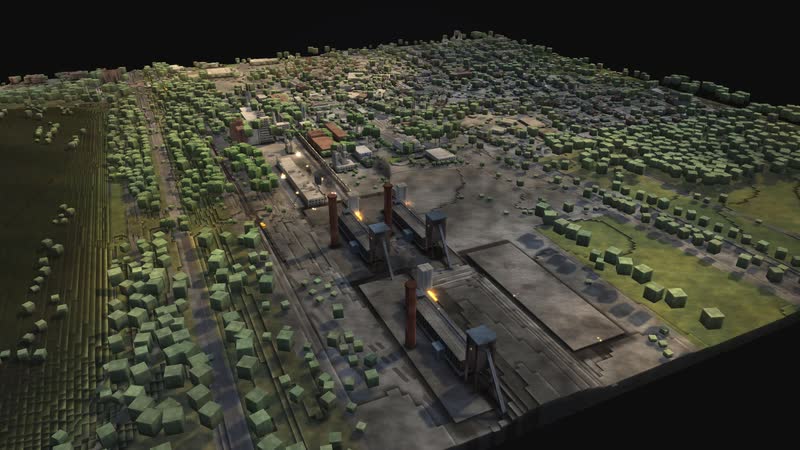
A showpiece colliery as a model: winding towers, sheaves, winding engine and cages in the shaft, plus machine hall and pay hall on the real terrain in Dortmund-Bövinghausen.
-
Zollverein · coal washery
A coal washery as a model: belts, screens and water, the loading bunker above the track, plus Shaft XII and the coking plant on the real terrain in Essen.
-
Nachtigall colliery · coal from the adit
An adit colliery as a model: tub trains roll out of the hill to the coal depot on the Ruhr, where the Ruhr barges are loaded, in the Muttental in Witten.
-
Henrichshütte Hattingen · blast furnace and ironworks
A blast furnace as a model you can walk through: wind, hot-blast stoves, burden and tapping, plus steelworks, rolling mill and works railway, on the real terrain of the Ruhr valley.
-
Düsseldorf future factory · robot cells and driverless transport
A modern factory as a model: robot cells, driverless transport vehicles, drones and a robot dog, plus people on the assembly line and a plant tour in ten stops.
-
Meiderich ironworks · blast furnaces in Duisburg-Nord
Three blast furnaces of an ironworks as a model: blast furnace gas flare above, tapping into torpedo cars below, plus burden bunker and blower house in Landschaftspark Duisburg-Nord.
Real are location, terrain, surroundings and the gas holder itself (official NRW elevation data, OpenStreetMap). The compressors are interpreted; quantities, processes and times are model values. With your data, the model shows your site and your processes.