
Simulation · Minimal Organization · Mid-sized firms and services
Special machine builder
A family-owned special machine builder as a walkable model: how a custom packaging line moves from enquiry to site acceptance and where the 28 weeks go.
Trailer
All data are fictional, including lead times and hours. The model can be adapted to your company's real data and filled with information that no report brings together today – for example project status from the ERP, or supplier lead times.
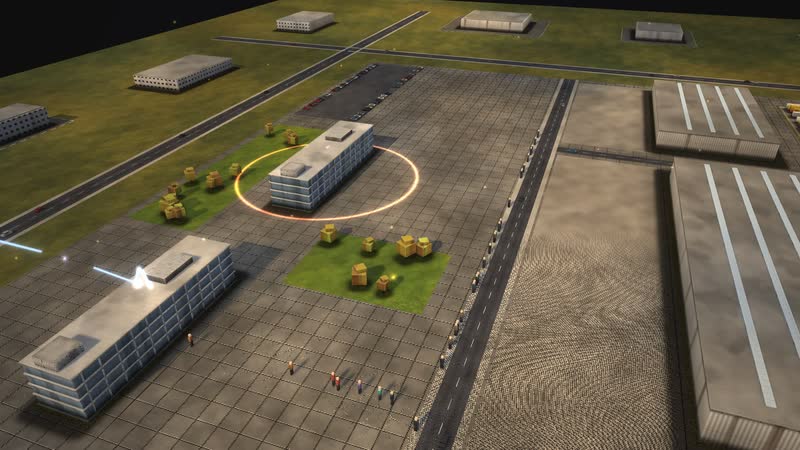
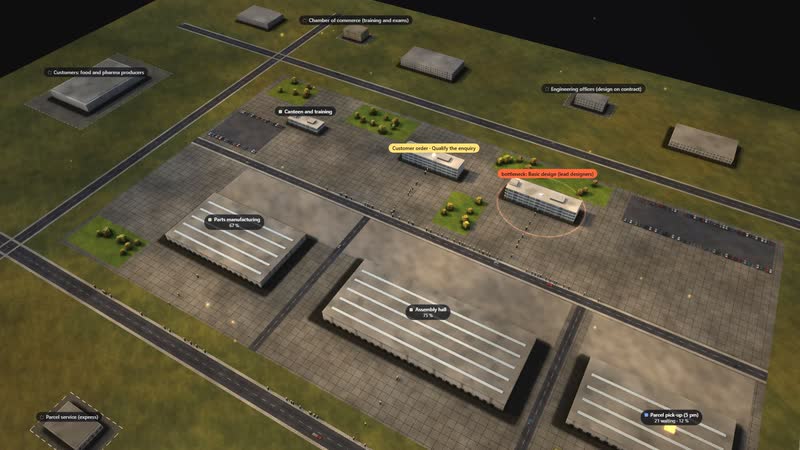
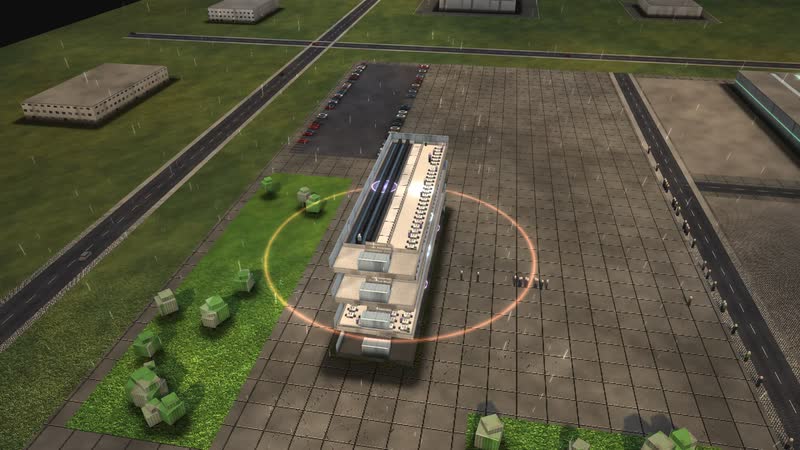
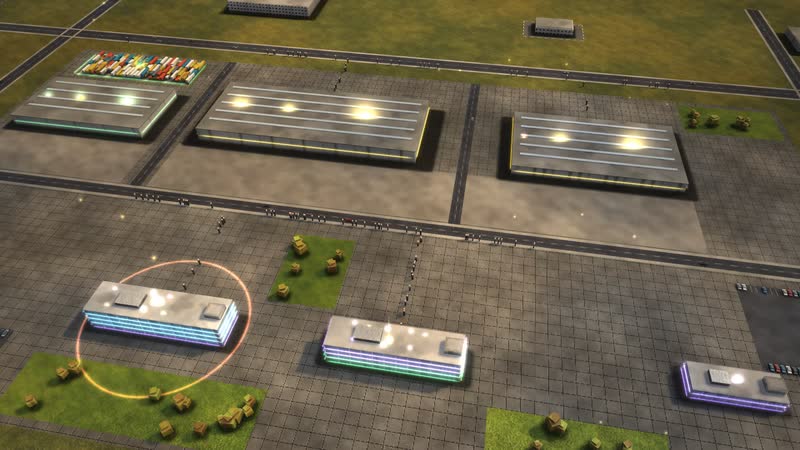
This engineer-to-order process simulation is built around the fictional VELBROCK MASCHINENBAU, a family-owned company with seven buildings and 21 departments. Every line is one of a kind – first designed, then made, assembled, accepted with the customer and shipped around the world.
The main process follows a packaging line for a frozen pizza maker, 120 cartons per minute: proposal, specification, mechanical and electrical design in parallel, bill of materials released in PDM, parts manufacturing and purchasing, assembly under the hall crane, factory acceptance test (FAT), CE marking, seaworthy packing, loading and site acceptance test (SAT). Model target: shipped almost 28 weeks after the enquiry, about 22 weeks after the order.
Spare parts, service calls for stopped machines and customer change requests run alongside. The page addresses owners and managing directors, project, design and plant managers, sales, HR and training.
A packaging line built to order
- 01
Qualify the enquiry: A frozen pizza maker enquires about a new packaging line: 120 cartons per minute.
- 02
Declined.
- 03
Concept and proposal: Sales engineers draft a layout with design and calculate hours and material.
- 04
Customer compares proposals: The customer compares proposals from several machine builders.
- 05
A competitor wins the order.
- 06
Create the order in the ERP: The order is in: it is created in the ERP with down payment and delivery date.
- 07
Kick-off and specification: Project management and customer write the specification: formats, output, interfaces.
- 08
Mechanical and electrical design work at the same time.
- 09
Basic design (lead designers): A lead designer fixes the machine concept: layout, drives, format change.
- 10
Detail design and drawings: The team draws frame, format parts and guards in CAD – thousands of parts.
- 11
Electrical design and PLC: Wiring diagram, safety concept and PLC program are created.
- 12
Mechanical and electrical design are done.
- 13
Release the bill of materials in PDM: The bill of materials is released in PDM and passed to the ERP.
- 14
Production planning: Production planning schedules work orders and writes NC programs.
- 15
Purchasing, parts manufacturing, sheet metal and cabinet building work at the same time.
- 16
Order bought-in parts: Purchasing orders drives, controls, sensors and standard parts.
- 17
Supplier lead time: Suppliers deliver – electronics often only after weeks.
- 18
Mill and turn parts: Machining centres mill and turn the parts – often just one piece per drawing.
- 19
Hardening at the contract shop: Wear parts go to a contract shop for hardening.
- 20
Inspection in the measuring room: Quality assurance measures the fits.
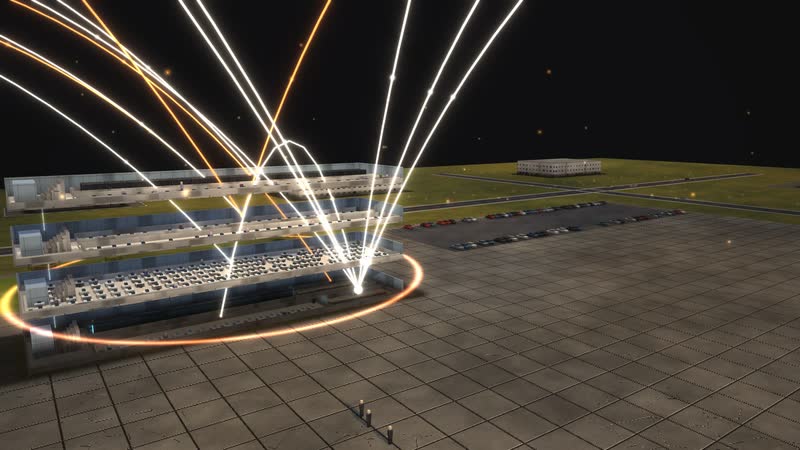
01
A site at work
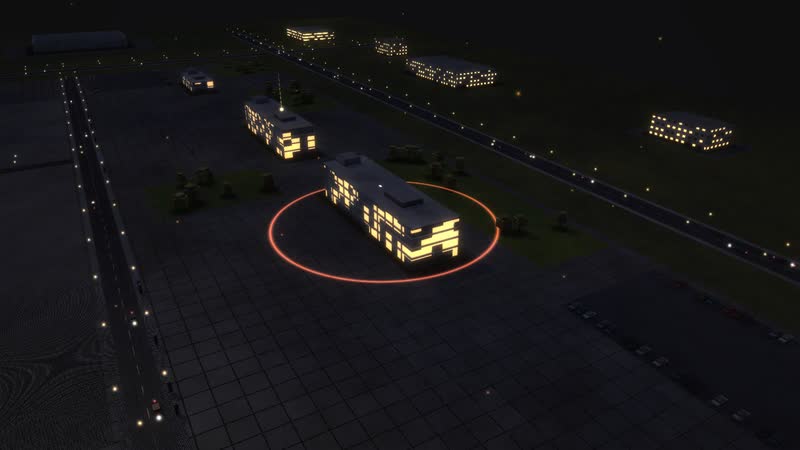
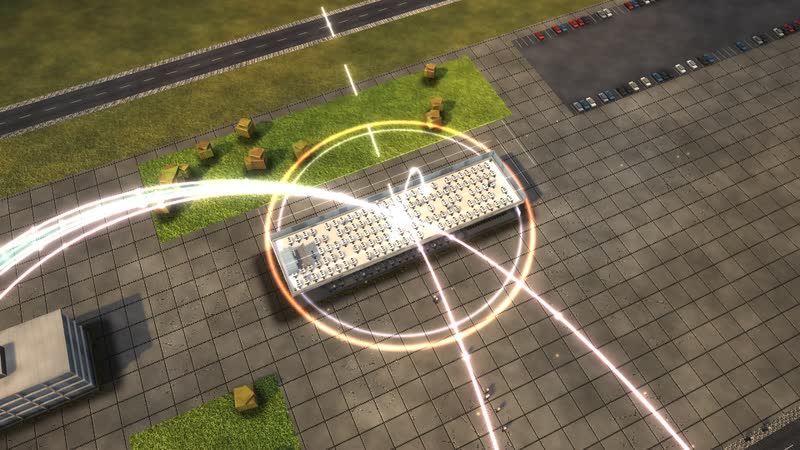
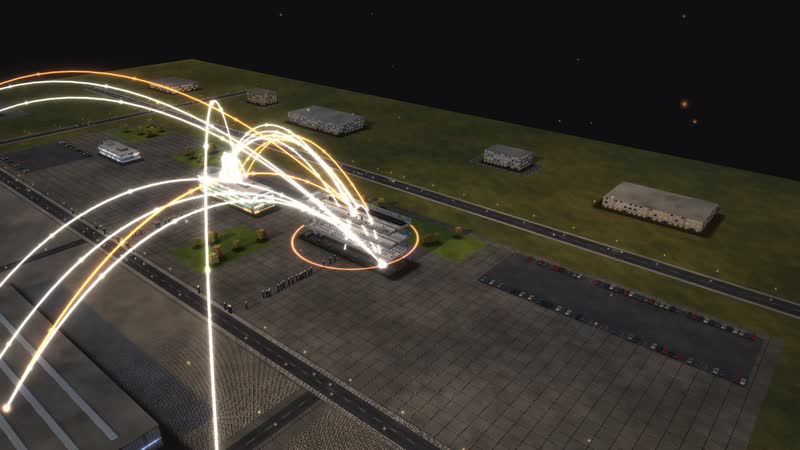
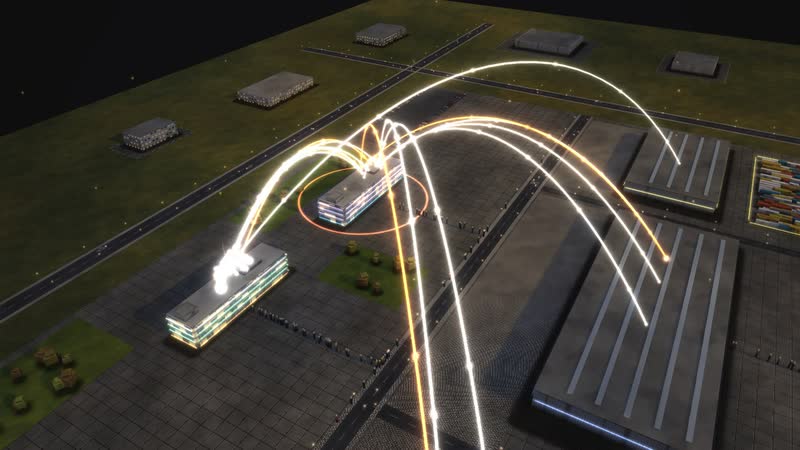
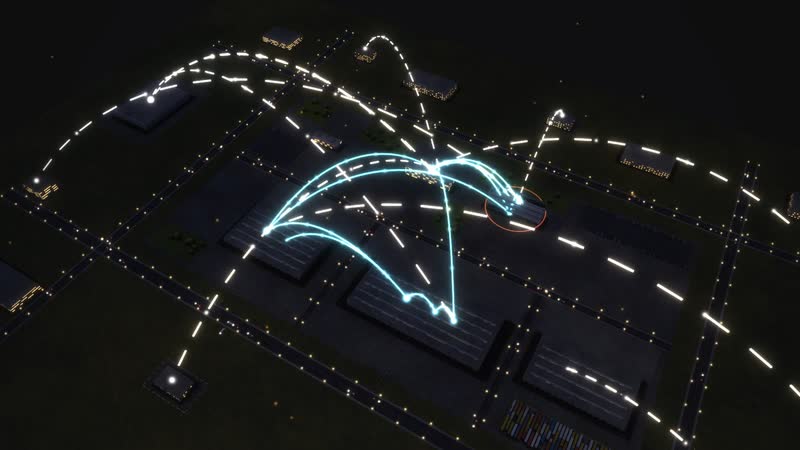
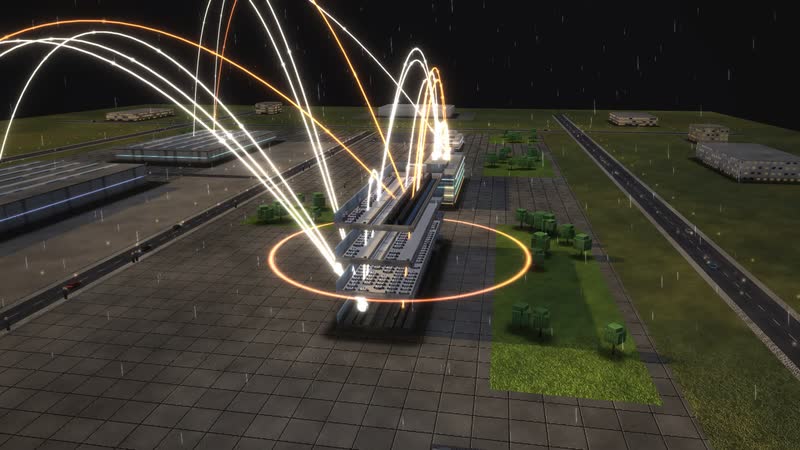
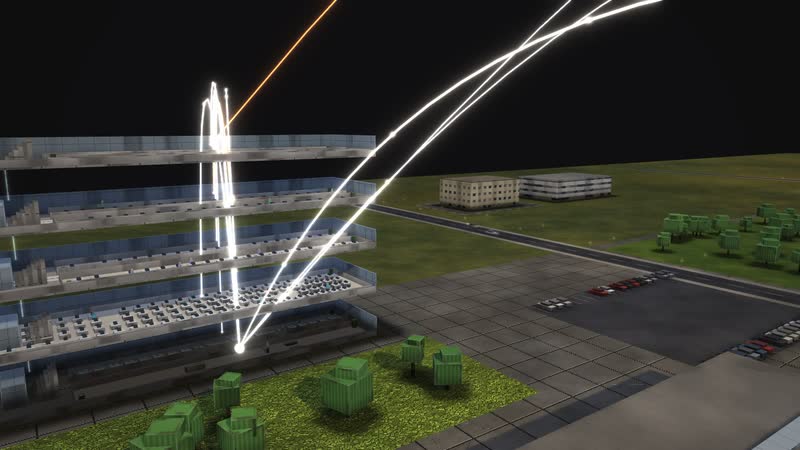
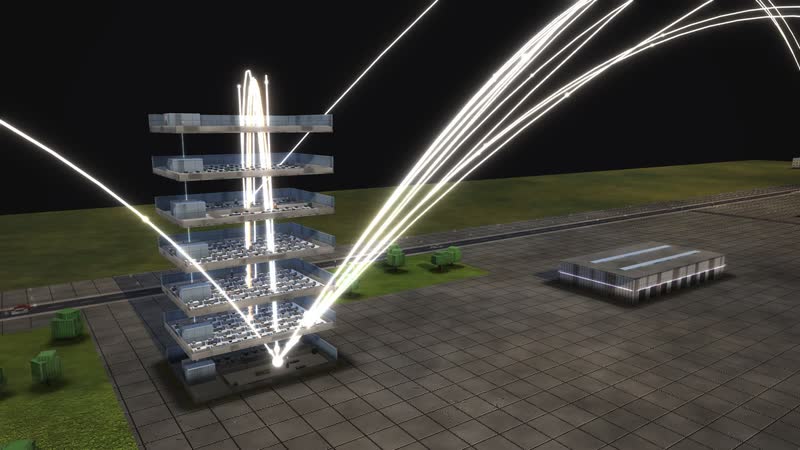
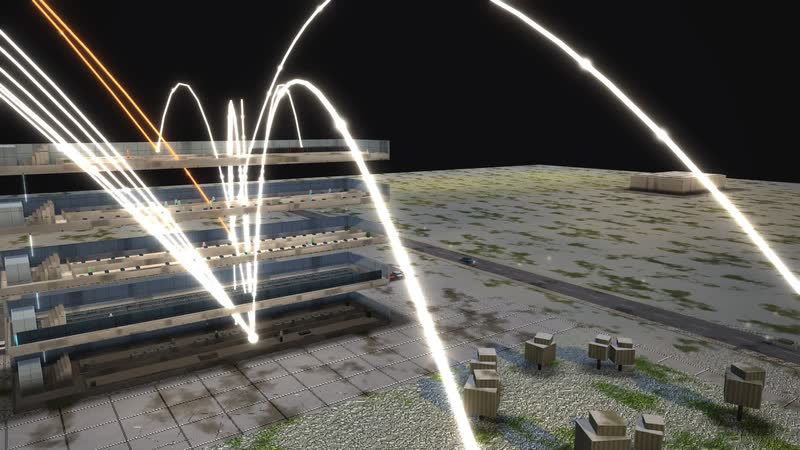
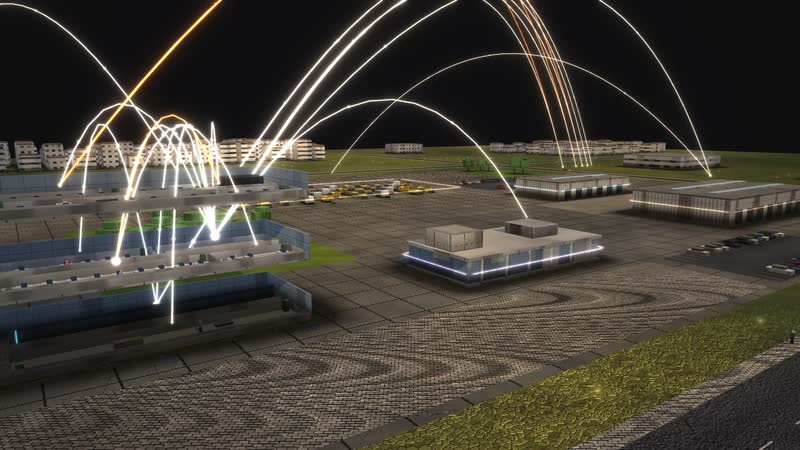
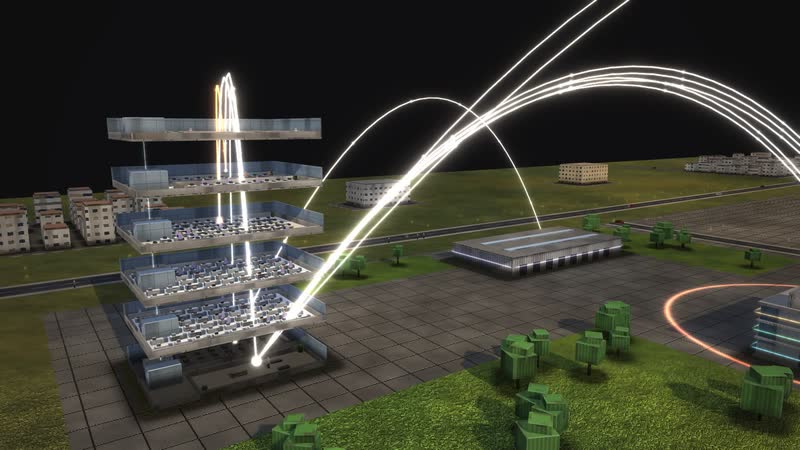
7 buildings, 21 departments, about 1,000 staff: in the evening light golden arcs show who reports to whom.
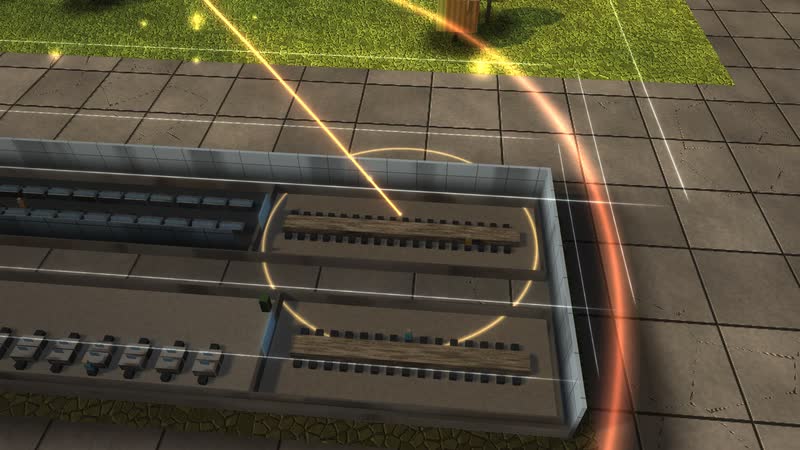
02
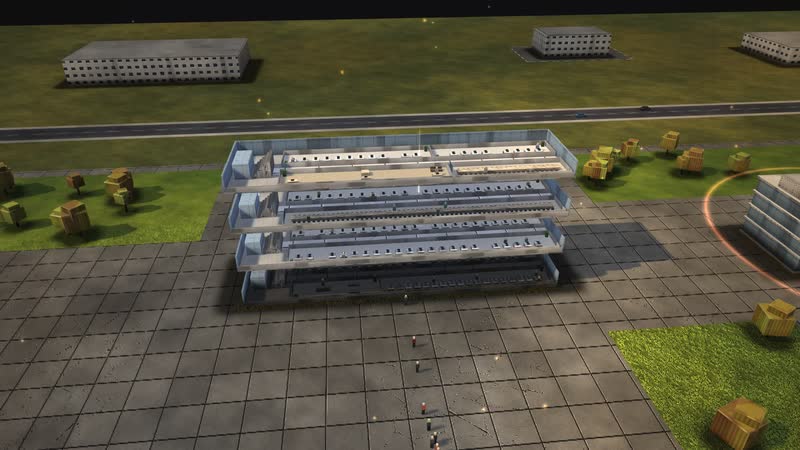
Every floor opened up
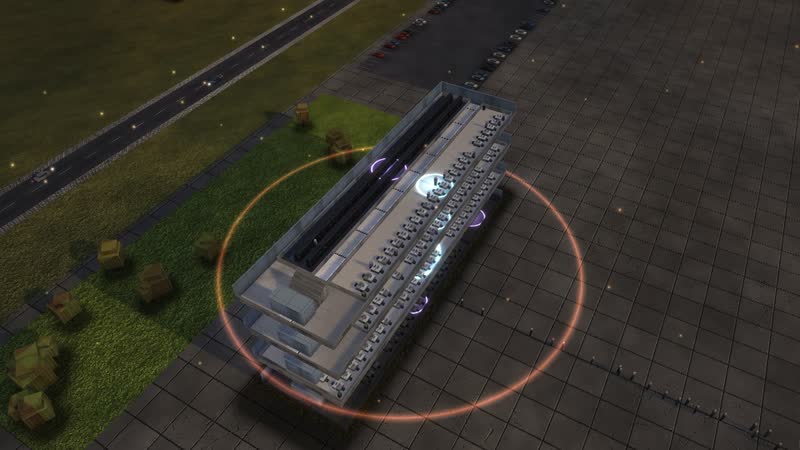
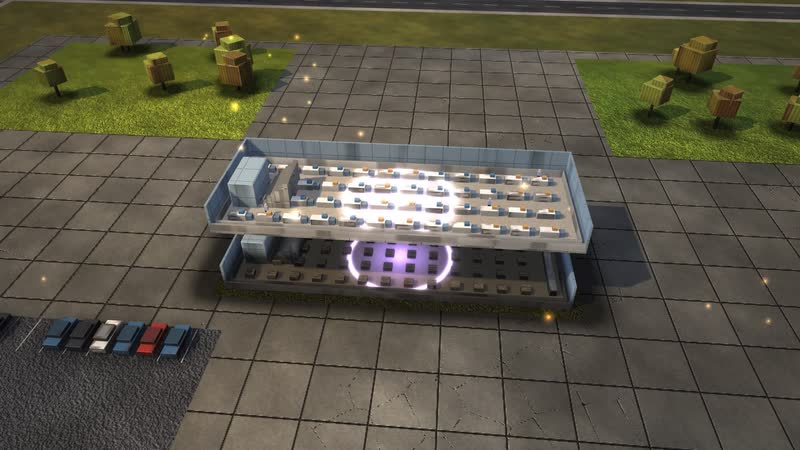
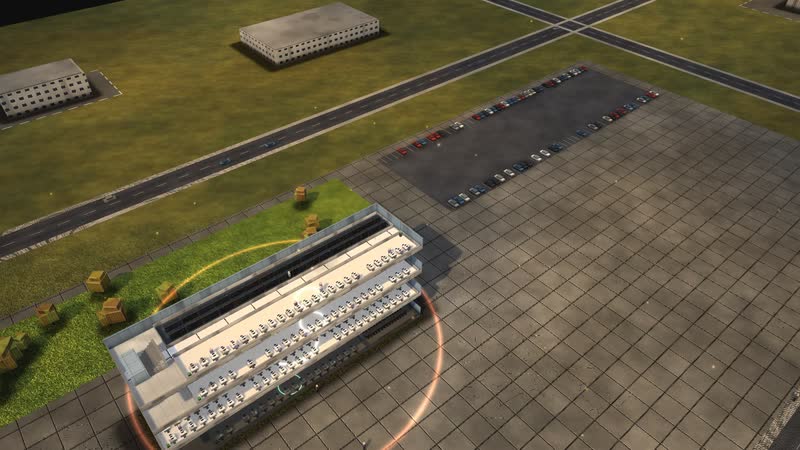
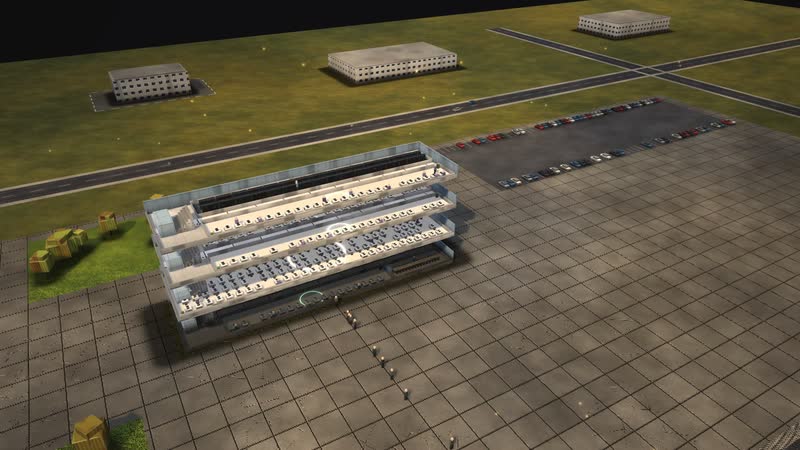
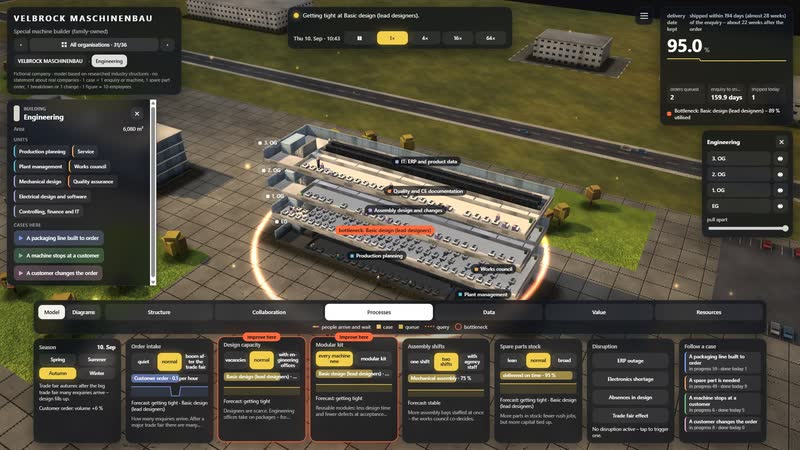
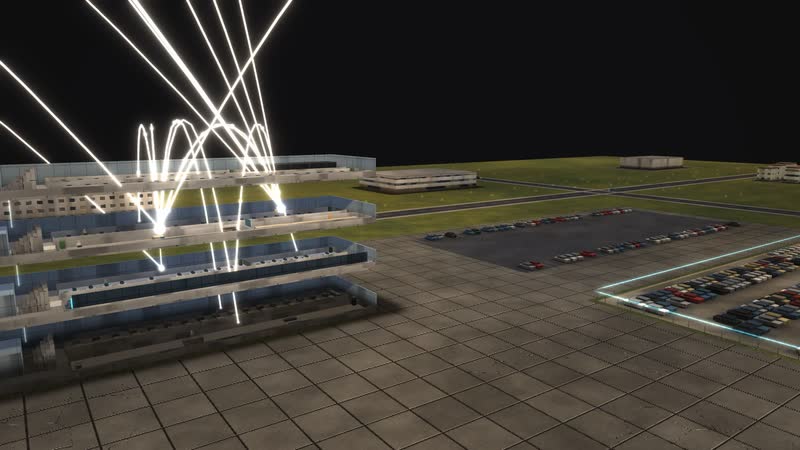
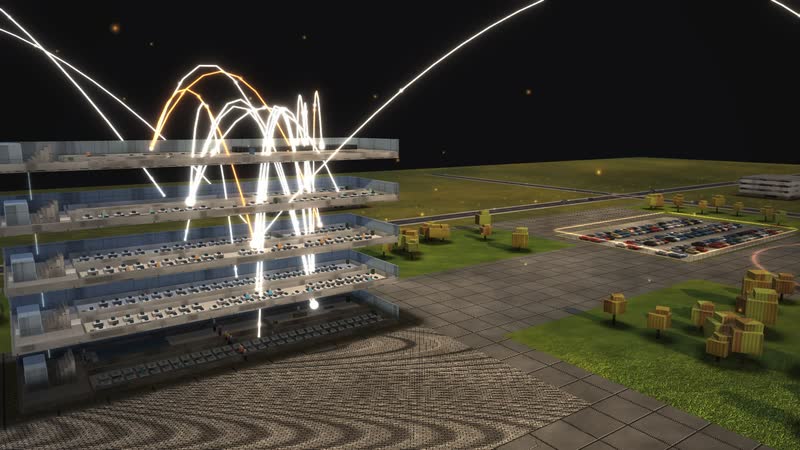
Every building can be opened, floor by floor – right into single rooms such as ‘Works council’, with workplaces and people at work.
What is shown – why – for whom
| What is shown | Why | For whom |
|---|---|---|
| ‘Where the time goes’ diagram: design and supplier lead times | WhyShows where the 28 weeks go. | For whomManagement, project managers |
| ‘Where it gets tight’ diagram: the design department | WhyShows the bottleneck after a trade fair. | For whomHead of design |
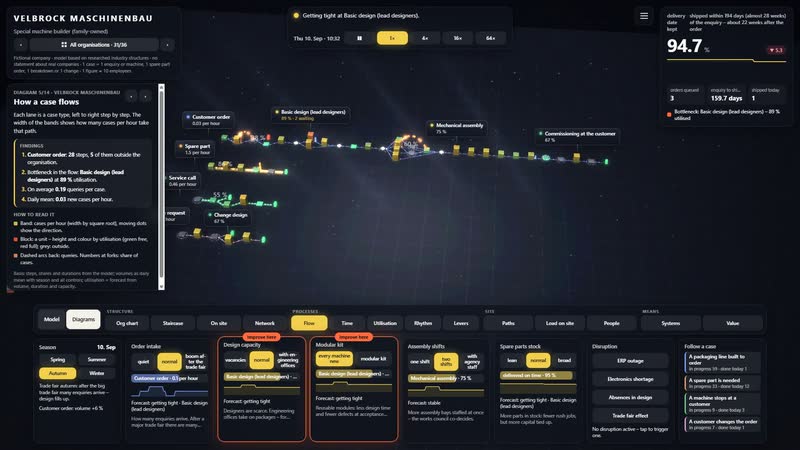
| ‘How a case flows’ diagram: from proposal to site acceptance | WhyShows the whole order step by step. | For whomCustomers, sales, training |
| ‘What each control does’ diagram: engineering offices, modular kit, shifts, spare parts stock | WhyRanks the levers for lead time. | For whomOwner family, management |
| ‘The path across the site’ diagram: manufacturing, assembly, loading | WhyShows the flow through the plant. | For whomPlant management, visitors |
| Resources view over the assembly hall | WhyShows assembly bays that are waiting. | For whomAssembly management |
| Process ‘A machine stops at a customer’ | WhyShows service under time pressure. | For whomService, customers |
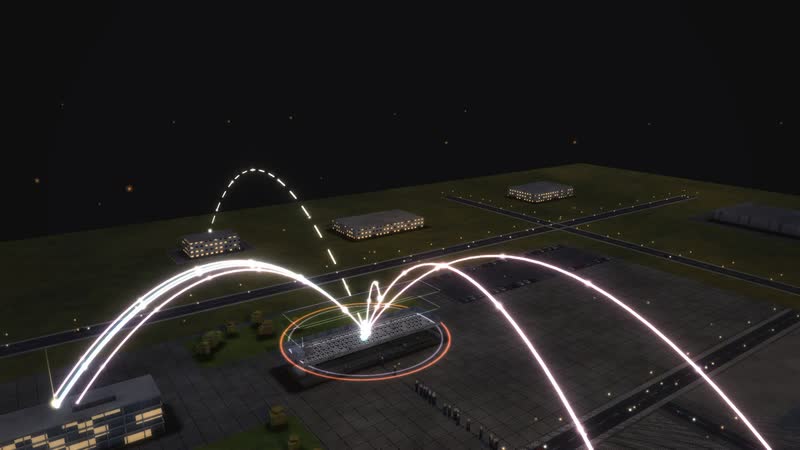
03
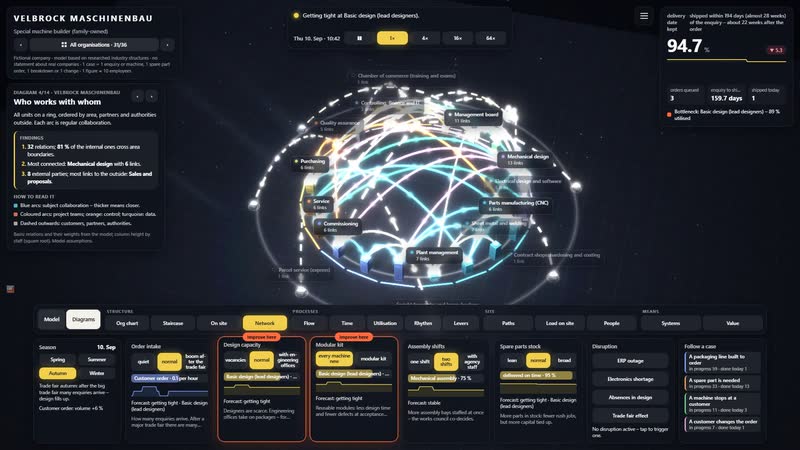
Who works with whom
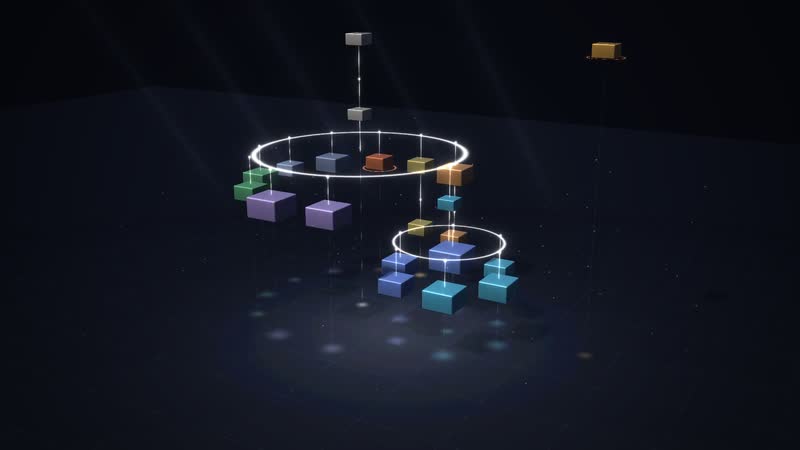
‘Mechanical design’ with all 6 relations: Sales and proposals, Project management, Electrical design and software, Production planning and Spare parts – and outside Engineering offices (design on contract).
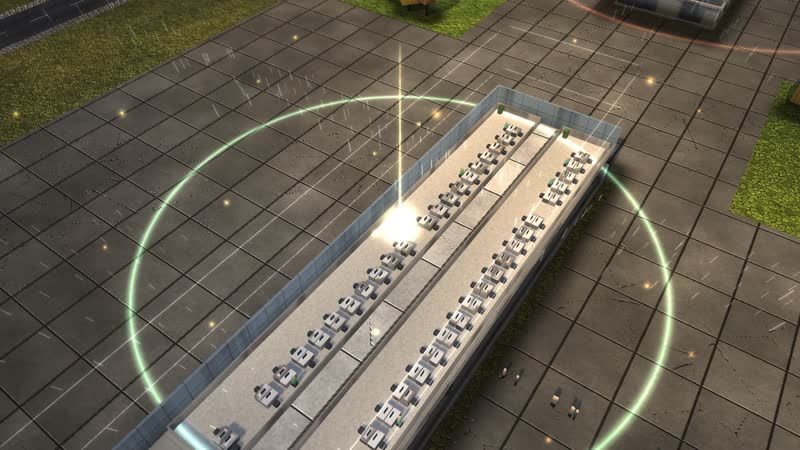
04
A packaging line built to order
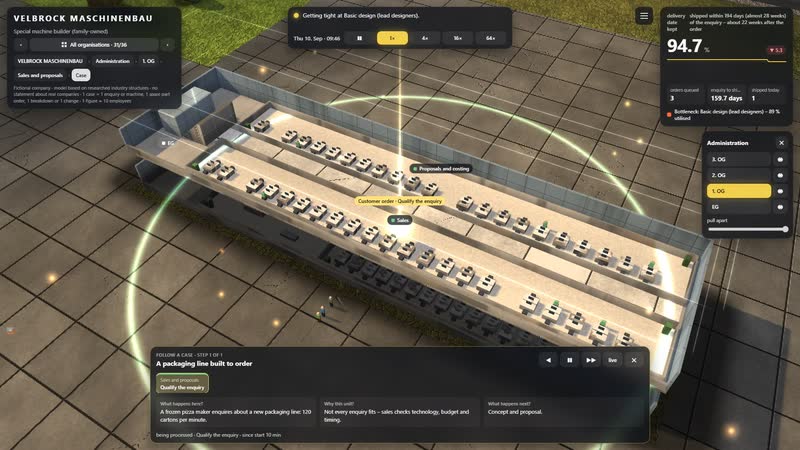
A single case can be followed – step by step, with the waiting time at every station. Target: shipped within 194 days (almost 28 weeks) of the enquiry – about 22 weeks after the order.
Films from the model
-
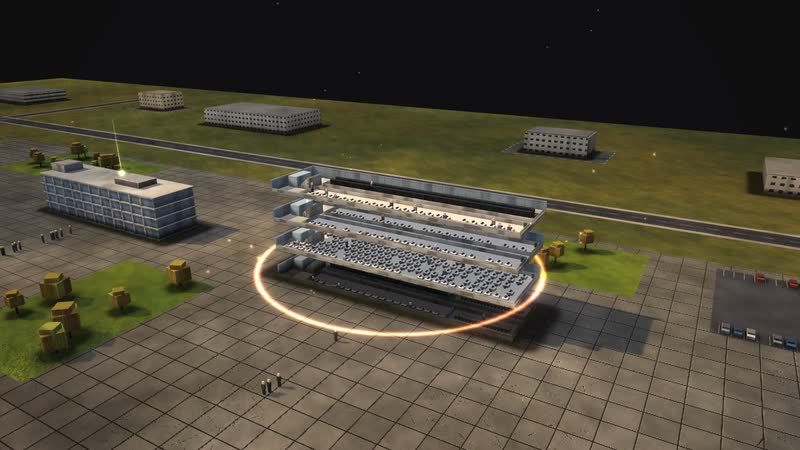
The building opens up
Just before sunset the floors drift apart – ‘Engineering’ opens up as the camera rises and circles the building until night falls.
-
Who reports to whom, who works with whom
Blue hour above the site: first the golden arcs of the structure, then the collaboration of the most connected department, finally the whole building.
-
A day in time-lapse
From ten in the morning to midnight in 26 seconds: the sun moves, the windows light up, at night the data lines glow.
-
Surge and system outage
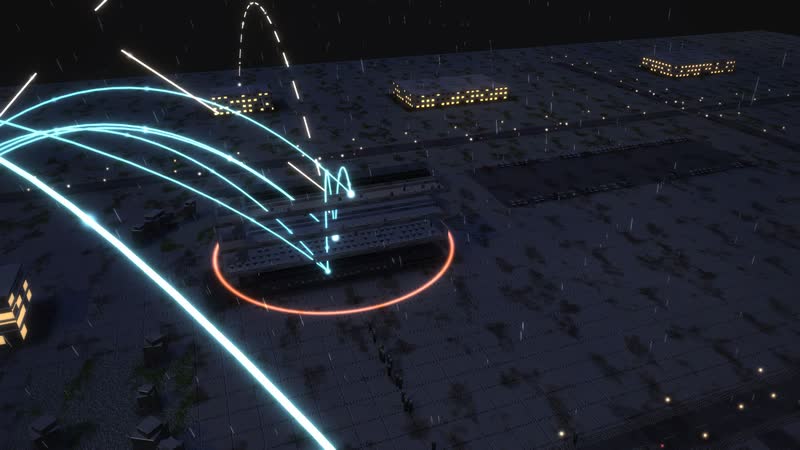
In time-lapse: ‘Trade fair effect’ brings more work, then ‘ERP outage’ – the data arcs turn red. The control ‘Design capacity’ set to ‘with engineering offices’ brings recovery.
-
Seven diagrams
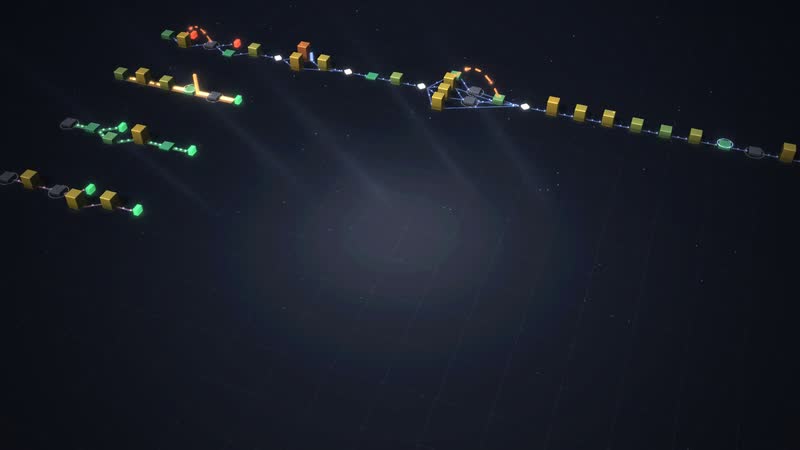
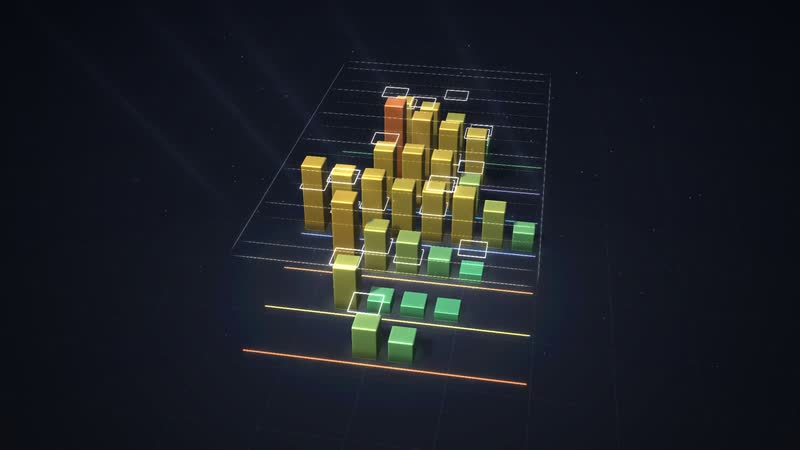
Calculated live from the model: ‘Who works with whom’, ‘Year, week, day’, ‘Management levels as a staircase’, ‘How a case flows’, ‘What each control does’, ‘What the work depends on’, ‘Where it gets tight’.
-
Using the software
With the full interface: open a building, a department’s relations, ‘Trade fair effect’, a control, diagrams with their panel, one case.
Departments in the model
-
Shareholders and advisory board
The family holds the shares in its third generation; an advisory board advises management and approves large investments.
-
Management board
Two managing directors: technical and commercial. One of them from the family.
-
Sales and proposals
Qualifies enquiries, drafts a concept with design and prices the proposal.
-
Project management
One project manager per order: specification, schedule, changes, contact with the customer up to acceptance.
-
Mechanical design
Designs every machine new or from modules – frame, conveying, tooling, guarding.
-
Electrical design and software
Wiring diagrams, safety technology and the PLC programs the machine will run on.
-
Plant management
Leads manufacturing, assembly and commissioning.
-
Production planning
Turns the bill of materials into work orders, NC programs and the assembly plan.
-
Purchasing
Orders bought-in parts – about two thirds of a machine's material value comes from suppliers.
-
Parts manufacturing (CNC)
Mills and turns individual parts on machining centres – often batch size one.
-
Sheet metal and welding
Laser cutting, bending and welding of frames, panels and guards.
-
Assembly
Builds the machine on fixed assembly bays under the crane – weeks per line.
-
Electrical assembly
Builds control cabinets and wires sensors, drives and safety equipment on the machine.
-
Commissioning
Loads the software, runs the machine in, holds acceptance with the customer and commissions it on site.
-
Quality assurance
Measuring room, checks of supplied parts and the CE documentation – reports directly to management, not to the plant manager.
-
Service
Hotline, remote support and technicians who travel worldwide to stopped machines.
-
Spare parts
Identifies the part, ships from stock or has it made urgently.
-
Logistics and shipping
Goods in, storage, crating and loading.
-
HR and apprenticeships
Hiring, shift plans and about 45 apprentices in the in-house training workshop.
-
Controlling, finance and IT
Post-calculation of every order, liquidity, down payments and IT.
-
Works council
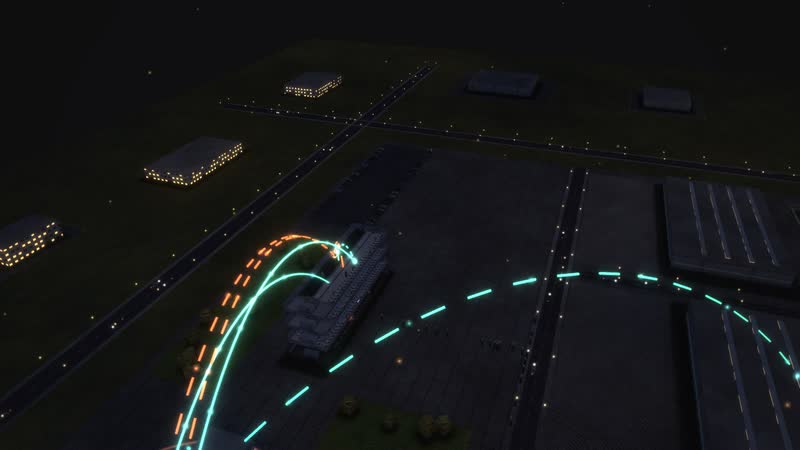
Elected by the employees: co-decides on shifts, overtime and agency work.
05
ERP outage
The data arcs turn red and work stalls – the simulation shows where cases pile up and how long recovery takes.
06
A day in 26 seconds
From ten in the morning to midnight in time-lapse: commuters, moving light, windows switching on – and at night the data lines.
All processes in the model
A packaging line built to order
- 01Qualify the enquiry: A frozen pizza maker enquires about a new packaging line: 120 cartons per minute.
- 02Declined.
- 03Concept and proposal: Sales engineers draft a layout with design and calculate hours and material.
- 04Customer compares proposals: The customer compares proposals from several machine builders.
- 05A competitor wins the order.
- 06Create the order in the ERP: The order is in: it is created in the ERP with down payment and delivery date.
- 07Kick-off and specification: Project management and customer write the specification: formats, output, interfaces.
- 08Mechanical and electrical design work at the same time.
- 09Basic design (lead designers): A lead designer fixes the machine concept: layout, drives, format change.
- 10Detail design and drawings: The team draws frame, format parts and guards in CAD – thousands of parts.
- 11Electrical design and PLC: Wiring diagram, safety concept and PLC program are created.
- 12Mechanical and electrical design are done.
- 13Release the bill of materials in PDM: The bill of materials is released in PDM and passed to the ERP.
- 14Production planning: Production planning schedules work orders and writes NC programs.
- 15Purchasing, parts manufacturing, sheet metal and cabinet building work at the same time.
- 16Order bought-in parts: Purchasing orders drives, controls, sensors and standard parts.
- 17Supplier lead time: Suppliers deliver – electronics often only after weeks.
- 18Mill and turn parts: Machining centres mill and turn the parts – often just one piece per drawing.
- 19Hardening at the contract shop: Wear parts go to a contract shop for hardening.
- 20Inspection in the measuring room: Quality assurance measures the fits.
A spare part is needed
- 01Identify the spare part: A customer orders a blade for the carton cutter – the machine is twelve years old.
- 02Rush job on the machine: Not in stock: parts manufacturing squeezes the part in between project parts.
- 03Pick the spare part: The store picks and packs the part.
- 04Parcel pick-up (5 pm): At 5 pm the parcel service collects.
- 05Delivery to the customer: The next day the part is at the customer.
- 06Delivered.
A machine stops at a customer
- 01Customer reports a stoppage: At three in the morning the line stops at the customer: fault at the carton erector.
- 02Hotline and remote diagnosis: The hotline connects to the controller remotely.
- 03Solved remotely.
- 04Dispatch a technician: Dispatch looks for a free technician with the right experience.
- 05Technician travels and repairs: The technician travels and repairs.
- 06Send the part by courier: The spare parts store sends the part by courier.
- 07Service report and invoice: Service report, hours and parts go to invoicing.
- 08The machine runs again.
A customer changes the order
- 01Customer requests a change: In the middle of assembly the customer wants an extra format: a larger pizza.
- 02Assess the change: cost and schedule: Project management assesses cost and schedule impact.
- 03Customer decides on the variation: The customer decides on price and new date.
- 04The contract stands.
- 05Change design: Design changes format parts and bill of materials.
- 06Implement the change in assembly: Assembly fits the changed parts.
- 07Change implemented.
How a machine builder can use the model
-
Internal communication
Administration, engineering, parts manufacturing, assembly hall, logistics centre and loading yard visible together. The collaboration view shows how sales, design, purchasing and assembly all hang on one order.
For whomManagement, works council, managers
-
Onboarding
New designers, fitters and project managers see what happens before and after their own step – from the enquiry to the signature on the site acceptance.
For whomNew staff in design, assembly and project management
-
Training
Apprentices follow a line through the plant and see what an electronics shortage or missing designers set off. ‘The path across the site’ shows manufacturing, assembly and loading.
For whomTraining managers, apprentices, work-study students
-
Explaining to customers
Why does a special machine take months? The model shows customers the whole order, where the 28 weeks go and what factory (FAT) and site acceptance (SAT) mean.
For whomSales, project managers, customers
-
Strategic overview
Engineering offices, modular kit, assembly shifts, spare parts stock: the model compares the levers for lead time. The trade fair effect shows when design capacity fills up.
For whomOwner family, advisory board, management
07
Diagrams from the model
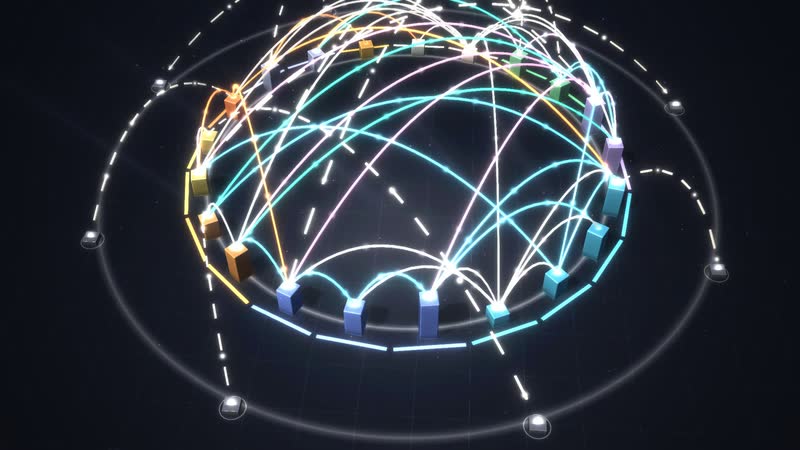
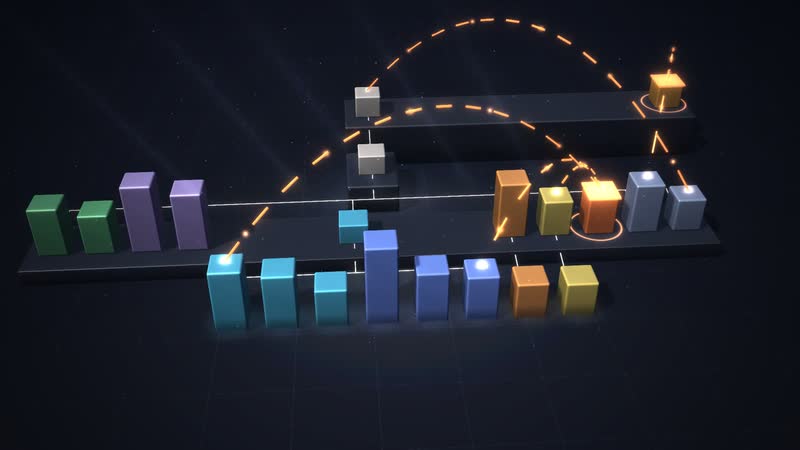
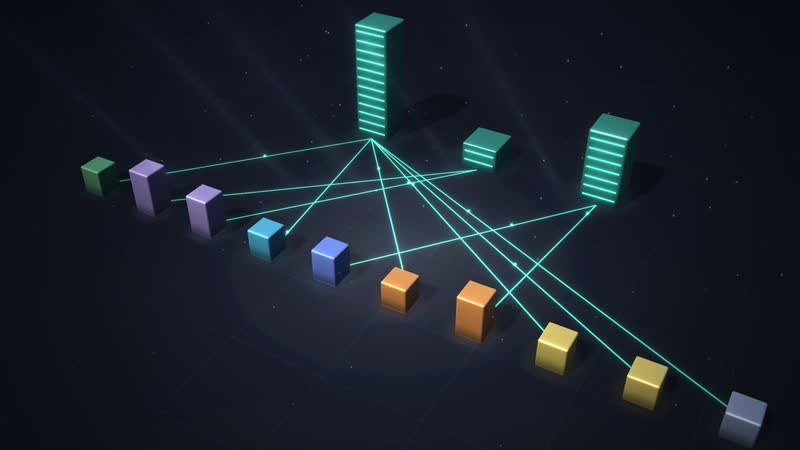
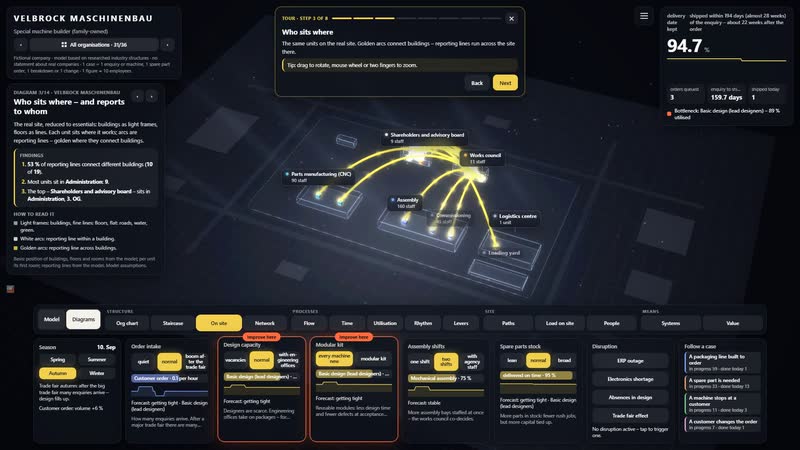
‘Who works with whom’ as a dome of arcs – one of 14 diagrams calculated live from the same data.
08
The whole software
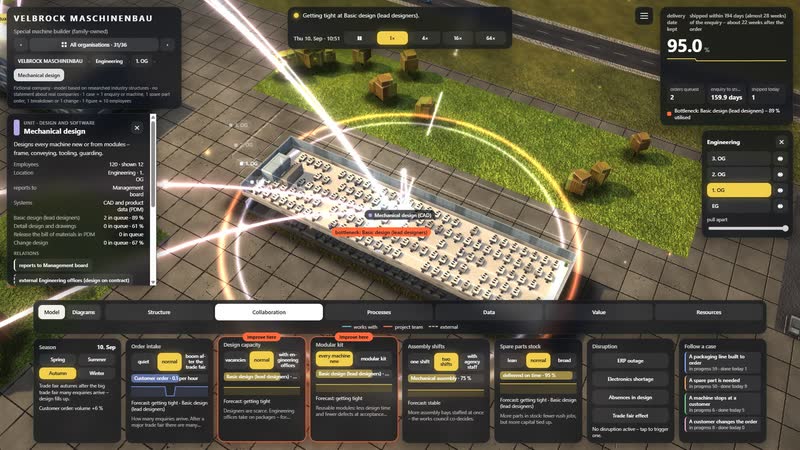
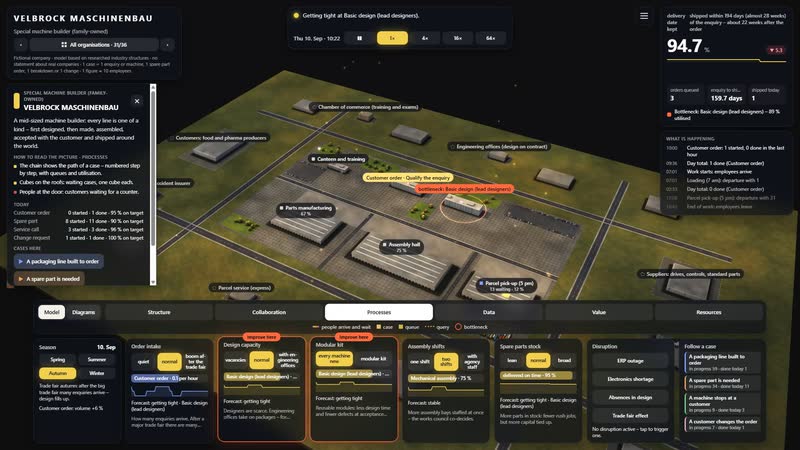
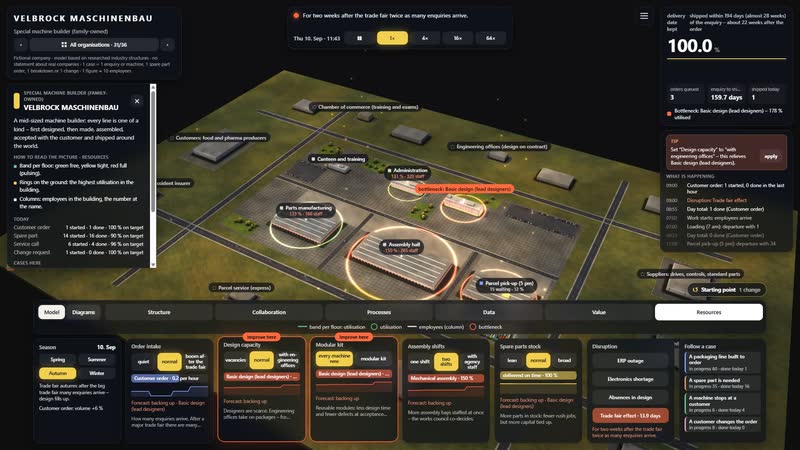
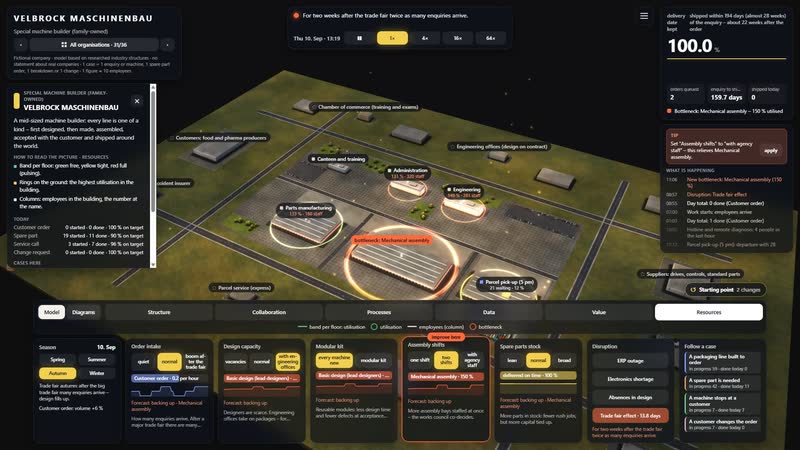
Situation, key figure, time-lapse, six views, controls and disruptions: one click on a department shows its task, location and all relations.
What you can change
Controls
- Order intake: How many enquiries arrive. After a major trade fair there are many more.
- Design capacity: Designers are scarce. Engineering offices take on packages – for money and with coordination effort.
- Modular kit: Reusable modules: less design time and fewer defects at acceptance (model assumption).
- Assembly shifts: More assembly bays staffed at once – the works council co-decides.
- Spare parts stock: More parts in stock: fewer rush jobs, but more capital tied up.
Disruptions
- ERP outage: Four hours without ERP: no orders are created, no spare part is found.
- Electronics shortage: For two months controls and drives take almost twice as long – assembly waits for parts.
- Absences in design: For a month a quarter of the designers are missing – flu wave and resignations.
- Trade fair effect: For two weeks after the trade fair twice as many enquiries arrive.
What a machine builder gets out of it
-
01
A plant you can walk through
Seven buildings from engineering to the loading yard, every hall and floor can be opened. An order travels as a point of light from station to station.
-
02
Parallel work made visible
Mechanical and electrical design, purchasing, manufacturing and cabinet building run at the same time in the simulation. If a part is missing, assembly waits – and you can see it.
-
03
Relieve design – in the model
Five controls and four disruptions, from the modular kit to an ERP outage. A hint at the bottleneck names the control that helps and sets it at the press of a button.
-
04
Diagrams in step with the simulation
14 diagrams in four groups calculate live – for example how much of the lead time goes to design and suppliers.
-
05
For trade fair, customer meeting and shop floor
The model needs nothing but a browser and also holds up on large projections. A guided tour in eight steps explains it the first time you open it.
-
06
Designed, not configured
Created by an artist and developer. An overview shows 35 more organisations, including a car maker, a chemicals group and a chip maker.
-
VELBROCK MASCHINENBAU in the morning – low sun, long shadows, the first commuters on their way in. -
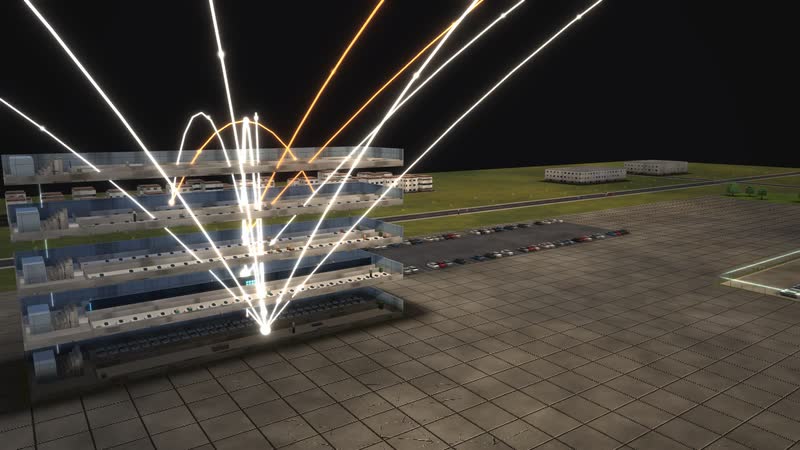
Engineering in evening light – golden arcs show who reports to whom. -
Just before eight – people stream from the car park and the street into the buildings. -
Blue hour – the windows of VELBROCK MASCHINENBAU light up. -
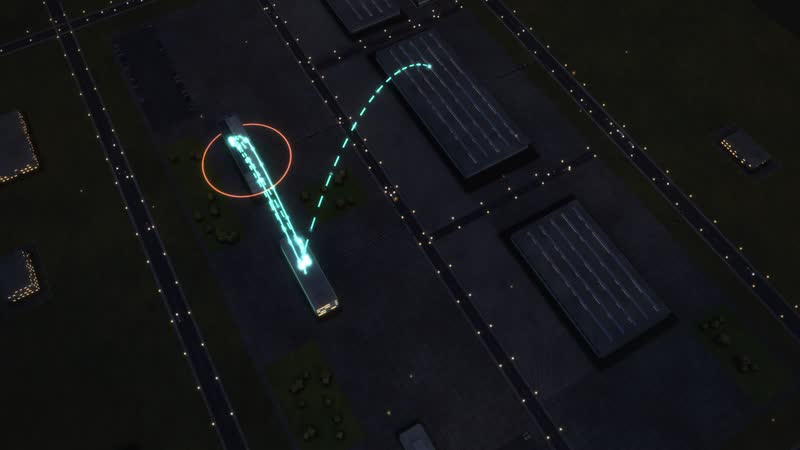
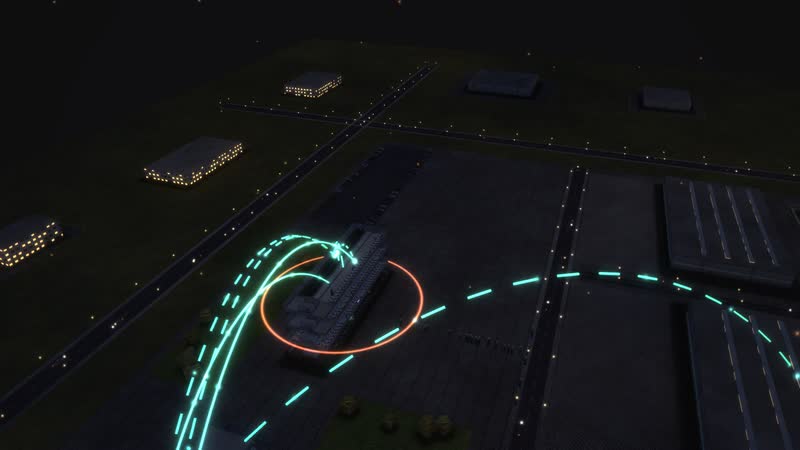
At night from above – Engineering opened up, data lines glowing across the site. -
Engineering opened up – every floor with workplaces and people. -
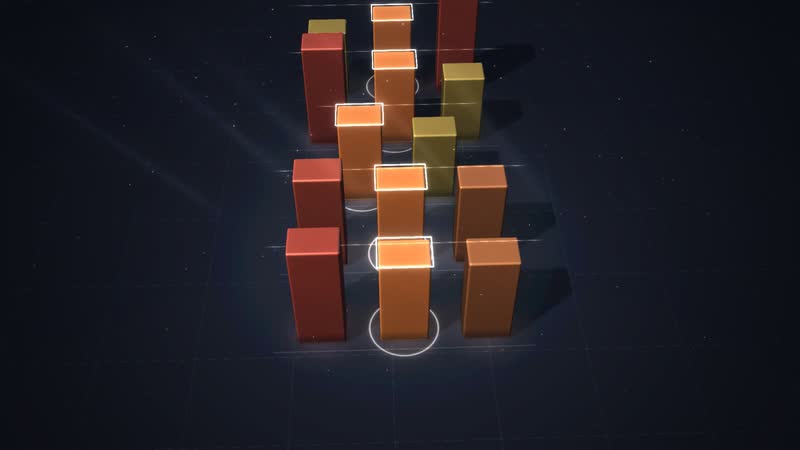
Dusk, performance view – rings of light show how busy each department is. -
Looking into the floor of Mechanical design – rows of desks, the floors above as outlines of light. -
A room of its own – Works council. -
Administration opened up – every floor with workplaces and people. -
Canteen and training – all floors at once, performance view. -
Structure at dusk – golden arcs from every floor to the buildings reporting to it. -
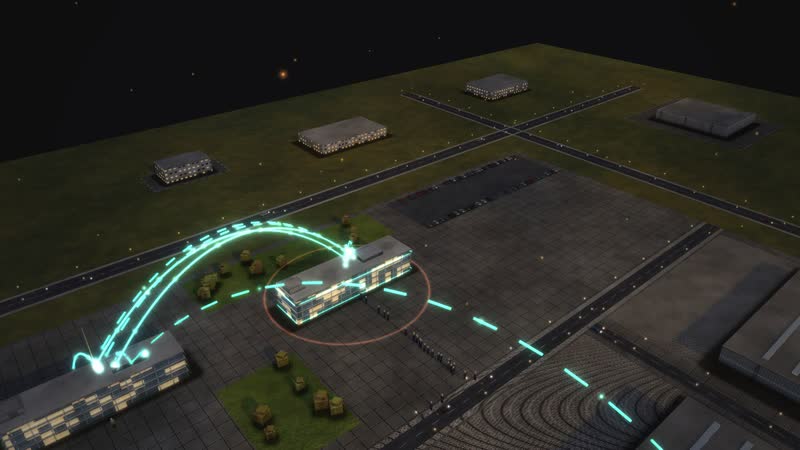
Collaboration – Mechanical design with all 6 relations – to departments, buildings and partners. -
Data flows at night – systems and users linked by glowing lines. -
Data flows at dusk – which department uses which system. -
Structure across the whole site – reporting lines between the buildings. -
The whole network at night – collaboration inside and far beyond. -
Every step labelled – name, how many are waiting, utilisation. -
Following one case – ‘A packaging line built to order’ – step by step through the building. -
Trade fair effect – resources view, the backlog grows floor by floor. -
ERP outage – the data arcs turn red, work stalls. -
The lever – Design capacity set to ‘with engineering offices’ – a flash shows where it acts. -
Spring at VELBROCK MASCHINENBAU – Engineering opened up, rings show the workload. -
Summer evening – warm light, long shadows, golden arcs above the square. -
Autumn – leaves on the paths, performance view. -
Winter evening – snow on the site, Engineering open and lit, collaboration glowing. -
Diagram ‘Who works with whom’, calculated live from the model. -
Diagram ‘Year, week, day’, calculated live from the model. -
Diagram ‘Management levels as a staircase’, calculated live from the model. -
Diagram ‘How a case flows’, calculated live from the model. -
Diagram ‘What each control does’, calculated live from the model. -
Diagram ‘What the work depends on’, calculated live from the model. -
Diagram ‘Where it gets tight’, calculated live from the model. -
Diagram ‘Who leads whom’, calculated live from the model. -
The whole software – situation, key figure, time, views and the controls below. -
Engineering selected – floor list on the right, the floors drift apart. -
Mechanical design – card with task, location and all relations. -
Trade fair effect triggered – timeline, key figure and bottleneck react. -
Countering – Design capacity increased – the tile shows the effect since the change. -
Diagram ‘How a case flows’ with its panel – findings in sentences. -
Diagram ‘Who works with whom’ with its panel. -
Follow a case – step, waiting time and target on the card. -
The tour leads through the software in eight steps. -
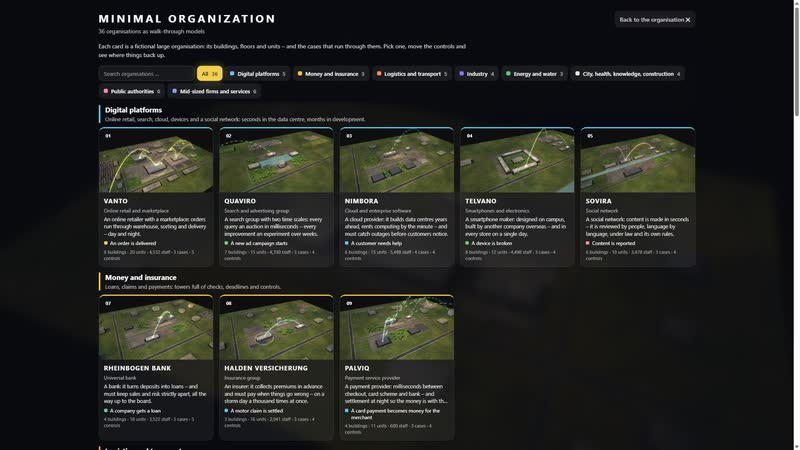
36 organisations to choose from, each with its own picture.

Your plant as a model
Would you like to see your own orders, departments and lead times like this? Contact us by email or phone. We will work out which data from ERP and design make sense. Starting the simulation takes a password, which we send on request.
cube4tec.de/spiele/minimal-organization/
Ask about this
Minimal Organization: Sondermaschinenbau
Basis and limits
Fictional company · model based on researched industry structures · no statement about real companies
1 case = 1 enquiry or machine, 1 spare part order, 1 breakdown or 1 change · 1 figure ≈ 10 employees
All volumes, durations, rates and capacities are model assumptions, not values of a real company.
Stations work every day in the model; weekends only affect the volume of cases, summer plant holidays act as slower design and assembly.
Documented: CE marking and declaration of conformity by the manufacturer, acceptance in the plant (FAT) and at the customer (SAT) as usual project steps, co-determination on shifts.
Public sources the model is based on:
- VDMA – Verband Deutscher Maschinen- und Anlagenbau
- VDMA Fachverband Nahrungsmittel- und Verpackungsmaschinen
- Destatis: Auftragsbestand im Verarbeitenden Gewerbe
- Maschinenverordnung (EU) 2023/1230
- Maschinenrichtlinie 2006/42/EG
- DIN EN ISO 12100 (Risikobeurteilung) und DIN EN 60204-1 (elektrische Ausrüstung)
- Berufsbildungsgesetz (BBiG)
- Betriebsverfassungsgesetz § 87
Similar business models
-
Car manufacturer
A car plant as a walkable model: follow an ordered car through the fixed build sequence and see what happens when the paint shop stops.
-
Construction group
A construction and infrastructure group as a walkable model: see how a viaduct is built section by section and where frost, inspections and variations cost time.
-
Chemical group with integrated site
A chemical site as a walkable model: see how a polyethylene order runs through the integrated site and which plants stall when the cracker trips.
-
Semiconductor manufacturer
A chip fab as a walkable model: see where a wafer lot spends its weeks and why lithography sets the pace for the whole fab.
-
Heating, plumbing and electrical contractor
A heating, plumbing and electrical contractor as a walkable model: what happens after a breakdown call, why the right part in the van matters and when the emergency service hits its limit.
-
Pharmaceutical company
A pharmaceutical plant as a walkable model: follow a batch from the cleanroom to certification by the qualified person and see where the four weeks go.
-
Industrial bakery
An industrial bakery with 120 shops as a walkable model: how rolls get from the night plan to the counter by 6 am and where oven, proofer or routes hold them up.
-
Housing company
A municipal housing company as a walkable model: what happens after a tenant reports a cold radiator, who repairs it and what speeds up the fix.
All data are fictional, including lead times and hours. The model can be adapted to your company's real data and filled with information that no report brings together today – for example project status from the ERP, or supplier lead times.