
Simulation · Minimal Organization · Public authorities
Health insurer
A statutory health insurer as a walkable model: how a wheelchair application moves from quote to decision, when the medical service steps in and where deadlines get tight.
Trailer
All data are fictional and the deadlines simplified. The model can be adapted to your insurer's real data and filled with what is not visible anywhere today – for example deadline compliance per month, or turnaround times of medical service assessments.
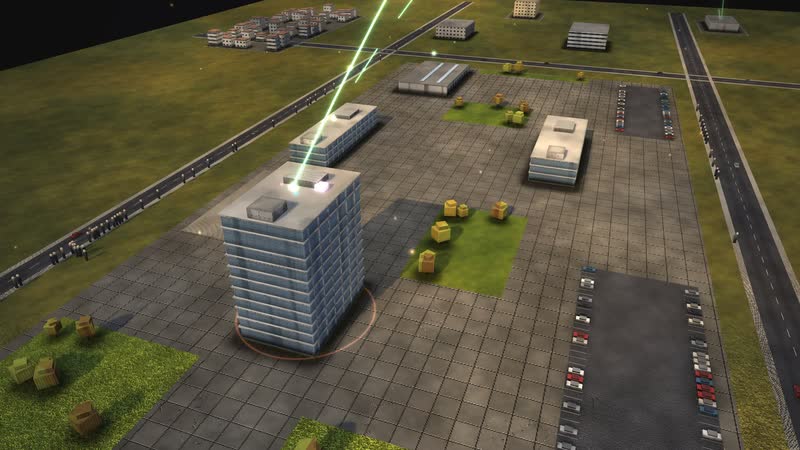
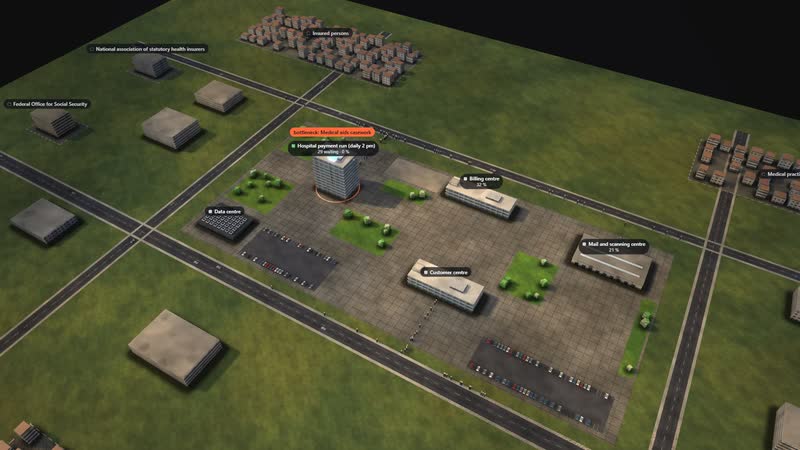
This health insurance process simulation shows the fictional BRENVIA KRANKENKASSE, a German statutory health insurer with six buildings and 20 departments. Insured people and employers govern it themselves, the law sets the deadlines – and between application and wheelchair stand casework, assessment and the medical supply store.
After a stroke, the GP prescribes a wheelchair; the supply store measures and sends a quote. If it arrives electronically and matches the contract, the system approves it at once. Otherwise a caseworker checks entitlement, contract and price, queries the supplier or calls in the medical service. Target: decided within three weeks, or within five weeks if the medical service reviews and the insured person is told in time. The statutory deadlines are simplified in the model.
Sickness benefit after six weeks of illness, payment and review of hospital bills, and objections up to the objections committee run alongside. The page is written for executive and administrative boards, division and team leaders, HR development and trainers.
A wheelchair is applied for
- 01
Supplier sends prescription and quote: After a stroke the GP prescribes a wheelchair; the supply store measures and sends the quote.
- 02
Electronic quote: automatic check: The electronic quote is checked against the contract and the medical aids directory.
- 03
Mail intake: scan and assign: Paper arrives at the scanning centre and is filed to the record.
- 04
Local office: hand in and get advice: The husband hands in the application at the local office and gets advice.
- 05
Medical aids casework: The clerk checks entitlement, contract and price – and whether a cheaper model suffices.
- 06
Query to supplier or practice: Query: the seat width is missing from the quote.
- 07
Notice: the medical service reviews: The insurer notifies: the medical service reviews, the deadline extends to five weeks.
- 08
Medical service assessment: The medical service assesses whether the wheelchair is necessary and suitable.
- 09
Decision after the assessment: With the assessment the insurer decides.
- 10
Notice and approval: Notice to the insured, approval to the supply store.
- 11
Supplier delivers and fits: The supply store delivers the wheelchair and adjusts it.
- 12
Billing with the supplier: The supply store bills the insurer electronically.
- 13
Supplied.
- 14
Refusal with notice of appeal rights: Refusal with reasons and notice of appeal rights.
- 15
Refused.
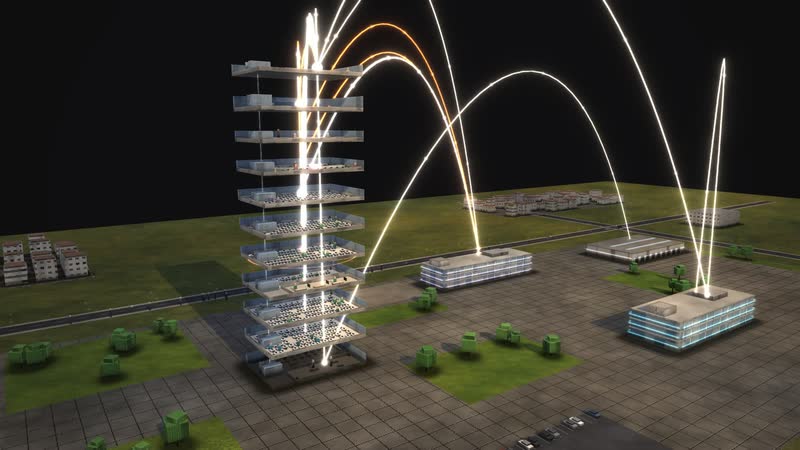
01
A site at work
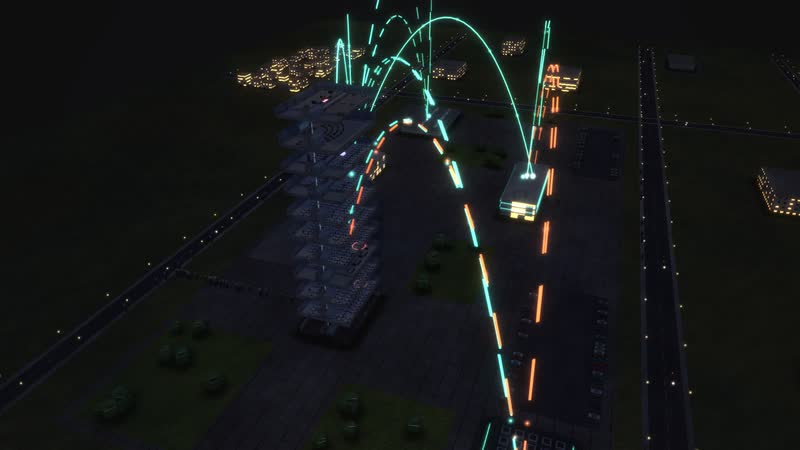
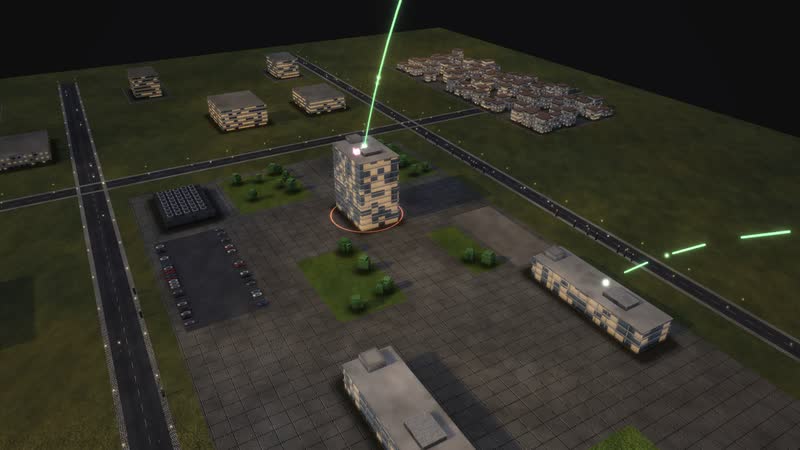
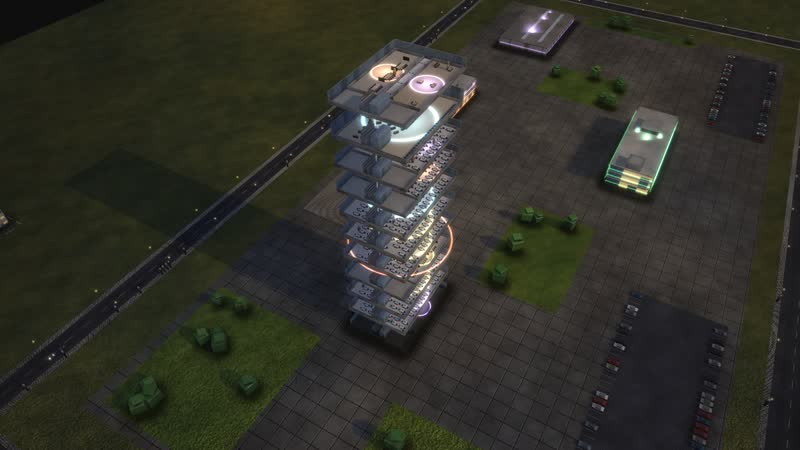
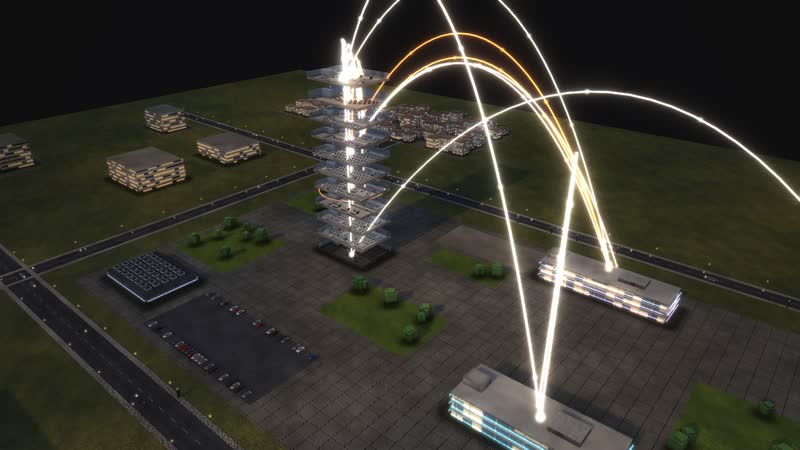
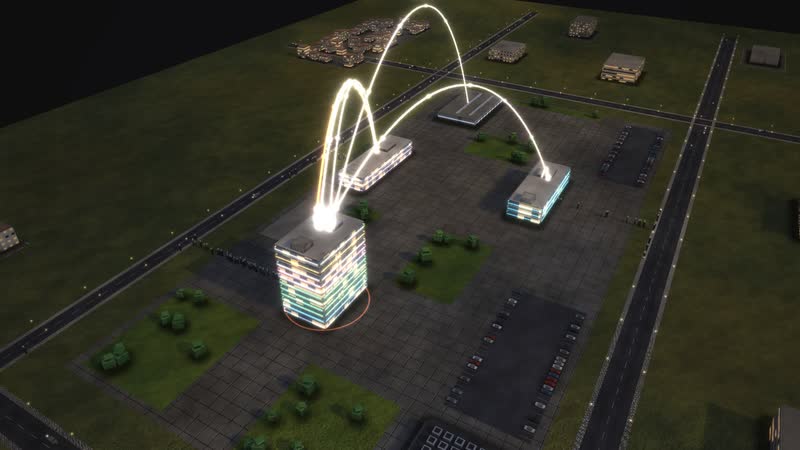
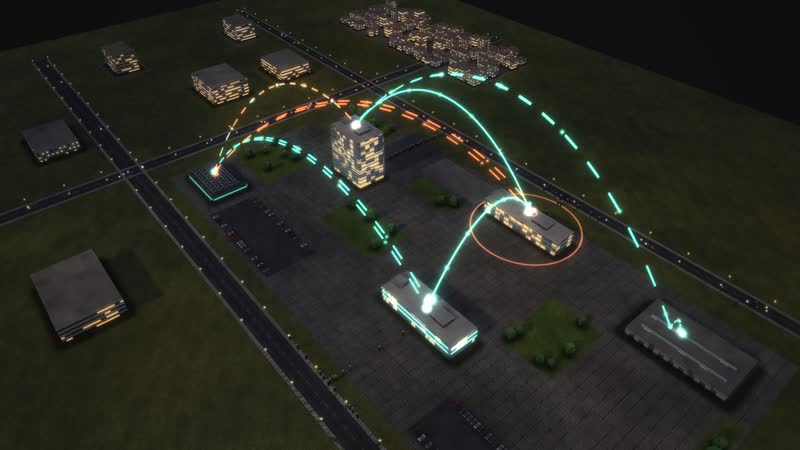
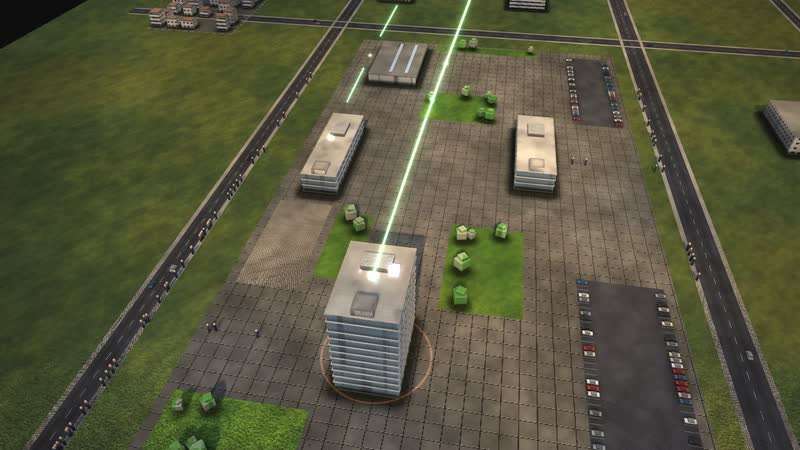
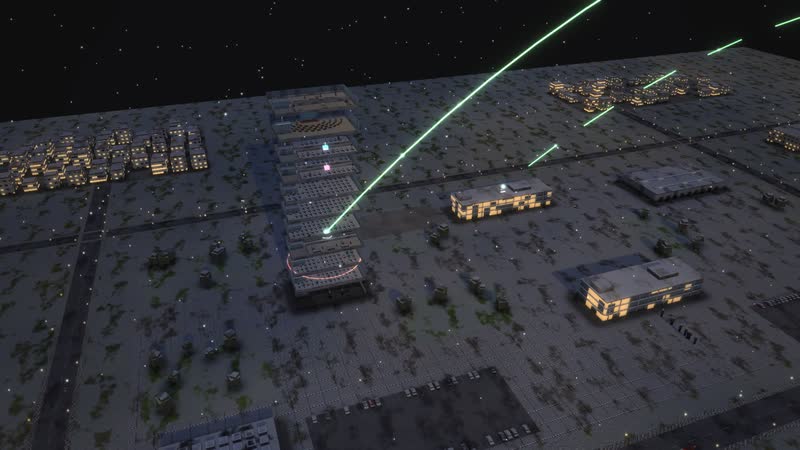
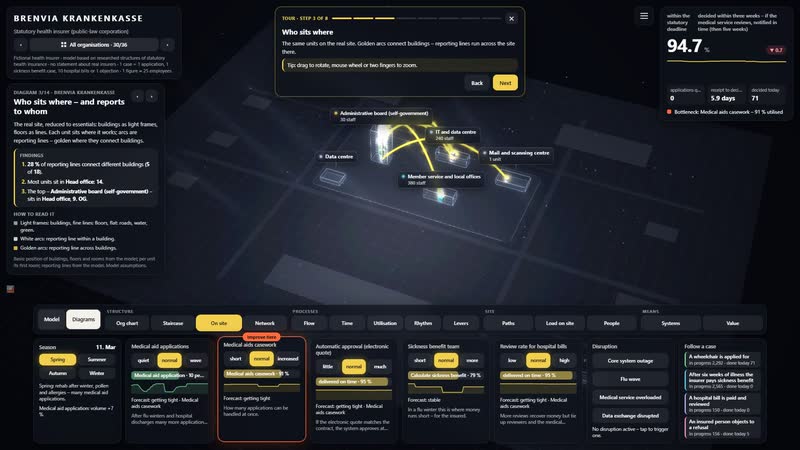
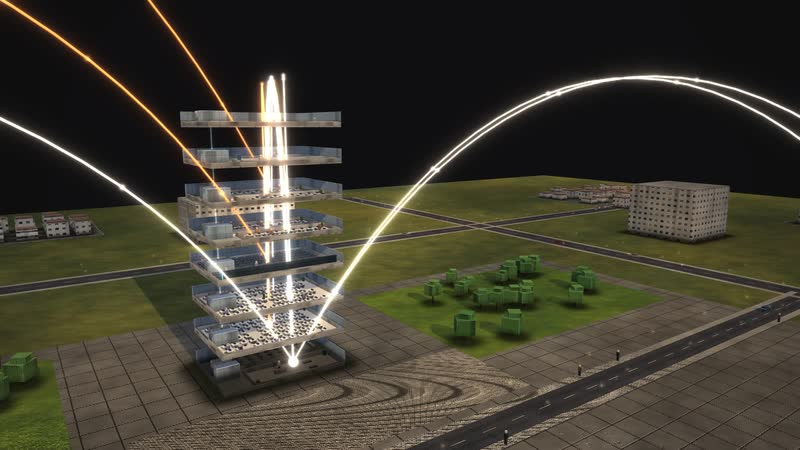
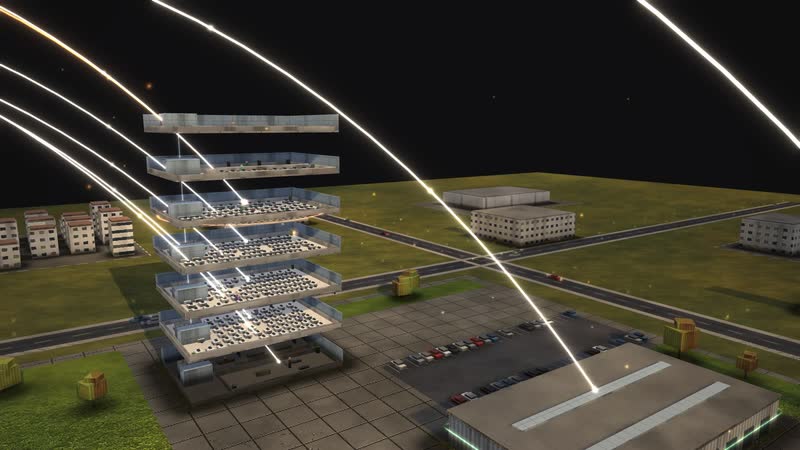
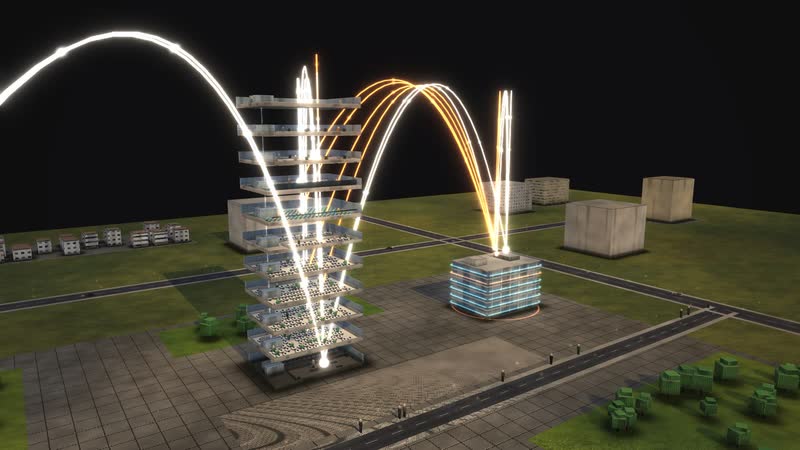
Six buildings, 20 departments, about 2,400 staff: in the evening light golden arcs show who reports to whom – from the head-office tower to the other buildings.
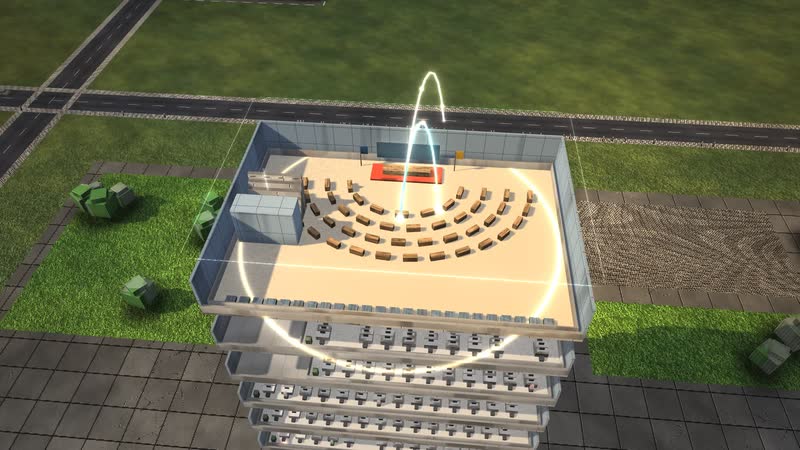
02
Every floor opened up
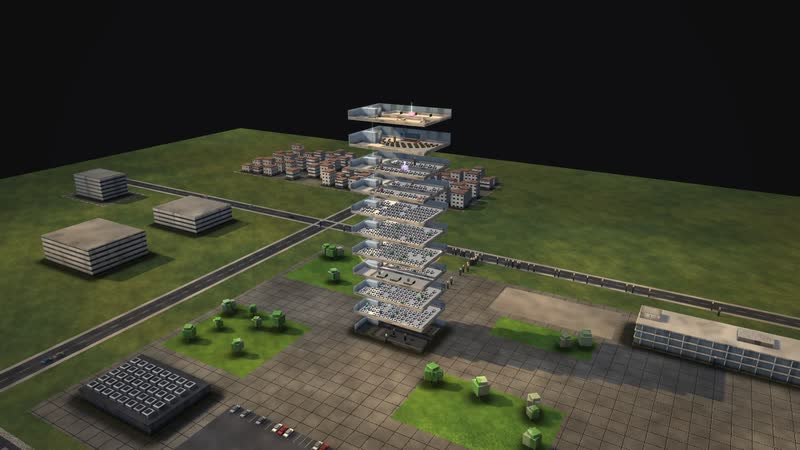
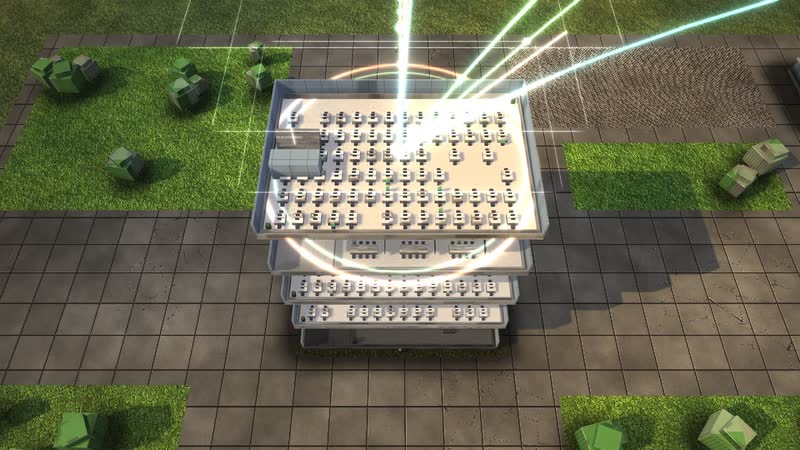
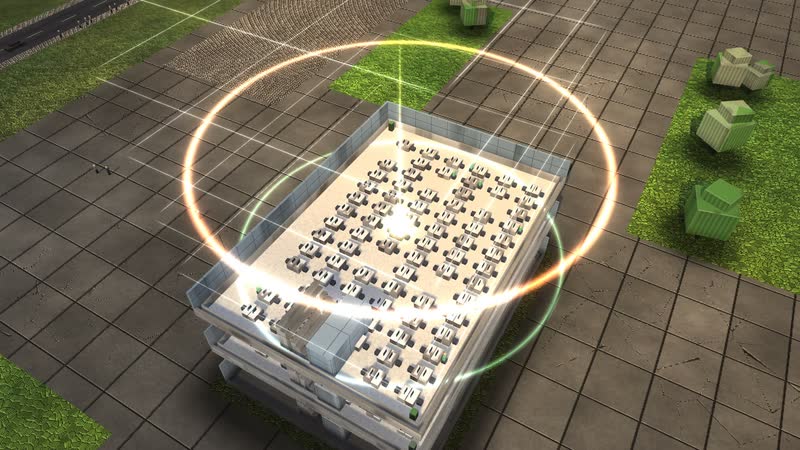
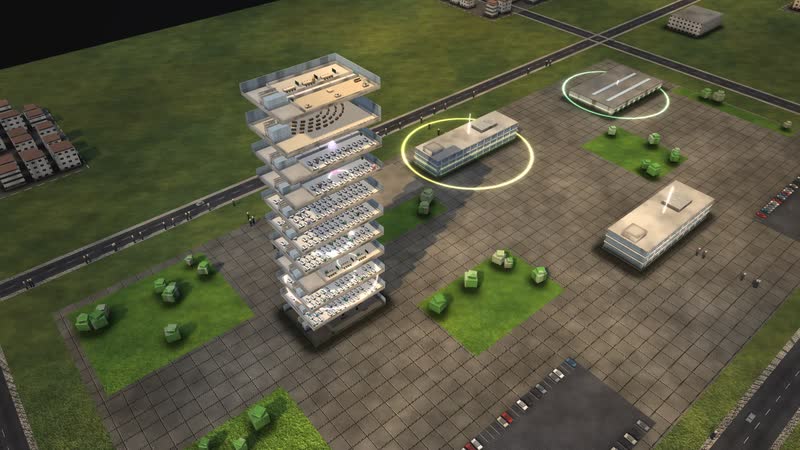
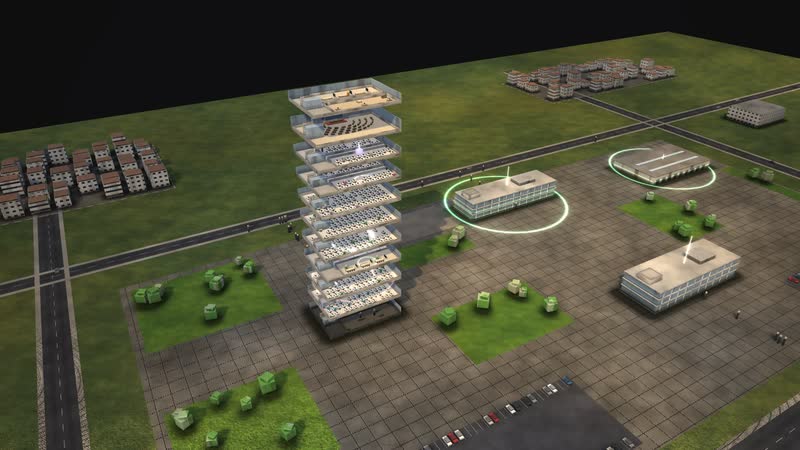
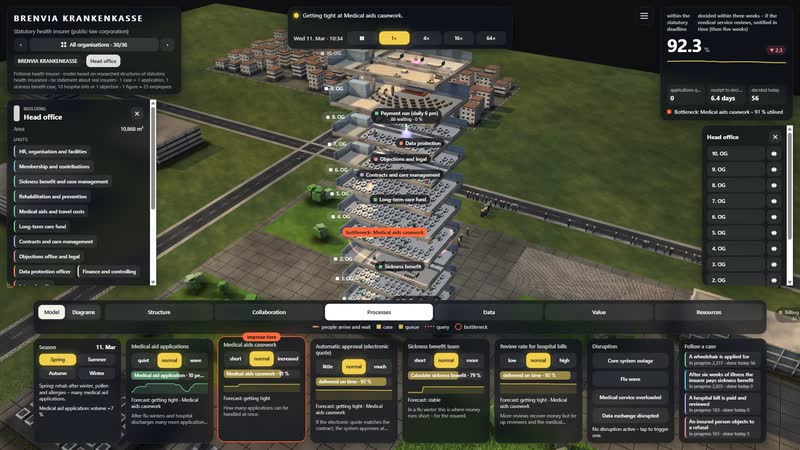
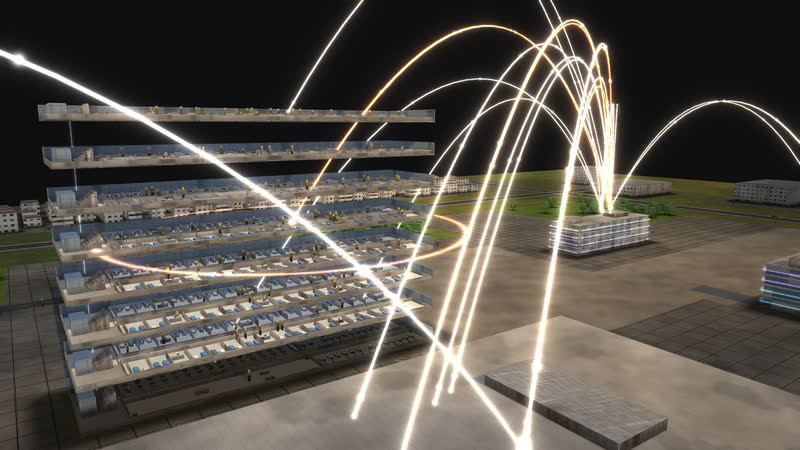
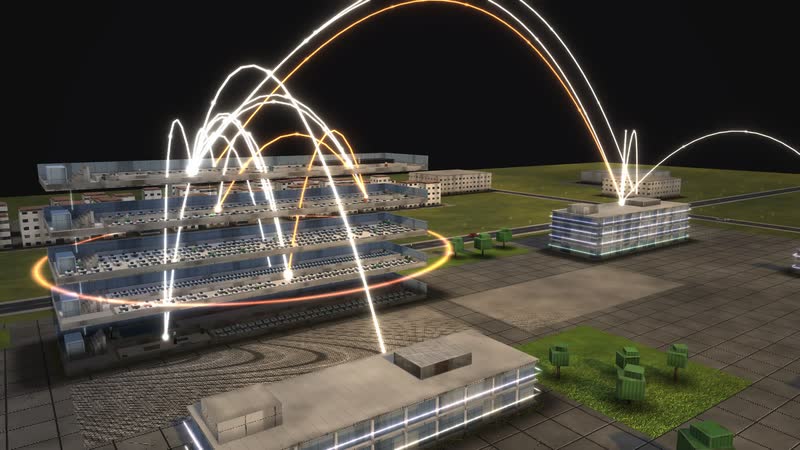
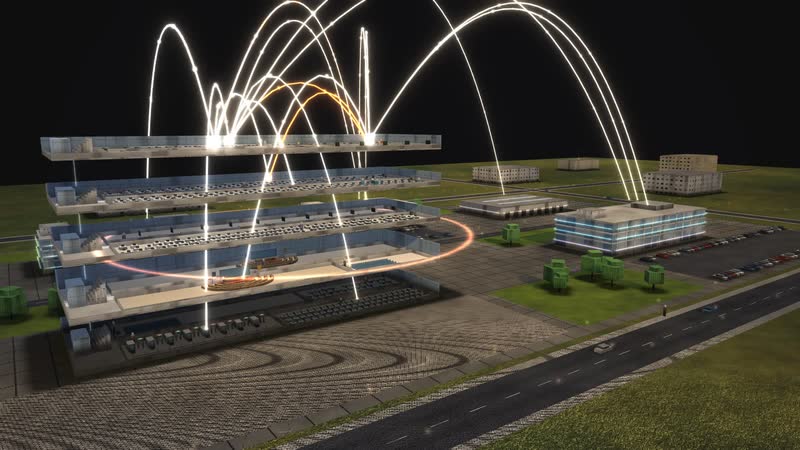
The head office opens floor by floor – right into the self-governance assembly hall, with rows of desks, meeting rooms and people at work below.
What is shown – why – for whom
| What is shown | Why | For whom |
|---|---|---|
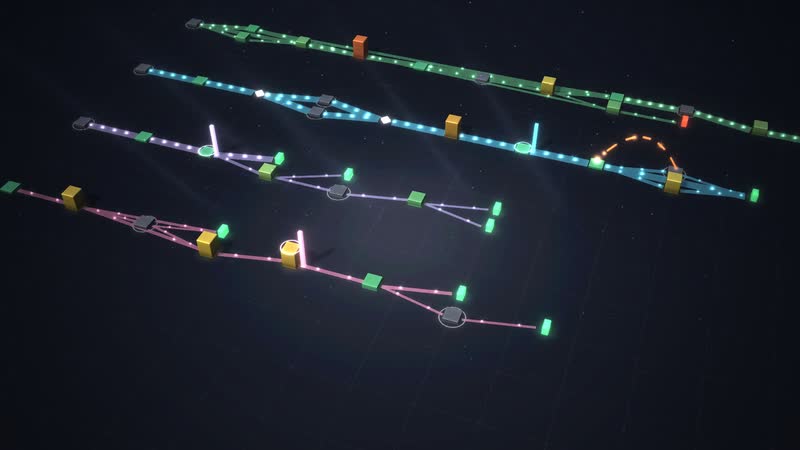
| ‘How a case flows’ diagram: automatic, casework, medical review | WhyShows the paths of a medical aid application. | For whomExecutive board, benefits division |
| ‘Where the time goes’ diagram: waiting for the medical service | WhyShows when the deadline gets tight. | For whomMedical aids team lead |
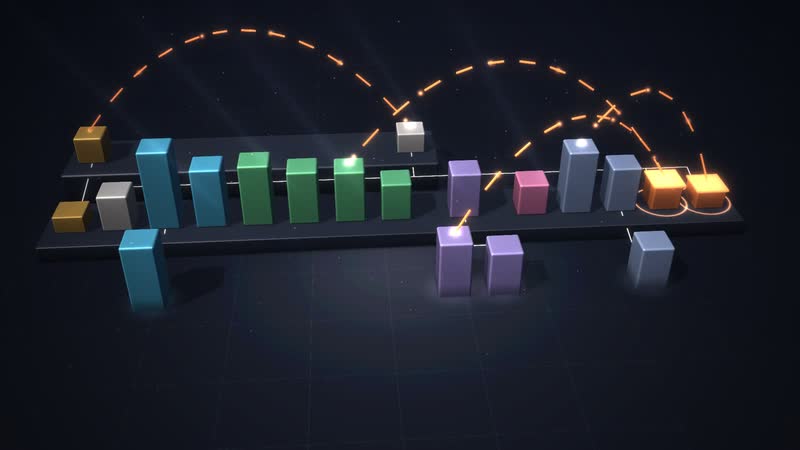
| ‘What each control does’ diagram: electronic quote, casework, sickness benefit team, review rate | WhyRanks levers for deadlines and costs. | For whomExecutive board, administrative board |
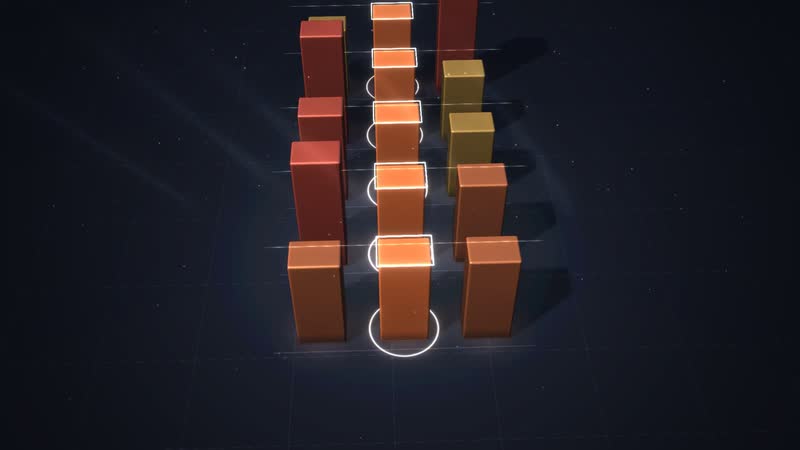
| ‘Where it gets tight’ diagram during a flu wave | WhyShows sickness benefit and staff under pressure at the same time. | For whomWorkforce planning |
| ‘Who leads whom’ diagram: administrative board, executive board, divisions | WhyExplains self-government. | For whomTraining, representatives of the insured |
| Backlog per team (resources view) | WhyShows where applications wait. | For whomTeam leaders |
| Process ‘A hospital bill is paid and reviewed’ | WhyShows payment before review. | For whomBilling, hospitals |
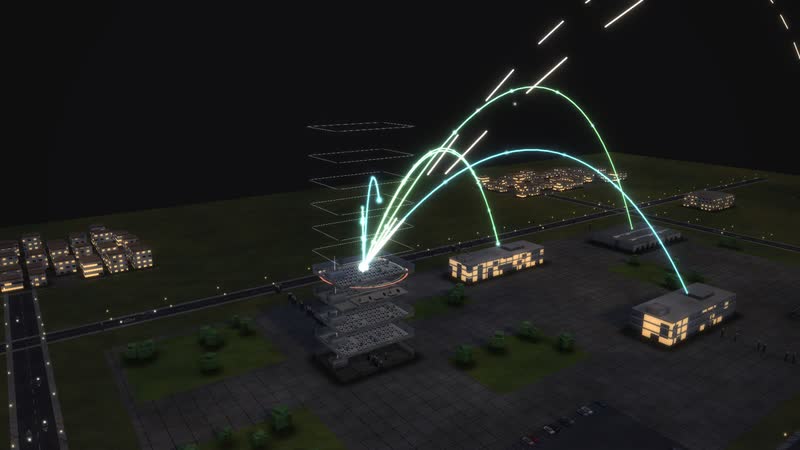
03
Who works with whom
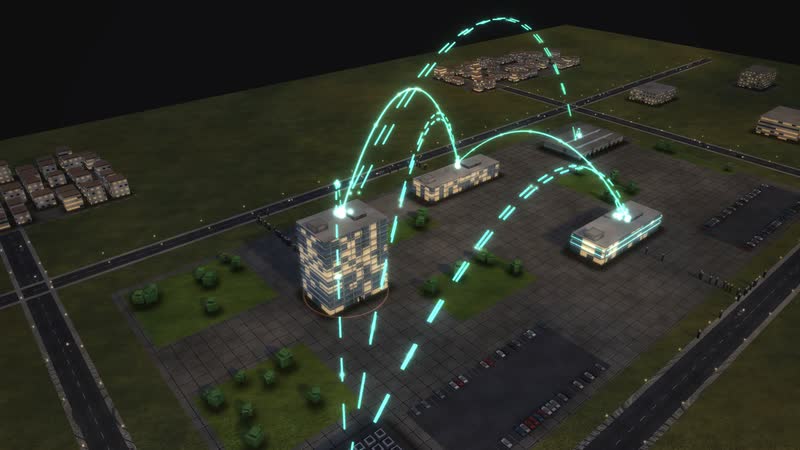
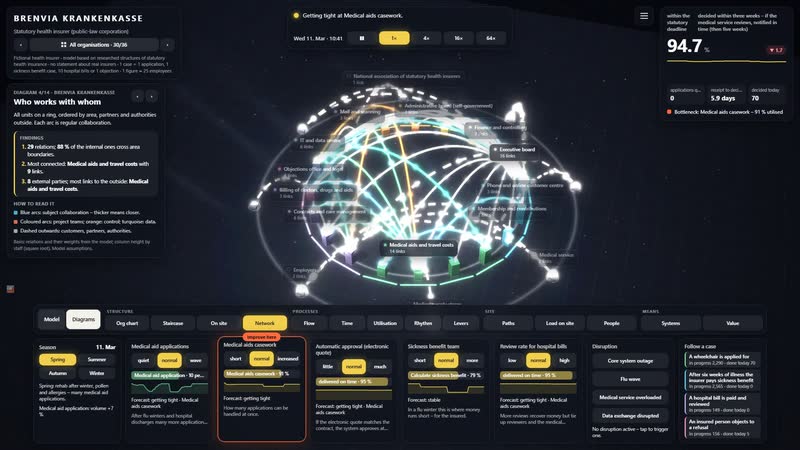
The medical aids and travel costs department with all nine relations: mail intake, customer centre, long-term care, contracts, billing, objections office, audit – and outside the medical service and supply stores.
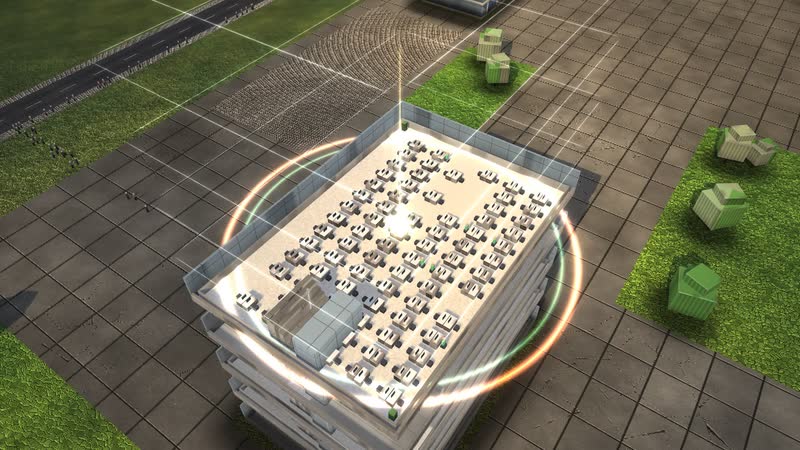
04
A wheelchair is applied for
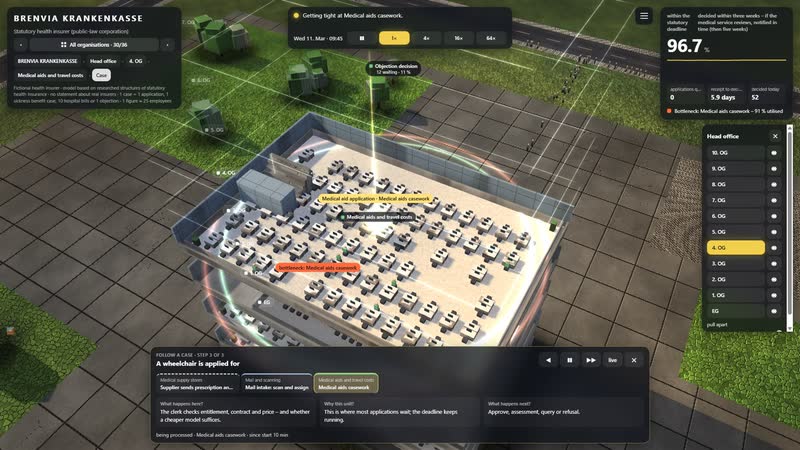
A single application can be followed – from the quote through casework to the decision, with the waiting time at every station.
Films from the model
-
The tower opens up
Just before sunset the floors of the head office drift apart as the camera rises and circles the building until night falls.
-
Who reports to whom, who works with whom
Blue hour above the site: first the golden arcs of the structure, then the collaboration of the most connected department, finally the whole building.
-
A day in time-lapse
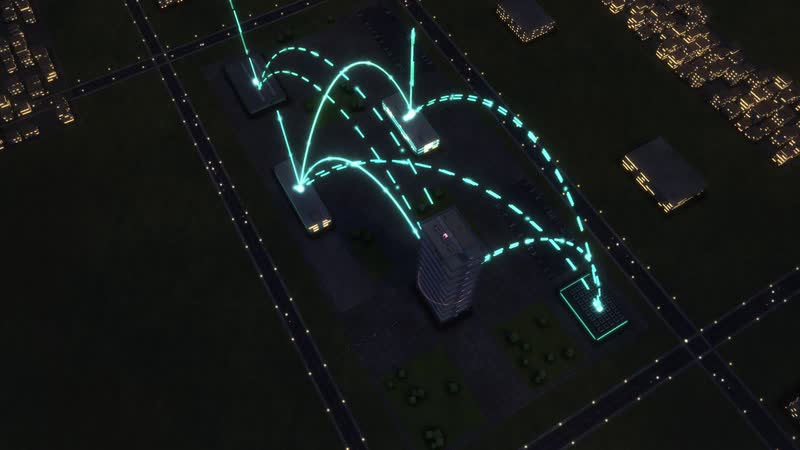
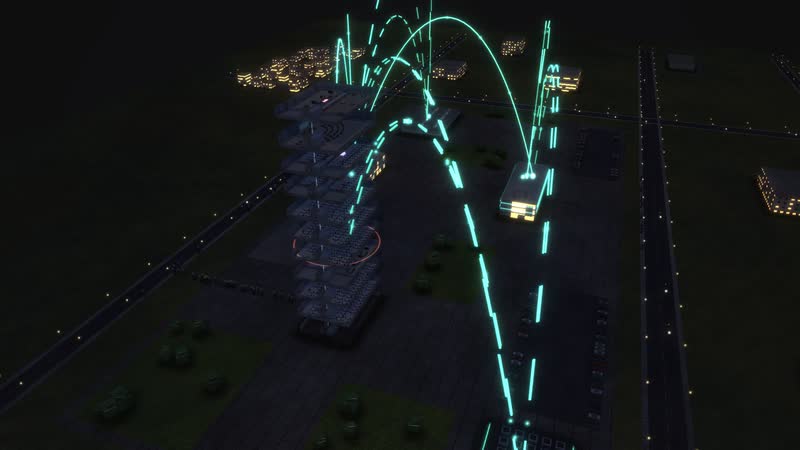
From ten in the morning to midnight in 26 seconds: the sun moves, the windows light up, at night the data lines glow.
-
Surge and system outage
In time-lapse: the flu wave brings more applications, the core system fails and the data arcs turn red – more staff at the bottleneck brings recovery.
-
Seven diagrams
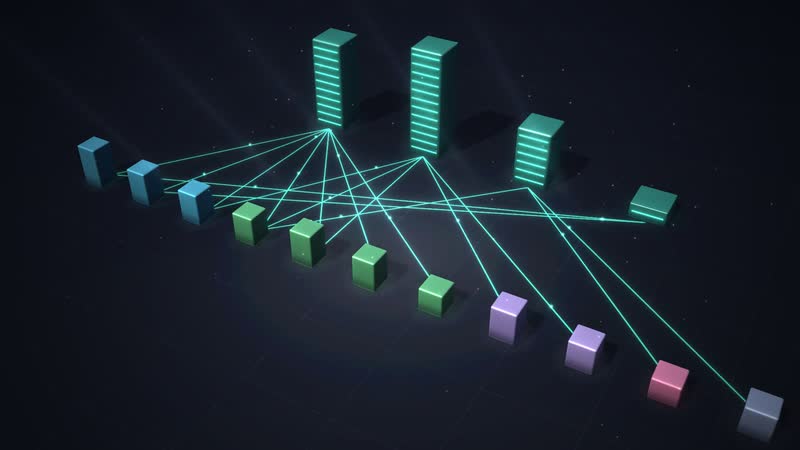
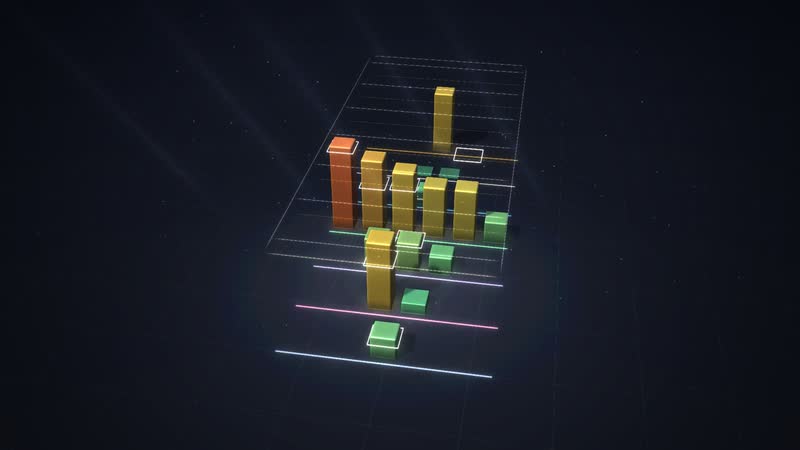
Calculated live from the model: ‘Who works with whom’, ‘Year, week, day’, ‘Management levels as a staircase’, ‘How a case flows’, ‘What each control does’, ‘What the work depends on’, ‘Where it gets tight’.
-
Using the software
With the full interface: open a building, a department’s relations, flu wave, a control, diagrams with their panel, one case.
Departments in the model
-
Administrative board (self-government)
Elected in the social elections, insured and employers: adopts statutes and budget, elects and supervises the executive board.
-
Objections committee
Volunteers from self-government decide on objections.
-
Executive board
Full-time, runs the insurer and represents it.
-
Internal audit
Independently audits processes, payments and contracts.
-
Data protection officer
Free of instructions: watches over health data.
-
Finance and controlling
Budget, allocations from the health fund, payment runs.
-
HR, organisation and facilities
Posts, training, building and canteen.
-
IT and data centre
Member and benefits system, data exchange, app.
-
Mail and scanning
Scans every letter and files it to the electronic record.
-
Member service and local offices
Advise in person, accept applications.
-
Phone and online customer centre
Phone, chat, app – most questions arrive here.
-
Membership and contributions
Employer reports, family insurance, voluntary members.
-
Medical aids and travel costs
Decides on wheelchairs, hearing aids, prostheses – within statutory deadlines.
-
Sickness benefit and case management
Pays after six weeks of illness and supports long cases.
-
Long-term care fund
A separate fund under the same roof: care levels, care allowance, services.
-
Rehabilitation and prevention
Spa treatments, rehabilitation, parent-child programmes.
-
Contracts and care management
Contracts with supply stores, hospitals and doctors; prices and quality.
-
Hospital billing
Pays hospital bills on time and has anomalies reviewed.
-
Billing of doctors, drugs and aids
Checks and pays the bills of the providers.
-
Objections office and legal
Prepares objections for the committee and represents the insurer in court.
05
When the core system fails
The data arcs turn red and work stalls – the simulation shows where applications pile up and how long recovery takes.
06
A day in 26 seconds
From ten in the morning to midnight in time-lapse: commuters, moving light, windows switching on – and at night the data lines.
All processes in the model
A wheelchair is applied for
- 01Supplier sends prescription and quote: After a stroke the GP prescribes a wheelchair; the supply store measures and sends the quote.
- 02Electronic quote: automatic check: The electronic quote is checked against the contract and the medical aids directory.
- 03Mail intake: scan and assign: Paper arrives at the scanning centre and is filed to the record.
- 04Local office: hand in and get advice: The husband hands in the application at the local office and gets advice.
- 05Medical aids casework: The clerk checks entitlement, contract and price – and whether a cheaper model suffices.
- 06Query to supplier or practice: Query: the seat width is missing from the quote.
- 07Notice: the medical service reviews: The insurer notifies: the medical service reviews, the deadline extends to five weeks.
- 08Medical service assessment: The medical service assesses whether the wheelchair is necessary and suitable.
- 09Decision after the assessment: With the assessment the insurer decides.
- 10Notice and approval: Notice to the insured, approval to the supply store.
- 11Supplier delivers and fits: The supply store delivers the wheelchair and adjusts it.
- 12Billing with the supplier: The supply store bills the insurer electronically.
- 13Supplied.
- 14Refusal with notice of appeal rights: Refusal with reasons and notice of appeal rights.
- 15Refused.
After six weeks of illness the insurer pays sickness benefit
- 01Practice transmits the sick note (eAU): A warehouse worker has a slipped disc; after six weeks the employer stops paying wages.
- 02Sickness benefit case is opened: The electronic sick note becomes a sickness benefit case.
- 03Employer and insured provide data at the same time.
- 04Employer reports the pay: The employer reports the pay electronically.
- 05Insured returns questionnaire and account: The insured sends the questionnaire and bank details via the app.
- 06All data in.
- 07Calculate sickness benefit: The sickness benefit is calculated and granted.
- 08Payment run (daily 6 pm): The evening payment run transfers the first payment.
- 09Benefit continues, follow-up notes arrive: The illness continues; follow-up notes arrive electronically.
- 10Medical service assesses incapacity: The medical service assesses the incapacity.
- 11Case management: rehab and return to work: Case management plans rehab and a gradual return to work.
- 12Recovered.
A hospital bill is paid and reviewed
- 01Invoice arrives as a data record: A hospital sends ten bills as a data record, including a hip operation.
- 02Automatic check rules: Check rules compare diagnosis, procedure and length of stay.
- 03Hospital payment run (daily 2 pm): The payment run pays – flagged bills too are paid first, then reviewed.
- 04Paid.
- 05Billing review screens flagged cases: Billing review screens: is a review by the medical service worthwhile?
- 06Resolved.
- 07Medical service reviews the billing: The medical service reviews coding and length of stay.
- 08Apply the result: claim back or confirm: The result is applied: claim back or confirm.
- 09Corrected and offset.
- 10Confirmed.
An insured person objects to a refusal
- 01Objection arrives: An insured person objects to the refusal of an electric wheelchair.
- 02Department checks whether to remedy: The department checks again – often with new documents.
- 03Remedied.
- 04Medical service reassesses: The medical service reassesses, this time with a home visit.
- 05Objections office prepares the case: The objections office writes the brief for the committee.
- 06Objections committee meets (every four weeks): The self-government's objections committee decides.
- 07Objection decision: The objection decision is sent.
- 08Decided.
- 09Lawsuit at the social court: The insured sues at the social court.
- 10Decided by the court.
How a health insurer can use the model
-
Internal communication
From the eleven-storey head office to the city centre branch: the collaboration view shows how benefits, contracts, billing and customer centres are connected.
For whomExecutive board, corporate communications, managers
-
Onboarding
New staff in medical aids and travel costs see the full path of an application: from the quote through automatic checking to the supply store that delivers and bills.
For whomNew caseworkers, customer advisers
-
Training
Social insurance trainees play through a flu wave or overload the medical service and see when the five-week deadline gets tight.
For whomTraining, apprentices, students
-
Explaining to insured people
What happens to my application, and why can it take five weeks? The model shows insured people, relatives and supply stores the three paths: automatic, casework, medical review.
For whomCustomer centres, branches, insured people
-
Strategic overview
Automatic approval, casework, sickness benefit team, review rate: the model weighs deadlines against costs. The ‘Flu wave’ disruption shows sickness benefit cases rising while part of the staff is off sick too.
For whomExecutive board, administrative board
07
Diagrams from the model
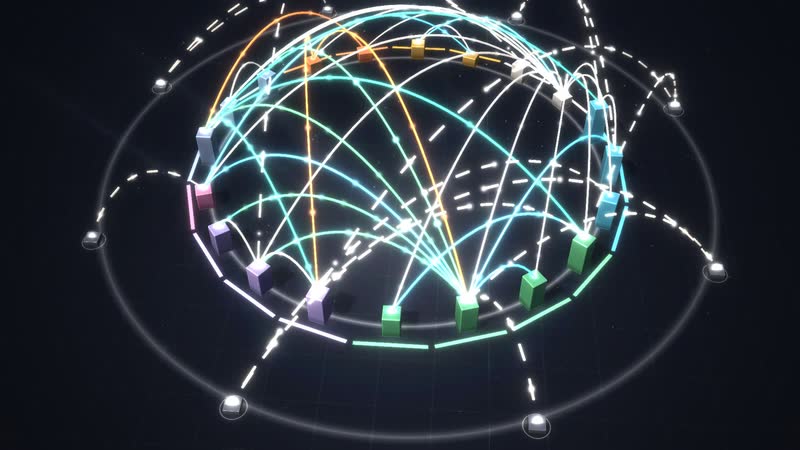
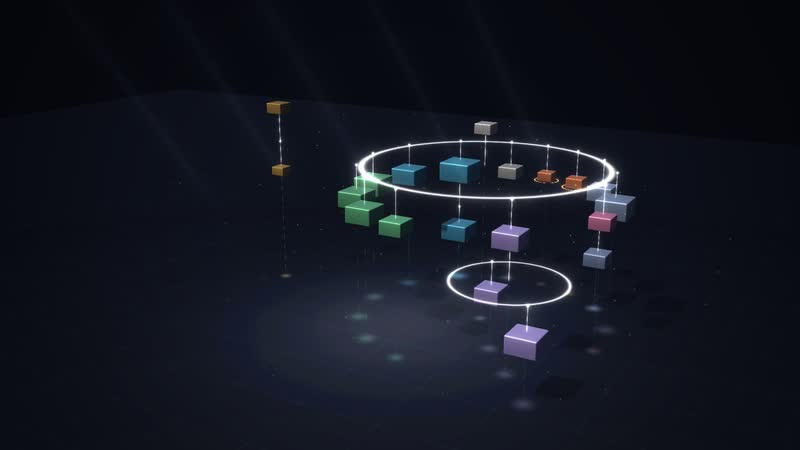
‘Who works with whom’ as a dome of arcs – one of 14 diagrams calculated live from the same data.
08
The whole software
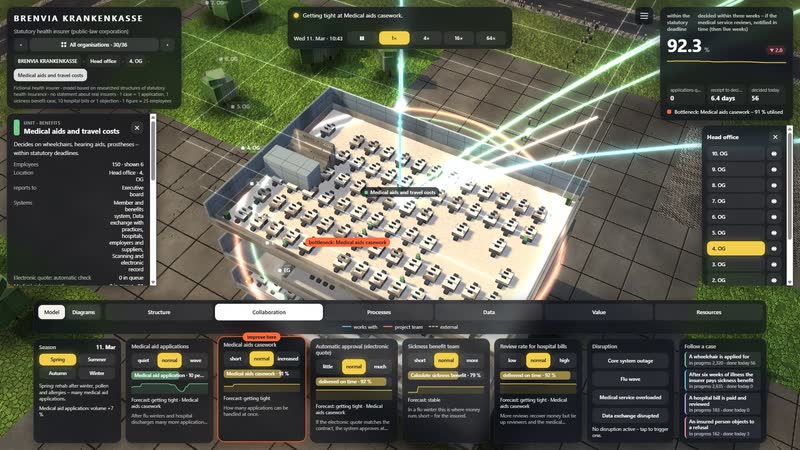
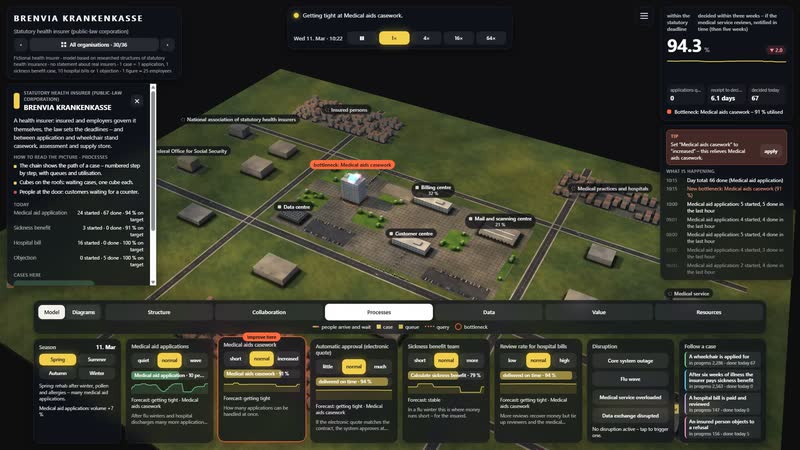
Situation, key figure, time-lapse, six views, controls and disruptions: one click on a department shows its task, location and all relations.
What you can change
Controls
- Medical aid applications: After flu winters and hospital discharges many more applications arrive.
- Medical aids casework: How many applications can be handled at once.
- Automatic approval (electronic quote): If the electronic quote matches the contract, the system approves at once (shares are model assumptions).
- Sickness benefit team: In a flu winter this is where money runs short – for the insured.
- Review rate for hospital bills: More reviews recover money but tie up reviewers and the medical service.
Disruptions
- Core system outage: Four hours without the member and benefits system: no notices, no calculations, advice on paper only.
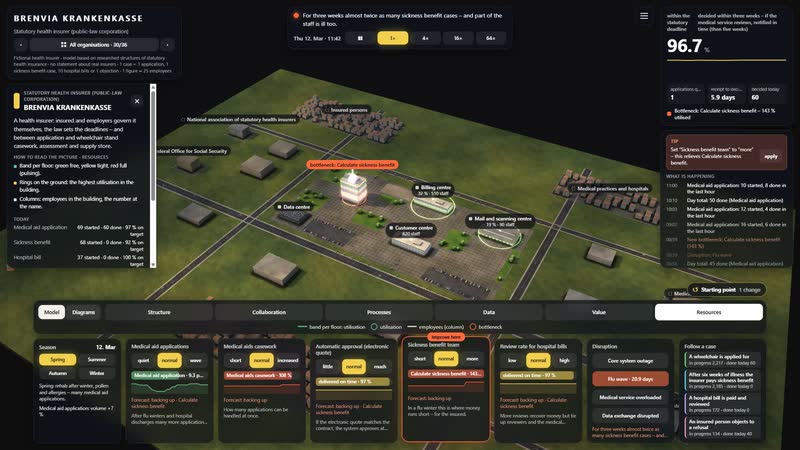
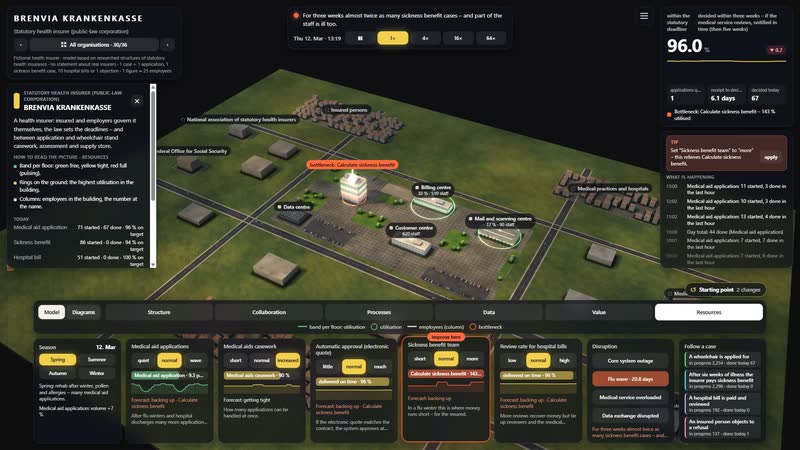
- Flu wave: For three weeks almost twice as many sickness benefit cases – and part of the staff is ill too.
- Medical service overloaded: For a month all assessments take almost twice as long – the five-week deadline gets tight.
- Data exchange disrupted: For three hours no sick notes, bills or quotes arrive.
What the model offers a health insurer
-
01
The insurer as a building
Head office, customer centre, scanning centre, billing centre, data centre and city branch can be walked through and opened up, with 20 departments in their places.
-
02
Deadlines in motion
The event simulation runs medical aids, sickness benefit, hospital bills and objections at the same time. Where applications wait, they visibly pile up.
-
03
Weigh automation against casework
Five controls and four disruptions, from the electronic quote to a data exchange failure. When applications get stuck, a tip names the control that helps.
-
04
Diagrams for both boards
14 diagrams in four groups are calculated live from the model – self-government included, as an organisation chart in space.
-
05
Ready to present anywhere
In the browser and on large projections, plus a guided tour in eight steps for the first visit.
-
06
One of 36
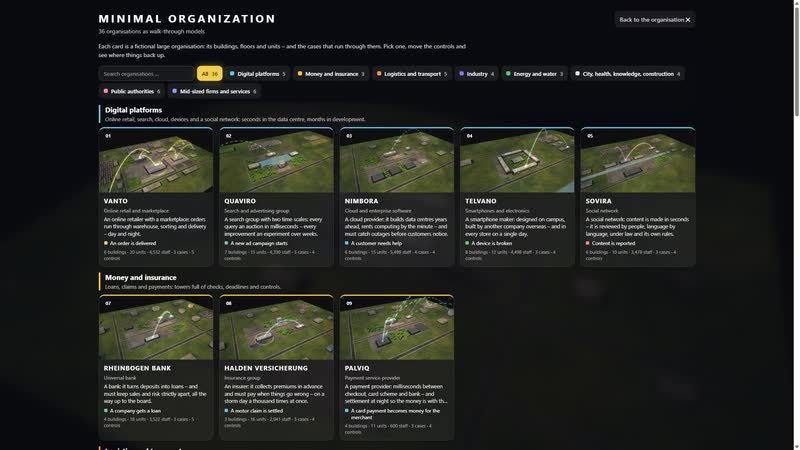
The insurer sits next to an insurance group, a hospital, a job centre and more, all in one overview. Created by an artist and developer rather than from a kit.
-
BRENVIA KRANKENKASSE in the morning – low sun, long shadows, the first commuters on their way in. -
Head office in evening light – golden arcs show who reports to whom. -
Just before eight – people stream from the car park and the stop into the buildings. -
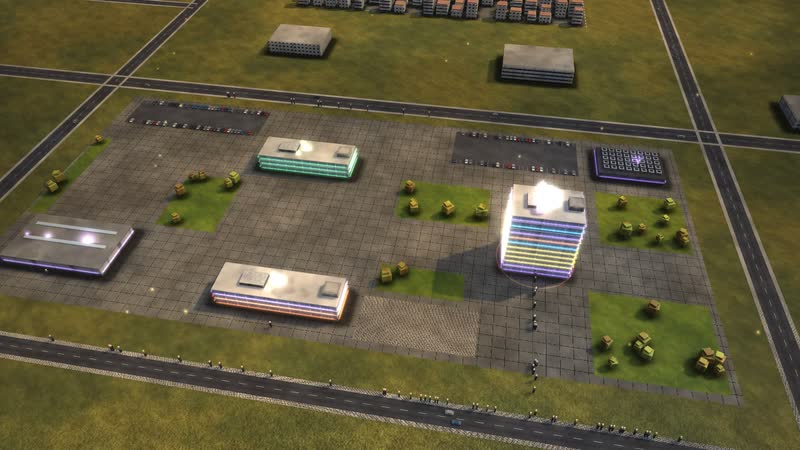
Blue hour – the windows of BRENVIA KRANKENKASSE light up. -
At night from above – the open tower, data lines glowing across the site. -
Head office opened up – every floor with workplaces and people. -
Dusk, performance view – rings of light show how busy each department is. -
Looking into the floor of Medical aids and travel costs – rows of desks, the floors above as outlines of light. -
A room of its own – Administrative board (self-government). -
Customer centre opened up – counters, waiting area, advice. -
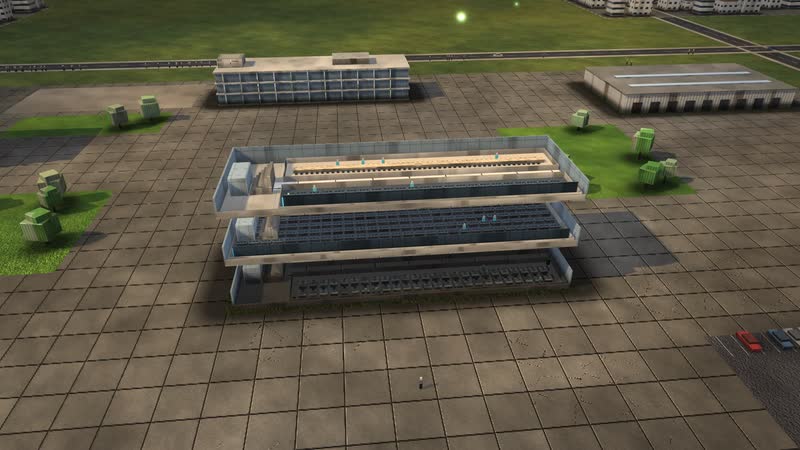
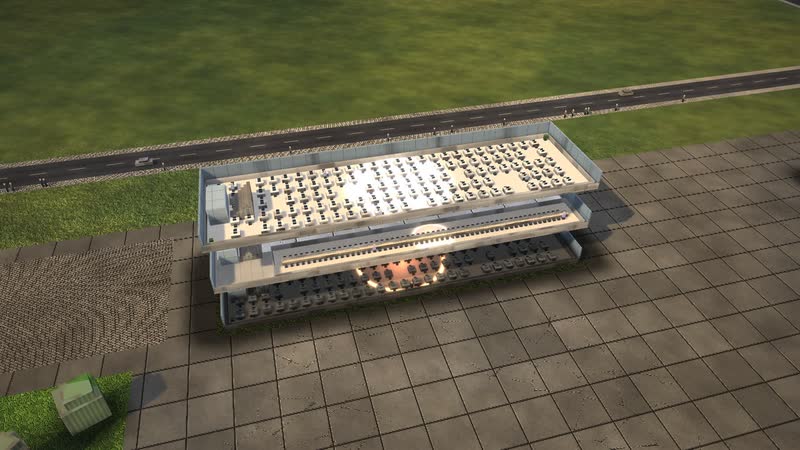
Billing centre – all floors at once, performance view. -
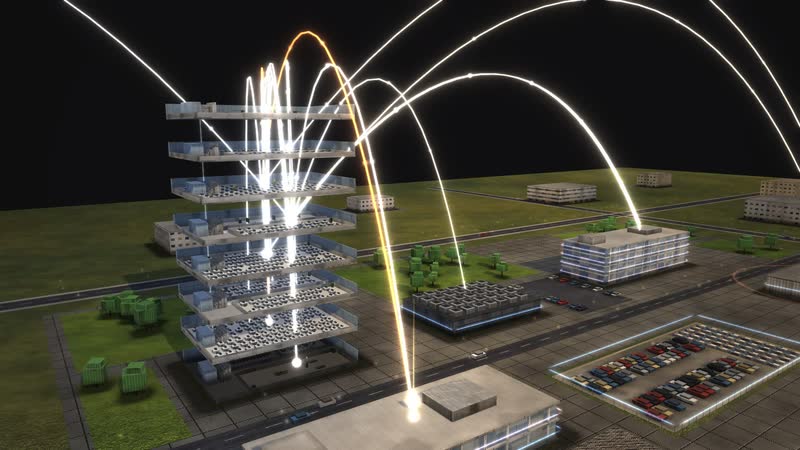
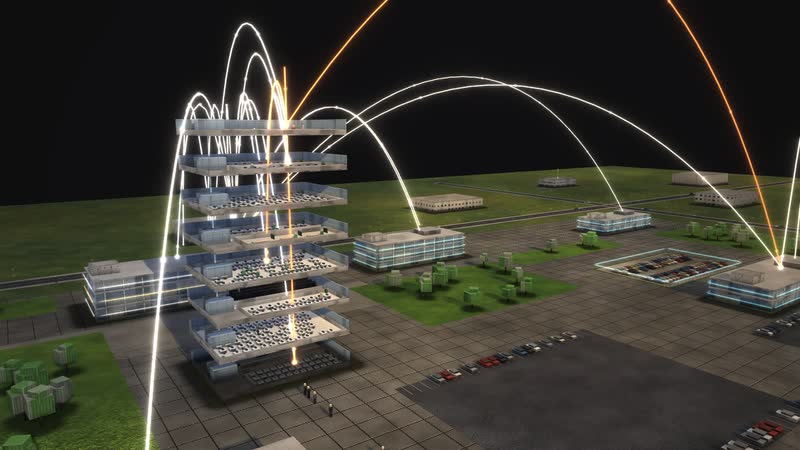
Structure at dusk – golden arcs from every floor to the buildings reporting to it. -
Collaboration – Medical aids and travel costs with all 9 relations – to departments, buildings and partners. -
Data flows at night – systems and users linked by glowing lines. -
Data flows at dusk – which department uses which system. -
Structure across the whole site – reporting lines between the buildings. -
The whole network at night – collaboration inside and far beyond. -
Every step labelled – name, how many are waiting, utilisation. -
Following one case – ‘A wheelchair is applied for’, now in casework. -
A second process – sickness benefit is calculated. -
Flu wave – resources view, the backlog grows floor by floor. -
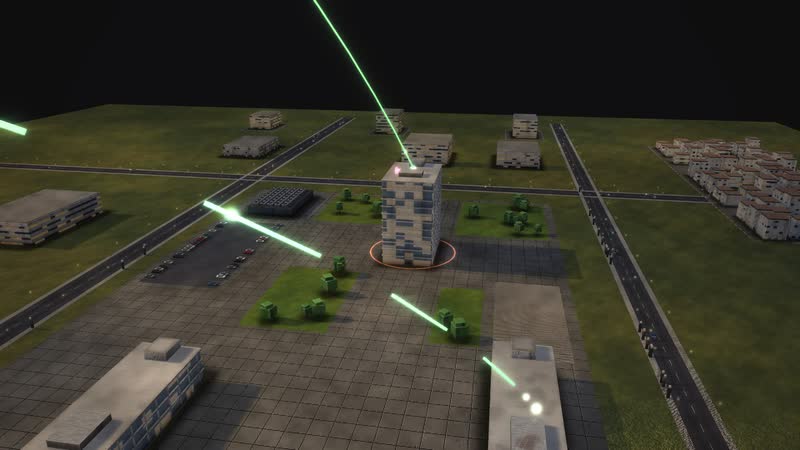
Core system outage – the data arcs turn red, work stalls. -
Data exchange disrupted – outage between the organisation and its partners. -
The lever – Medical aids casework set to ‘increased’ – a flash shows where it acts. -
Spring at BRENVIA KRANKENKASSE. -
Summer evening – warm light, long shadows across the square. -
Autumn – leaves on the paths, performance view. -
Winter evening – snow on the site, the tower open and lit. -
Diagram ‘Who works with whom’, calculated live from the model. -
Diagram ‘Year, week, day’, calculated live from the model. -
Diagram ‘Management levels as a staircase’, calculated live from the model. -
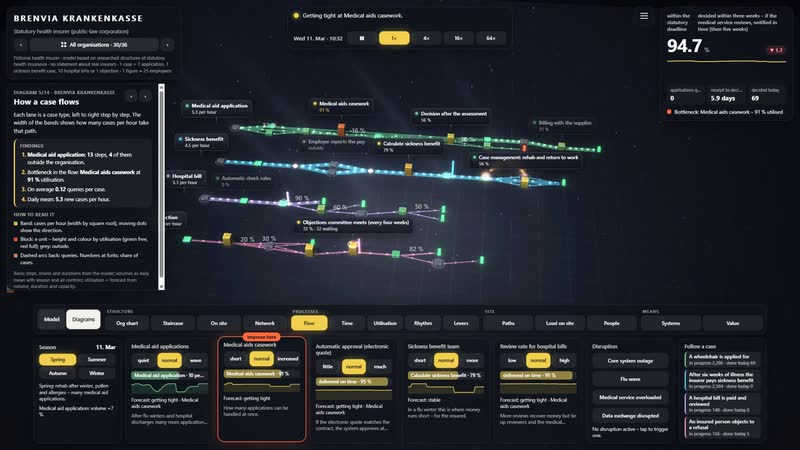
Diagram ‘How a case flows’, calculated live from the model. -
Diagram ‘What each control does’, calculated live from the model. -
Diagram ‘What the work depends on’, calculated live from the model. -
Diagram ‘Where it gets tight’, calculated live from the model. -
Diagram ‘Who leads whom’, calculated live from the model. -
The whole software – situation, key figure, time, views and the controls below. -
Head office selected – floor list on the right, the floors drift apart. -
Medical aids and travel costs – card with task, location and all relations. -
Flu wave triggered – timeline, key figure and bottleneck react. -
Countering – Medical aids casework increased – the tile shows the effect since the change. -
Diagram ‘How a case flows’ with its panel – findings in sentences. -
Diagram ‘Who works with whom’ with its panel. -
Follow a case – step, waiting time and target on the card. -
The tour leads through the software in eight steps. -
36 organisations to choose from, each with its own picture.


Your health insurer as a model
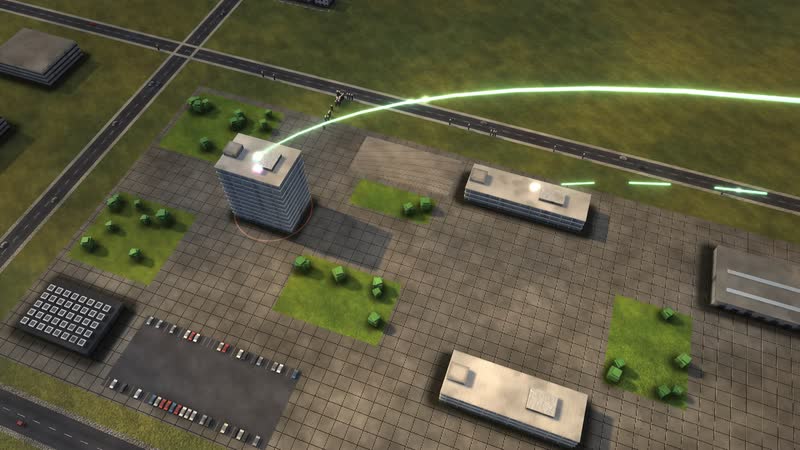
Would you like to see your insurer with its own divisions, application backlogs and deadlines? Write to us or call; we will discuss which data are needed. Feel welcome to ask us for the password to the simulation.
cube4tec.de/spiele/minimal-organization/
Ask about this
Minimal Organization: Krankenkasse
Basis and limits
Fictional health insurer · model based on researched structures of statutory health insurance · no statement about real insurers
1 case = 1 application, 1 sickness benefit case, 10 hospital bills or 1 objection · 1 figure ≈ 25 employees
All volumes, durations, rates and capacities are model assumptions, not values of a real insurer.
Deadlines under § 13 (3a) SGB V are simplified: measured is the decision within three weeks or the timely notice that the medical service reviews.
Documented: self-government with administrative board and objections committee, sickness benefit after six weeks of continued pay, payment before review of hospital bills, medical service as a separate body.
Public sources the model is based on:
- SGB V § 13 Abs. 3a (Entscheidungsfristen)
- SGB V § 33 (Hilfsmittel), § 127 (Verträge), § 139 (Hilfsmittelverzeichnis)
- SGB V §§ 44–48 (Krankengeld)
- SGB V §§ 275, 275c, 301 (Medizinischer Dienst, Krankenhausprüfung, Datenübermittlung)
- SGB IV §§ 29–36a (Selbstverwaltung)
- Sozialgerichtsgesetz §§ 78, 84, 85, 88
- Entgeltfortzahlungsgesetz § 3
- GKV-Spitzenverband: Kennzahlen der GKV
- Bundesamt für Soziale Sicherung
Similar business models
-
Insurance company
An insurer as a walkable model: a motor claim runs straight through or via claims handler, loss adjuster and workshop to payment and recovery.
-
University hospital
A university hospital as a walkable model: see where an emergency patient's time goes and why the strongest lever sits on the wards.
-
Job centre
A job centre as a walkable model: how a benefit claim moves from reception to payment, where missing documents hold it up and how job placement runs alongside.
-
Tax office
A tax office as a walkable model: how an income tax return travels from receipt to notice, where it waits and what speeds up processing.
-
Bank
A bank as a walkable model: a business loan from first vote to disbursement, with sales and risk kept apart up to the board, in a running simulation.
-
Local court
A local court as a walkable model: what happens between claim and judgment, where the months go and which levers shorten proceedings without touching judicial independence.
-
Police authority
A city police authority as a walkable model: what happens after an emergency call, how many patrols it takes and what shortens the time to arrival.
-
District administration
A rural district administration as a walkable model: why the morning queue at vehicle registration grows, what shortens it and where the district office runs short of staff.
All data are fictional and the deadlines simplified. The model can be adapted to your insurer's real data and filled with what is not visible anywhere today – for example deadline compliance per month, or turnaround times of medical service assessments.