
Simulation · Minimal Organization · Public authorities
District administration
A rural district administration as a walkable model: why the morning queue at vehicle registration grows, what shortens it and where the district office runs short of staff.
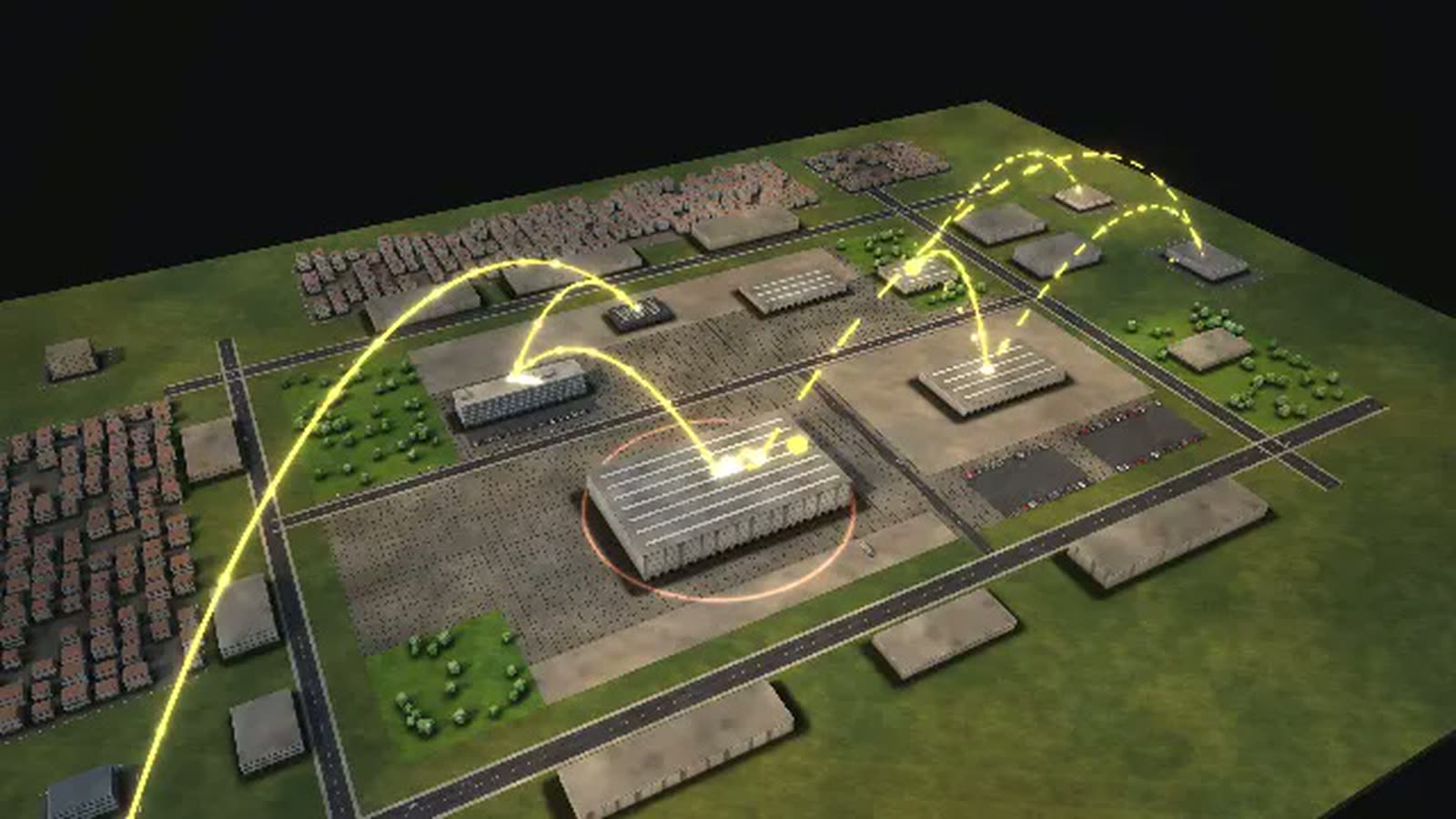
All data are fictional. The model can be adapted to your district's real data and then also shows what is not visible anywhere today – for example actual waiting times per counter, or caseload and processing time at the immigration office.
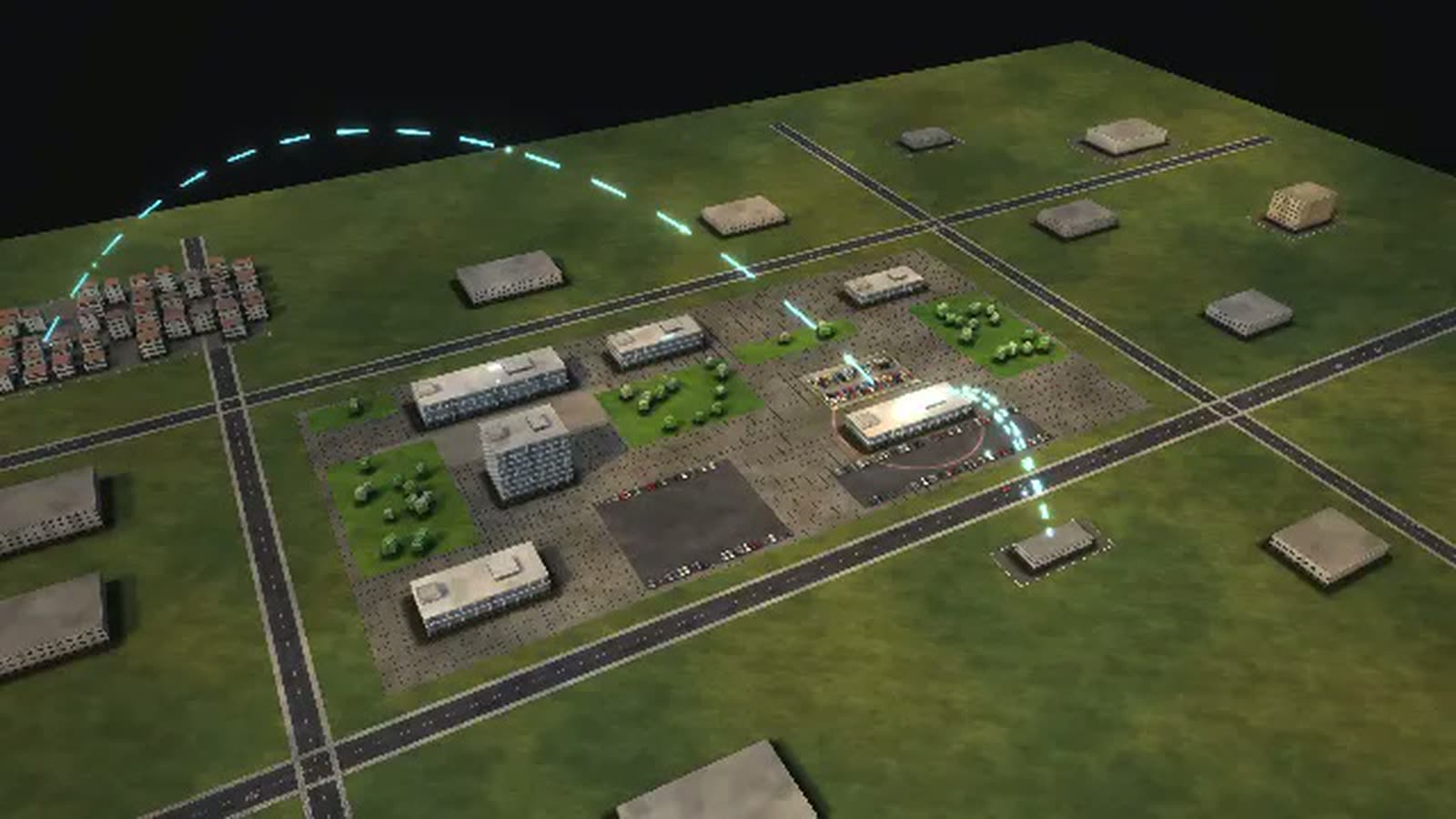
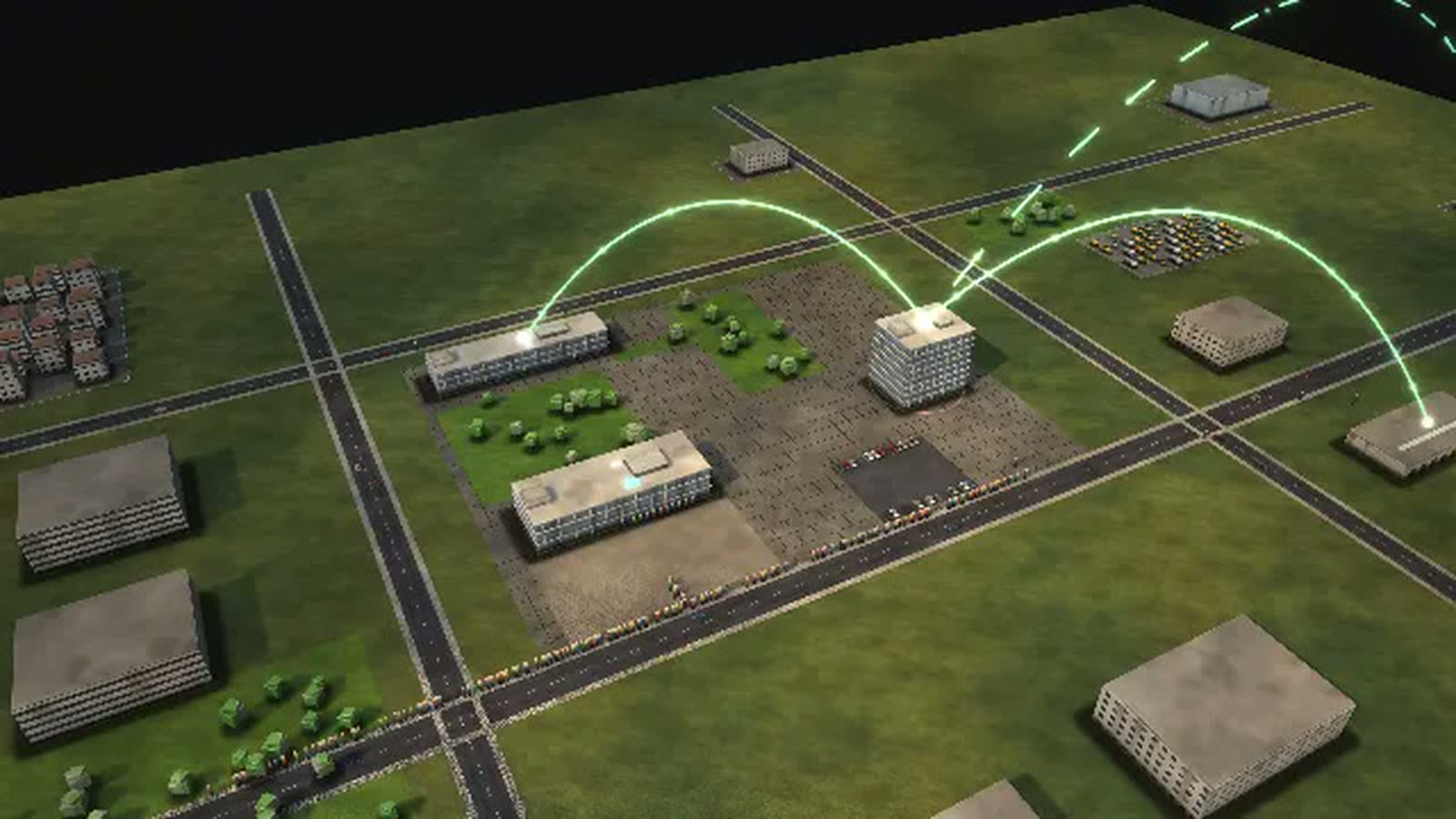
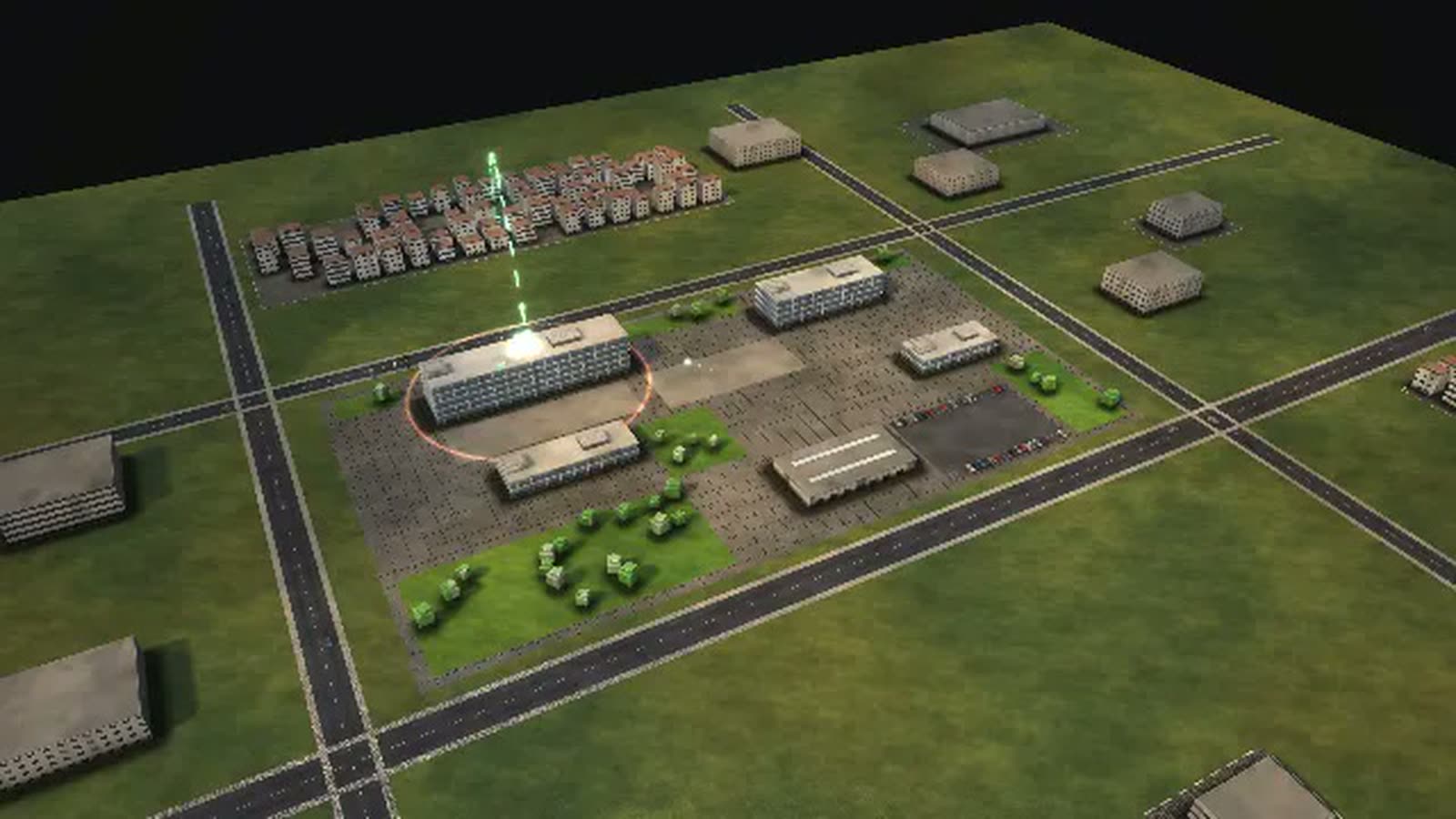
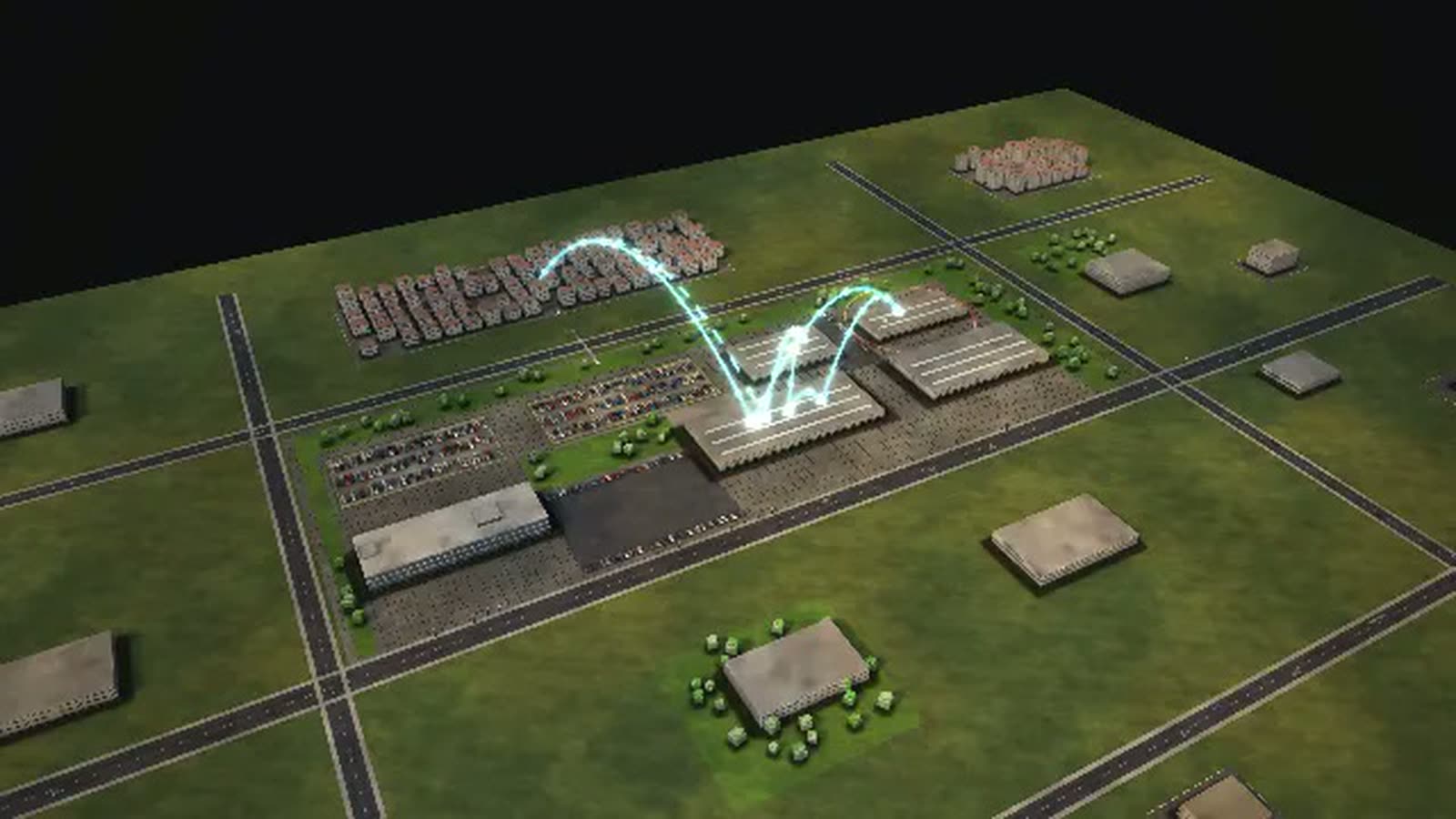
This vehicle registration queue simulation shows the fictional KREIS ALTENHEIDE, a German rural district: why the morning queue grows and what shortens it. The council decides, the district hall executes – and at the registration counter, in the immigration office and in snack bar kitchens it shows how many staff there are.
The main process starts with a man who wants to register a used car: online via i-Kfz, Germany's online vehicle registration, at the road traffic office or at the branch office North. In person, the path leads through info desk and ticket, counter, vehicle check in the yard, payment machine and plate embossing to the seals on the plates. Alongside, a student applies for her first driving licence, through to the finished card. The model target – registered or back outside with plates within one hour – is a set value, not a statutory deadline.
With residence permits, food inspections and council decisions, the model covers eight buildings and 18 departments. It is aimed at district administrators, executive boards, heads of offices, organisation teams and trainers.
A car is registered – or a driving licence applied for
- 01
Request: online or in person: A man has bought a used car and wants to register it: online, at the road traffic office or at the branch office.
- 02
i-Kfz: automatic check: With the ID app, insurance number and uncovered security codes the application runs online.
- 03
Online application checked by hand: A clerk checks the online application.
- 04
Papers and seals arrive by post: Registered – registration papers and seals arrive by post.
- 05
Registered online.
- 06
Info desk: documents and ticket: At the info desk: are insurance confirmation, inspection certificate and tax direct debit there? Then there is a ticket.
- 07
Registration counter: At the counter: the vehicle is transferred in the register, a plate number reserved.
- 08
The insurance confirmation is missing – the man has to come back another day.
- 09
Vehicle check in the yard: An imported car: the vehicle identification number is checked in the yard.
- 10
Fee at the payment machine: The fee is paid at the machine.
- 11
Plates embossed: Opposite, a private shop embosses the new plates.
- 12
Seals on the plates: Back at the counter: seals on the plates, papers handed over.
- 13
Registered.
- 14
Registration at the branch office: At the branch office North: two counters, short distances, bring your own plates.
- 15
Registered at the branch.
- 16
Licence application at the counter: A student applies for her first driving licence: eye test, first-aid course and photo attached.
- 17
Query of the federal registers: The application is taken; now the office queries the federal registers.
- 18
Licensing authority checks the file: The licensing authority checks fitness and registers.
- 19
Provide a medical report: The applicant provides a medical report.
- 20
The card is ordered, the test order goes to the test centre – at the same time.
How a district administration can use the model
-
Internal communication
District hall, office tower, road traffic office, health office, immigration office, ambulance station and branch office: the ‘Who sits where – and reports to whom’ diagram brings locations and responsibilities together.
For whomExecutive board, HR and organisation
-
Onboarding
New staff see where their office sits, whom it reports to and which path a request takes – from info desk to plate seal, or from application to residence permit.
For whomNew staff, career changers
-
Training
Administrative trainees take the federal registers offline or staff two counters fewer and watch the queue grow. ‘Who leads whom’ explains council, district administrator and departments.
For whomTraining managers, trainees, public administration students
-
Explaining to residents
Why is it full in spring and at month end, and why do people who register online not need to come in at all? The model answers with one picture of the registration office.
For whomCitizen service, press office, residents
-
Strategic overview
Counters, online registration, immigration office, food control: the model shows the levers for each office. The process ‘The district council decides on a proposal’ reveals how long decisions take.
For whomDistrict administrator, executive board, district council
What is shown – why – for whom
| What is shown | Why | For whom |
|---|---|---|
| ‘Where the site gets tight’ diagram: the registration office in the morning | WhyShows the queue. | For whomDistrict administrator, head of road traffic office |
| ‘What each control does’ diagram: counters, online registration, immigration office, food control | WhyRanks the levers per office. | For whomExecutive board, district council |
| ‘Year, week, day’ diagram: spring peak and month end | WhyShows the registration peaks. | For whomWorkforce planning |
| ‘Who leads whom’ diagram: council, district administrator, departments | WhyShows politics and administration in the district. | For whomTraining, residents |
| ‘Who sits where – and reports to whom’ diagram: district hall, branch office, health office | WhyShows locations and responsibilities. | For whomResidents, onboarding |
| Process ‘A residence permit is extended’ | WhyShows waits that last for months. | For whomImmigration office, integration council |
| Process ‘A snack bar is inspected’ | WhyShows food control at work. | For whomVeterinary office, restaurants |
Departments in the model
-
District council
Elected representation of the district: decides budget, district levy, bylaws and major projects.
-
District committee
Prepares the council's decisions and decides between sessions.
-
District administrator's office
Directly elected; heads the administration, chairs the council and is also the lower state authority.
-
County director and heads of department
Elected by the council; lead the departments.
-
Audit office
Directly accountable to the council and independent in its audits.
-
Treasury and cash office
Budget, district levy, fees; co-signs every proposal with costs.
-
HR, organisation and IT
Posts, specialist systems, online services, canteen.
-
Road traffic office (registration)
Registers, transfers and deregisters vehicles – at the counter, in the branch office and online.
-
Driving licence office
Grants driving licences, checks fitness and registers.
-
Immigration office
Grants and extends residence permits, issues provisional certificates.
-
Public health office
Infection control, drinking water hygiene, school entry examinations.
-
Veterinary and food control
Inspects food businesses by risk, takes samples, issues orders – also fights animal diseases.
-
Youth welfare office
For municipalities without their own youth office: day care, family support, child protection.
-
Social welfare office
Basic income support, care assistance, housing benefit.
-
Building control
Lower building authority for the smaller municipalities without their own.
-
Environment office and nature authority
Water, soil, emissions, nature and species protection.
-
Waste management
Plans collection and recycling centres as the public waste authority.
-
Ambulance service and control centre
Runs the ambulance service: control centre 112, ambulance stations, disaster control.
All processes in the model
A car is registered – or a driving licence applied for
- 01Request: online or in person: A man has bought a used car and wants to register it: online, at the road traffic office or at the branch office.
- 02i-Kfz: automatic check: With the ID app, insurance number and uncovered security codes the application runs online.
- 03Online application checked by hand: A clerk checks the online application.
- 04Papers and seals arrive by post: Registered – registration papers and seals arrive by post.
- 05Registered online.
- 06Info desk: documents and ticket: At the info desk: are insurance confirmation, inspection certificate and tax direct debit there? Then there is a ticket.
- 07Registration counter: At the counter: the vehicle is transferred in the register, a plate number reserved.
- 08The insurance confirmation is missing – the man has to come back another day.
- 09Vehicle check in the yard: An imported car: the vehicle identification number is checked in the yard.
- 10Fee at the payment machine: The fee is paid at the machine.
- 11Plates embossed: Opposite, a private shop embosses the new plates.
- 12Seals on the plates: Back at the counter: seals on the plates, papers handed over.
- 13Registered.
- 14Registration at the branch office: At the branch office North: two counters, short distances, bring your own plates.
- 15Registered at the branch.
- 16Licence application at the counter: A student applies for her first driving licence: eye test, first-aid course and photo attached.
- 17Query of the federal registers: The application is taken; now the office queries the federal registers.
- 18Licensing authority checks the file: The licensing authority checks fitness and registers.
- 19Provide a medical report: The applicant provides a medical report.
- 20The card is ordered, the test order goes to the test centre – at the same time.
A residence permit is extended
- 01Application submitted online: A nurse from abroad applies online to extend her residence permit.
- 02Receipt and completeness check: The immigration office checks whether passport, employment contract and lease are attached.
- 03Provide further documents: The applicant sends her pay slips.
- 04Appointment: photo, fingerprints, provisional certificate: Appointment at the service desk: photo, fingerprints, signature – and a provisional certificate.
- 05Security check and casework run at the same time.
- 06Security check and consent: Federal authorities check for security concerns, the employment agency consents to the job.
- 07Casework checks passport, income, housing: Casework checks passport, income and housing.
- 08All checks are in.
- 09Team lead signs off: The team lead signs the decision.
- 10Refused.
- 11Order the electronic residence permit: The electronic residence permit is ordered.
- 12Card is produced: The card is produced centrally and sent to the district.
- 13Handover with PIN letter: Handover at the service desk, the PIN letter comes separately.
- 14Permit handed over.
A snack bar is inspected
- 01Inspection falls due (risk plan): The risk plan reports: a snack bar is due for inspection.
- 02Morning inspection round: In the morning the inspectors set off – unannounced.
- 03Inspection on site: Kitchen, cooling, temperatures, training – and sometimes a sample of the kebab.
- 04Sample at the state laboratory: The sample goes chilled to the state laboratory.
- 05Assess the findings: Food control assesses the findings.
- 06Order and fine: Defects: an order, often a fine, closure at once if there is danger.
- 07Deadline to fix the defects: The business has a deadline to fix the defects.
- 08Inspection report and risk rating: Report into the control programme, the business is re-rated.
- 09Inspection closed.
The district council decides on a proposal
- 01Department drafts the proposal: The ambulance service drafts a proposal: in the south of the district the ambulance takes too long to arrive.
- 02Treasury co-signs: The treasury budgets construction and staff.
- 03Management conference (weekly): The district administrator and heads of department release the proposal.
- 04Specialist committee deliberates (every six weeks): The committee deliberates and recommends.
- 05District committee prepares (every six weeks): The district committee prepares the council session; urgent matters it decides itself.
- 06Urgent decision of the district committee.
- 07District council decides (every six weeks): The council votes in the chamber.
- 08Rejected.
- 09District administrator executes the decision: The district administrator executes the decision: publication, order to the department, tender.
- 10Decided and commissioned.
What you can change
Controls
- Registrations: In spring come seasonal plates, motorbikes and new cars – plus dealers with whole stacks.
- Registration counters staffed: Every extra staffed counter shortens the morning queue.
- Online registration (i-Kfz): Those who register online do not come to the office (shares are model assumptions).
- Posts in the immigration office: How many files are handled at once – missing posts make waits grow for months.
- Food inspectors: How many businesses can be inspected per day.
Disruptions
- Federal registers unreachable: For four hours neither registrations nor licences work – the queue grows.
- Dealers register at month end: For three days one and a half times as many registrations arrive.
- Animal disease outbreak: For three weeks the veterinary office works in the crisis team: reports and orders pile up.
- Many new arrivals: For a month twice as many applications at the immigration office.
What a district administration gains
-
01
Eight buildings, one district
From the district hall to the ambulance station, every building opens up and every floor shows departments and people. The org chart becomes a place.
-
02
The queue as a measure
When counters are missing, people queue at the door. The event simulation shows registration, residence permits, inspections and the council at the same time.
-
03
Live through peaks in advance
Spring peak, dealers at month end, animal disease, many new arrivals: five controls and four disruptions show where it gets tight first. Each bottleneck comes with a tip naming the right control.
-
04
Diagrams calculated live
14 diagrams in four groups, from bottlenecks on the site to the org chart in space, keep calculating while the simulation runs.
-
05
For committee room and hall
In the browser at the desk or projected large in the district hall. On the first visit, a guided tour in eight steps explains where everything is.
-
06
Designed, not assembled
An artist and developer built the model. Next to the district, a city administration, a job centre, a tax office and 32 more organisations appear in one overview.
Basis and limits
Fictional district · model based on researched administrative structures · no statement about real districts
1 case = 1 registration or licence application, 1 residence permit, 1 inspection or 1 proposal · 1 figure ≈ 25 employees
All volumes, durations, rates and capacities are model assumptions, not values of a real district.
The one-hour target and the shares of online registration, branch office and licences are set, not a statutory deadline.
Documented: council, district committee and directly elected district administrator; registration with seals; provisional certificate during extension; cards from the federal printing office; risk-based food inspections.
Public sources the model is based on:
- Kreisordnung NRW (KrO NRW)
- Fahrzeug-Zulassungsverordnung (FZV)
- Fahrerlaubnis-Verordnung (FeV)
- Aufenthaltsgesetz (AufenthG) §§ 73, 78, 81
- Verordnung (EU) 2017/625 (amtliche Kontrollen)
- Lebensmittel- und Futtermittelgesetzbuch (LFGB)
- Bundesregierung: digitale Fahrzeugzulassung (i-Kfz)
- Kraftfahrt-Bundesamt: Statistik
Your district as a model
Would you like to see your registration office, departments and waiting times this way? Write or call us. We will discuss which data your district can contribute. On request, we will send you the password for the simulation.
cube4tec.de/spiele/minimal-organization/
Ask about this
Minimal Organization: Kreisverwaltung
Similar business models
-
City administration
A large city's administration as a walkable model: see how a building application moves through the departments, how council and committees meet and where people queue at the counter.
-
Job centre
A job centre as a walkable model: how a benefit claim moves from reception to payment, where missing documents hold it up and how job placement runs alongside.
-
Car dealership
A franchised car dealership with workshop as a walkable model: how a car gets from reception to handover in one day and where lifts, parts or inspections slow it down.
-
Tax office
A tax office as a walkable model: how an income tax return travels from receipt to notice, where it waits and what speeds up processing.
-
Police authority
A city police authority as a walkable model: what happens after an emergency call, how many patrols it takes and what shortens the time to arrival.
-
Local court
A local court as a walkable model: what happens between claim and judgment, where the months go and which levers shorten proceedings without touching judicial independence.
-
Health insurer
A statutory health insurer as a walkable model: how a wheelchair application moves from quote to decision, when the medical service steps in and where deadlines get tight.
-
Online retail
An order from click to doorstep as a walkable model: payment check, warehouse, packing, trucks, sortation and delivery in a running simulation.
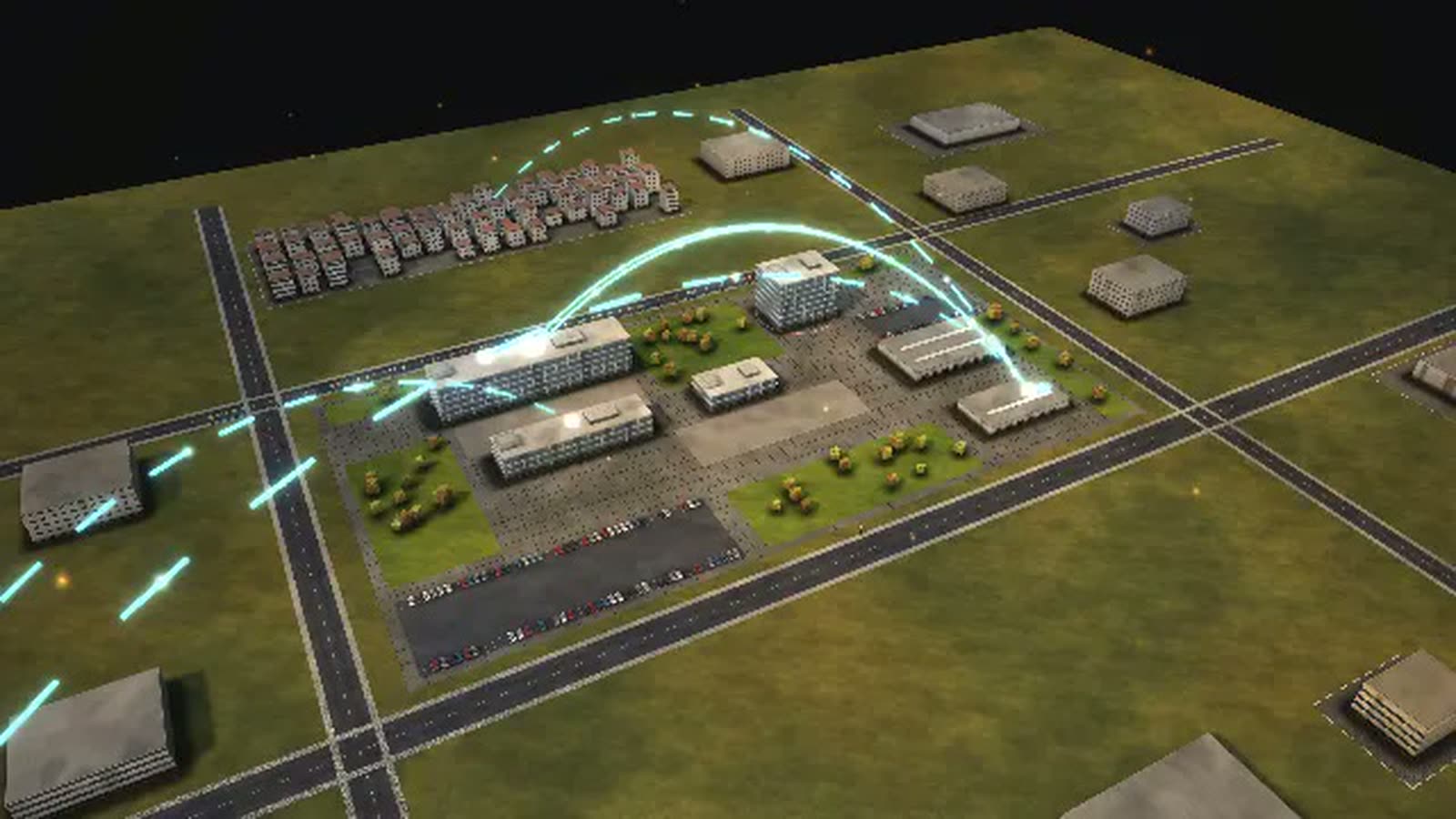
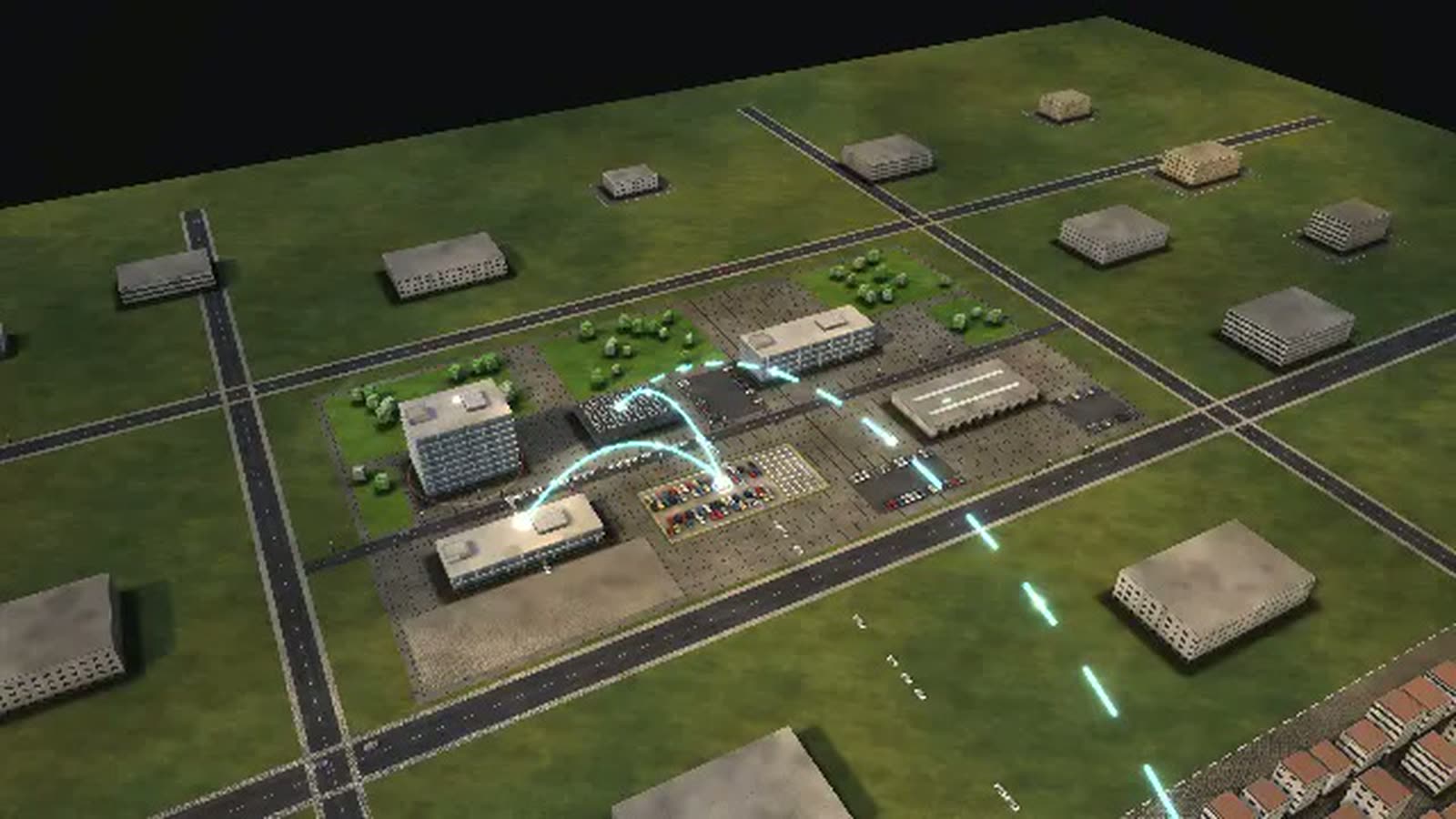
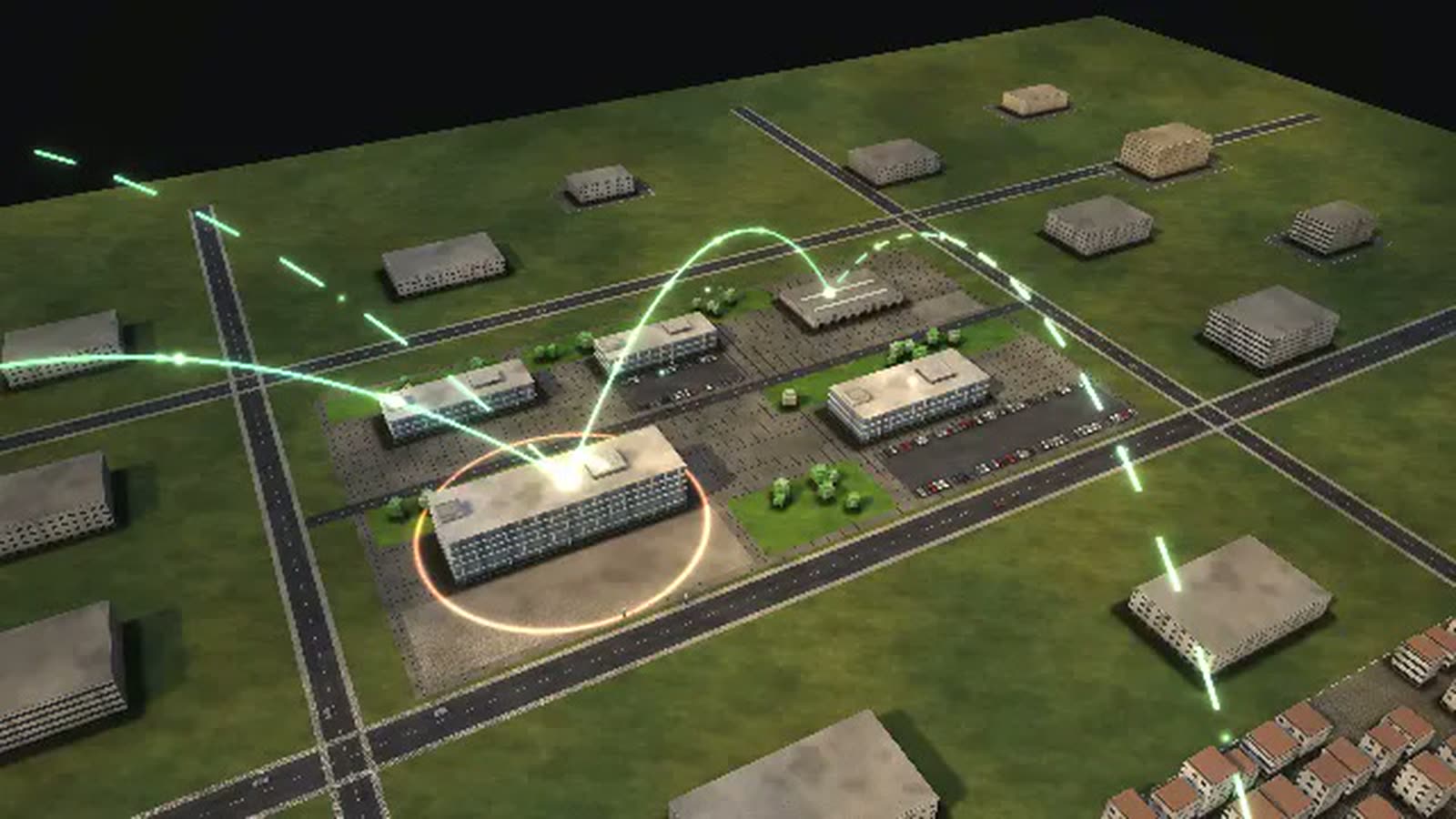
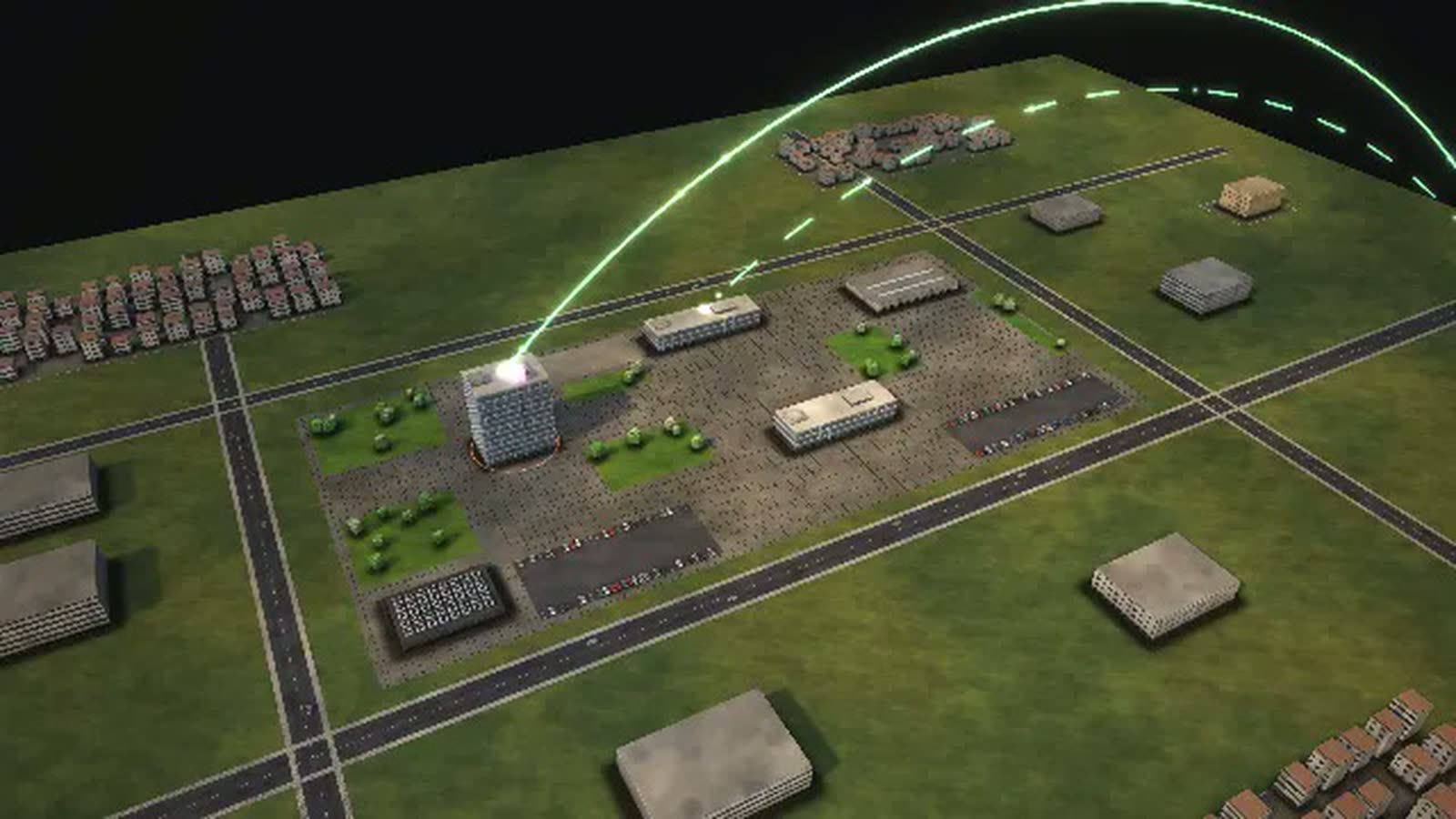
All data are fictional. The model can be adapted to your district's real data and then also shows what is not visible anywhere today – for example actual waiting times per counter, or caseload and processing time at the immigration office.