
Simulation · Minimal Organization · Money and insurance
Payment service provider
A payment service provider as a walkable model: a card payment from authorisation in milliseconds to the payout to the merchant in the morning.
Trailer
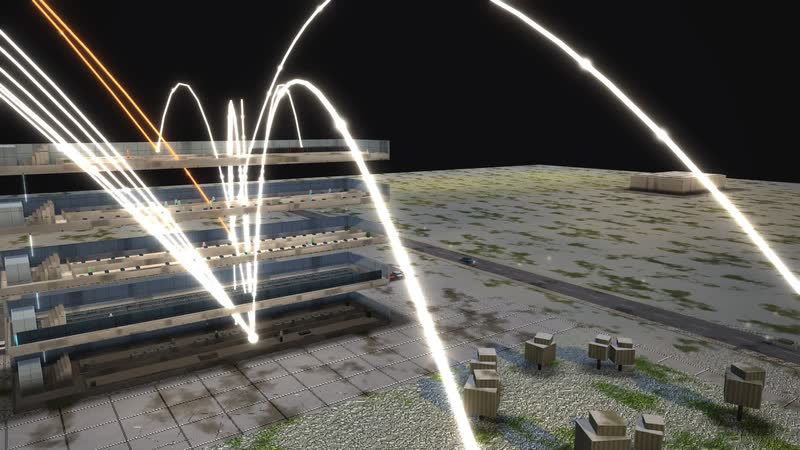
All data are fictional – PALVIQ does not exist. The model can be filled with your company's real data and then shows what is hard to see today: transactions per second, sale days included, or the runtime of the clearing run night after night.
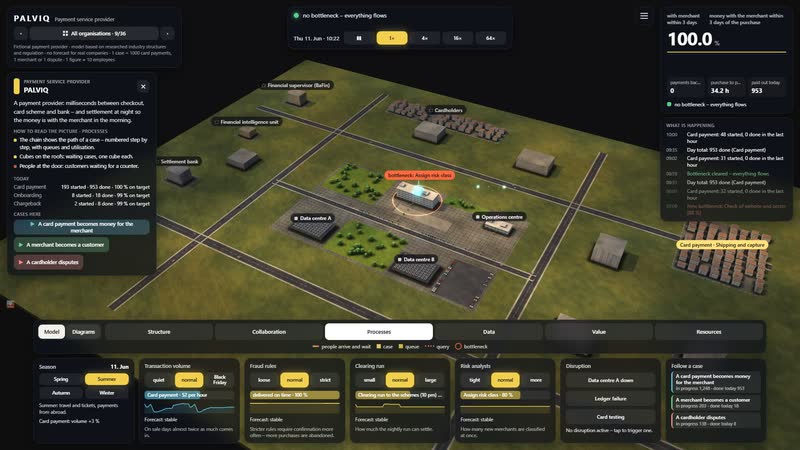
The card payment process – authorisation, clearing and payout – as a running model. At PALVIQ, a fictional payment service provider, every payment has two speeds. Authorisation between checkout, card scheme and the cardholder's bank takes milliseconds. The money only reaches the merchant through the clearing run at 10 pm and the payout at 6 am. The target in the model: money with the merchant within three days of the purchase.
The site has headquarters, an operations centre and data centres A and B. Stricter fraud rules ask for confirmation in the banking app more often – safer, but more purchases are abandoned. If data centre A fails, everything runs via B and responses slow down. In card testing, fraudsters try out stolen cards with thousands of tiny payments. Alongside, a merchant becomes a customer and a cardholder raises a chargeback.
The shares of confirmations, abandonments and declines are model assumptions. Documented in the sources: the licensing requirement, strong customer authentication, safeguarding of customer funds and the four-party model. This page is for management, risk, IT, merchant sales and onboarding.
A card payment becomes money for the merchant
- 01
Checkout at the merchant: Someone shops online and enters a card.
- 02
Gateway and tokenisation: The gateway replaces the card number with a token.
- 03
Fraud scoring: A model scores the payment in milliseconds.
- 04
Declined.
- 05
Confirmation in the banking app: The cardholder confirms in their bank's app.
- 06
Purchase abandoned.
- 07
Authorisation via the card scheme: The request runs through the card scheme to the cardholder's bank.
- 08
Decision by the cardholder's bank: The cardholder's bank checks funds and risk.
- 09
Not approved.
- 10
Response to the merchant: The merchant gets the approval – the purchase is done.
- 11
Shipping and capture: When shipping, the merchant captures the amount.
- 12
Clearing run to the schemes (10 pm): At night the settlement goes to the card schemes.
- 13
Payout to merchants (6 am): In the morning the money minus fees goes to the merchant.
- 14
With the merchant.
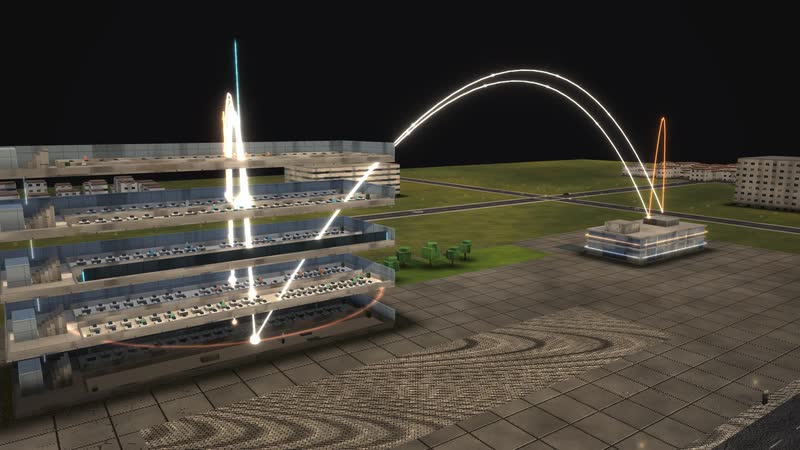
01
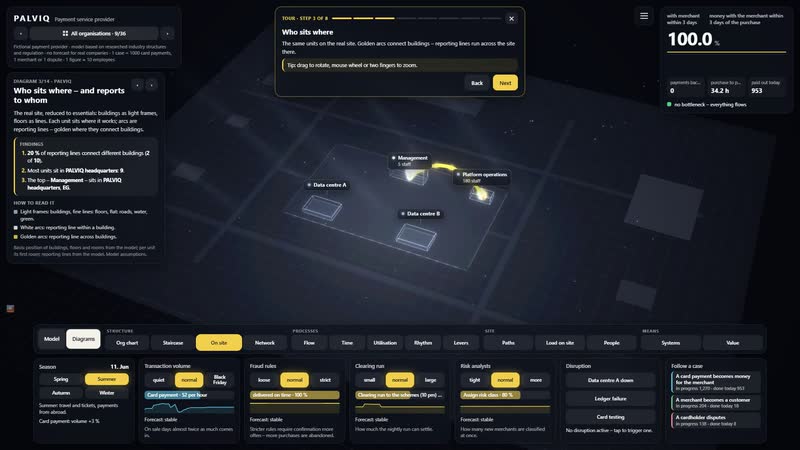
A site at work
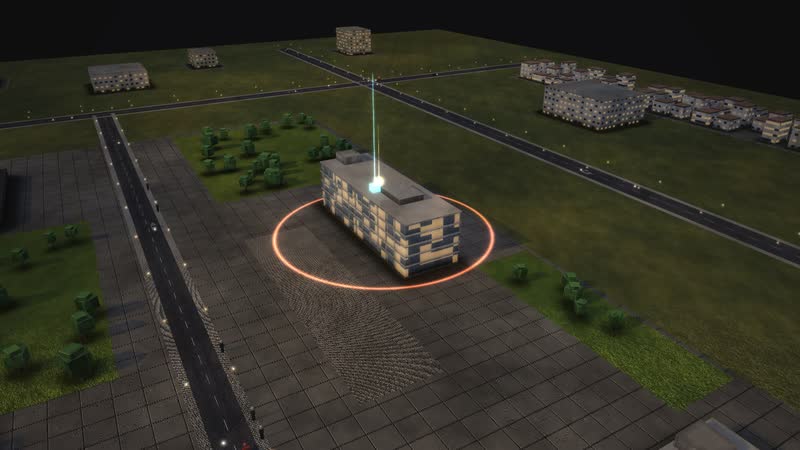
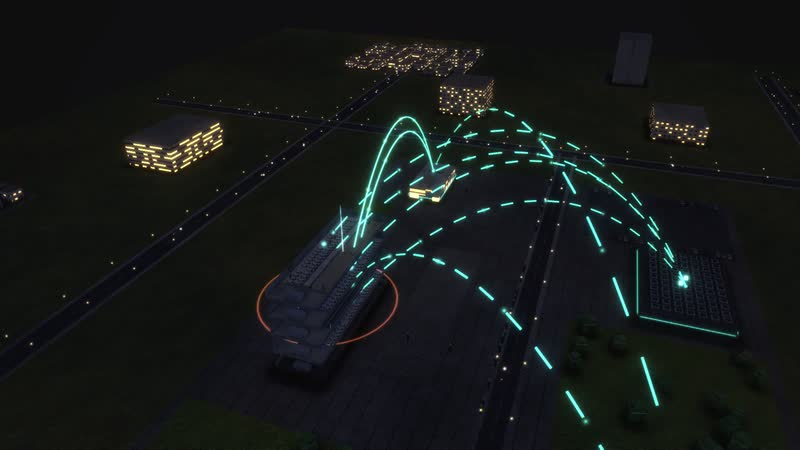
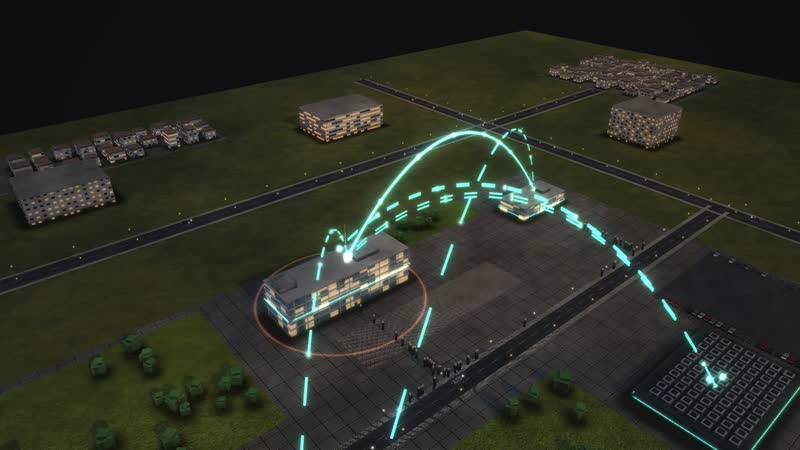
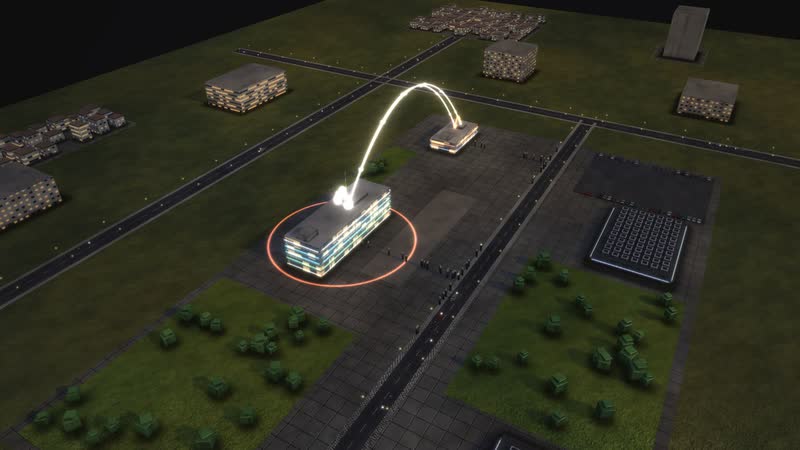
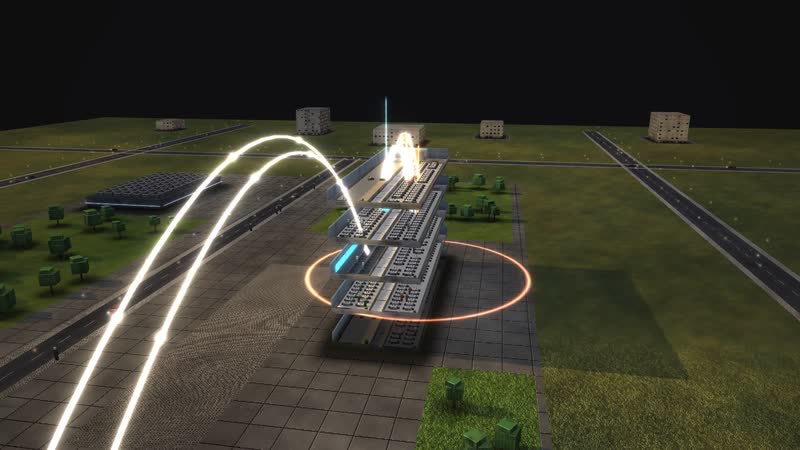
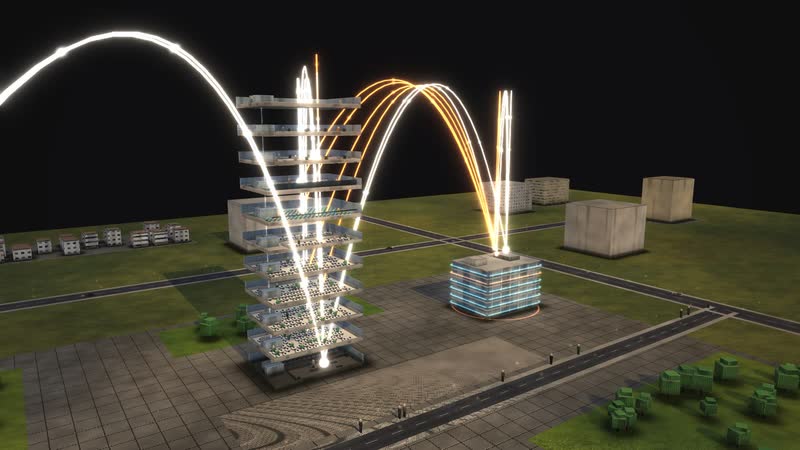
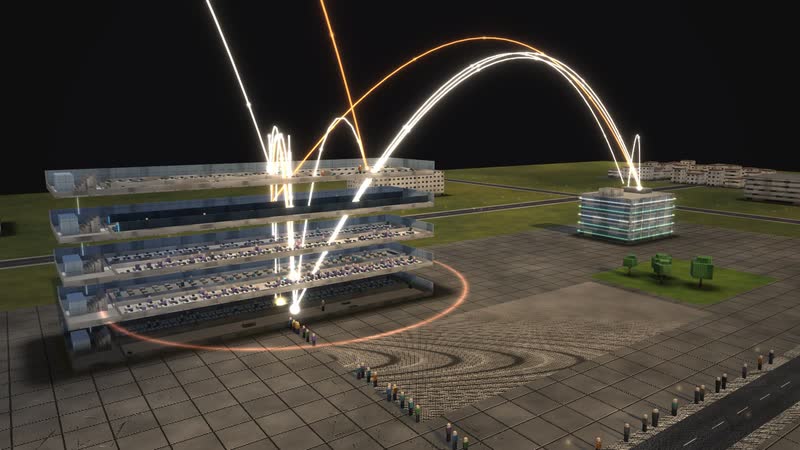
4 buildings, 11 departments, about 600 staff: in the evening light golden arcs show who reports to whom.

02
Every floor opened up
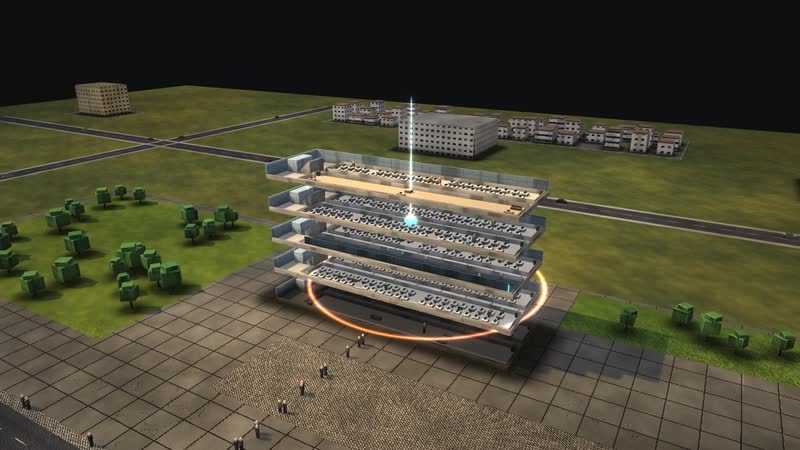
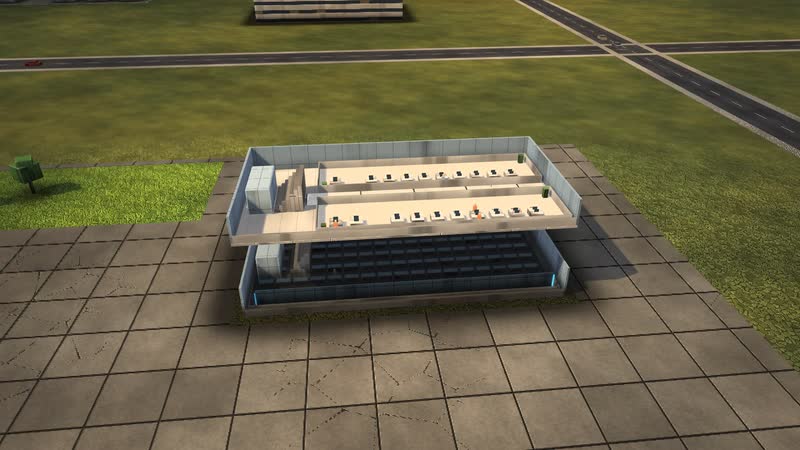
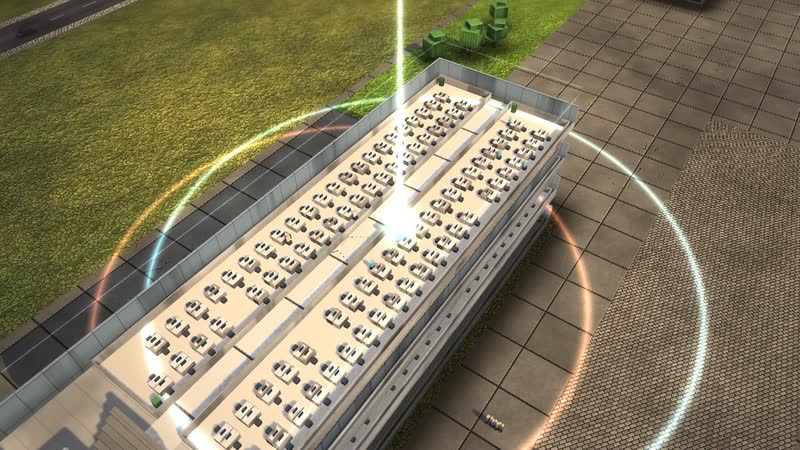
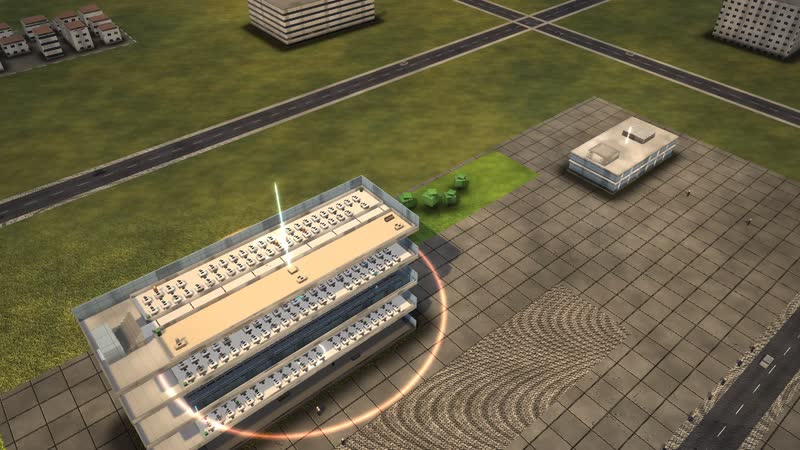
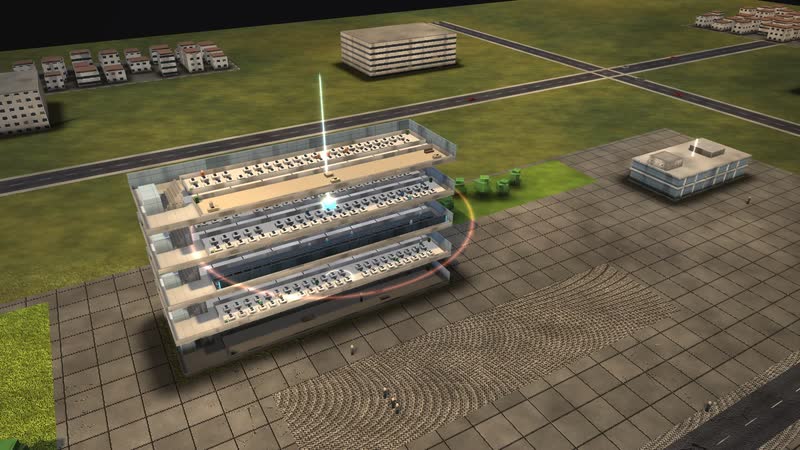
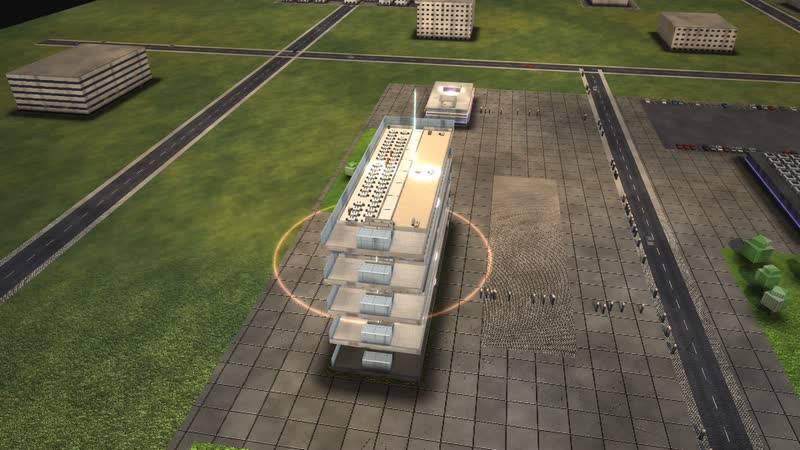
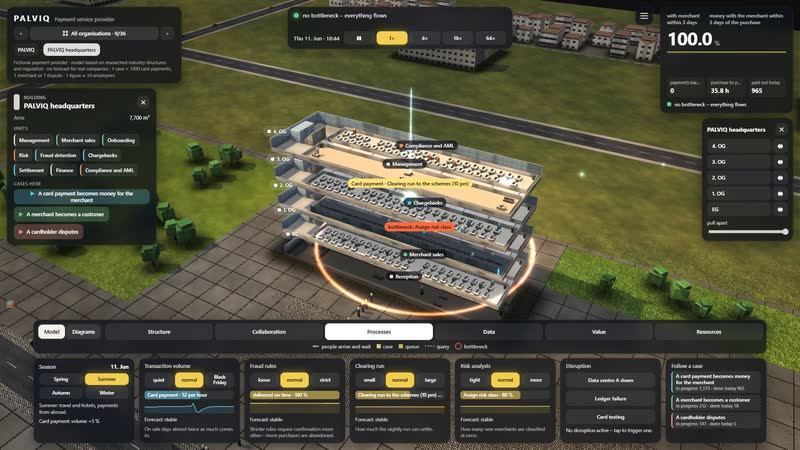
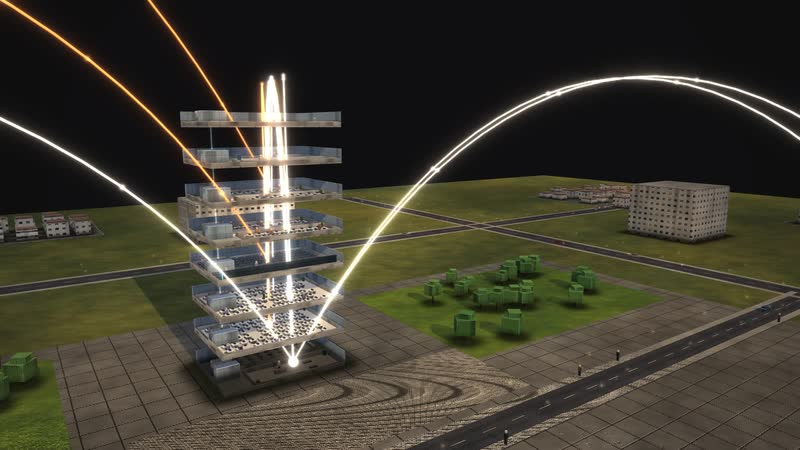
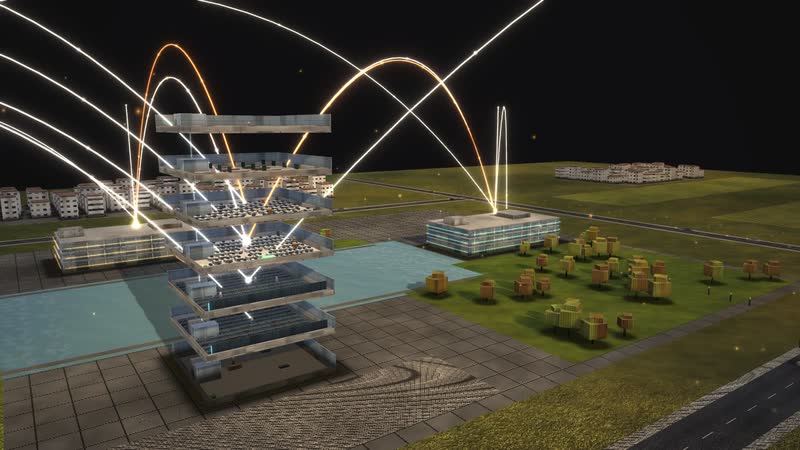
Every building can be opened, floor by floor – right into single rooms such as ‘Management’, with workplaces and people at work.
What is shown – why – for whom
| What is shown | Why | For whom |
|---|---|---|
| Diagram ‘Year, week, day’: authorisation, clearing at 10 pm, payout at 6 am | WhyExplains when merchants have their money. | For whomMerchants, sales |
| Diagram ‘What the work depends on’: gateway, fraud scoring, ledger, two data centres | WhyShows the impact of an outage per system. | For whomHead of IT, supervisors, business continuity |
| Diagram ‘What each control does’: fraud rules versus abandoned purchases | WhyMakes the trade-off between security and revenue visible. | For whomRisk management, merchant support |
| Diagram ‘Where the time goes’ until the money reaches the merchant | WhyShows where the three days come from. | For whomFinance, merchants |
| Chain of a card payment in the four-party model (Processes view) | WhyExplains what merchant, card scheme and bank each do. | For whomOnboarding, customers |
| Disruption ‘Card testing’ | WhyShows the attack with tiny payments and how it is fended off. | For whomFraud prevention, training |
| Process ‘A merchant becomes a customer’ with the control ‘Risk analysts’ | WhyShows how new merchants are classified. | For whomSales, risk |
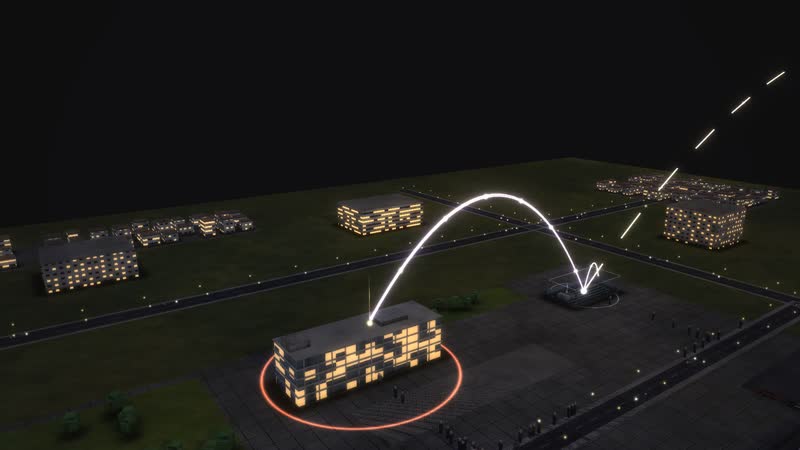
03
Who works with whom
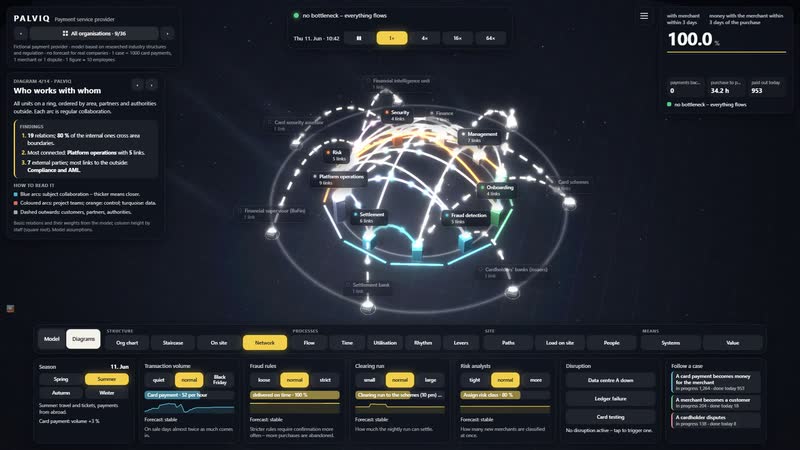
‘Platform operations’ with all 4 relations: Fraud detection, Security and Settlement – and outside Card schemes.
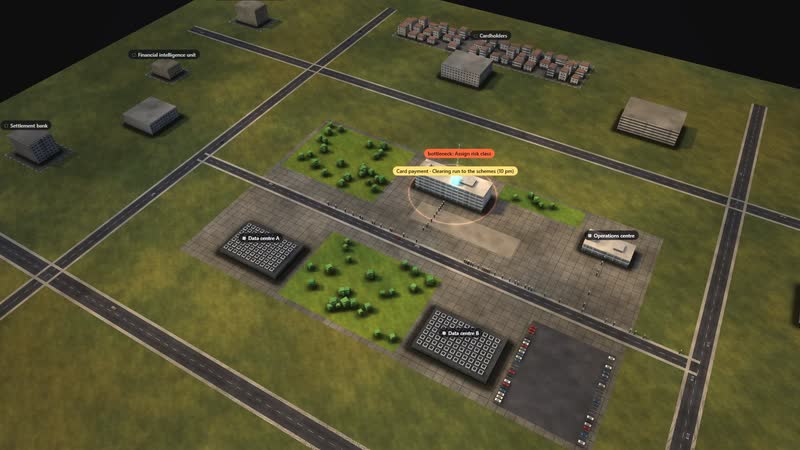
04
A card payment becomes money for the merchant
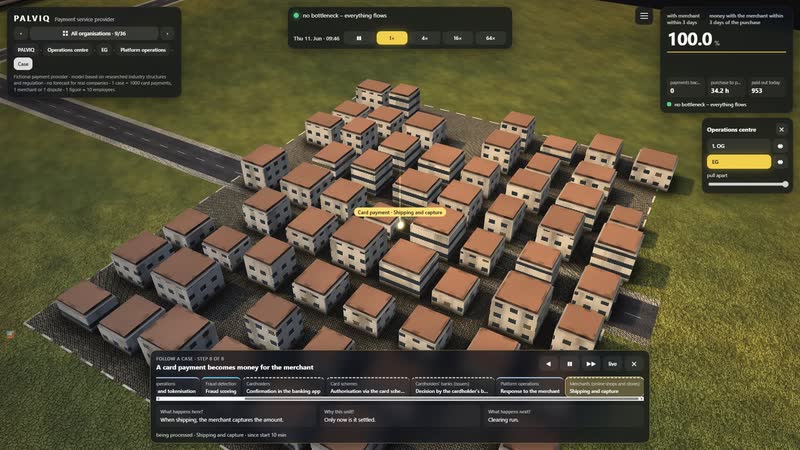
A single case can be followed – step by step, with the waiting time at every station. Target: money with the merchant within 3 days of the purchase.
Films from the model
-
The building opens up
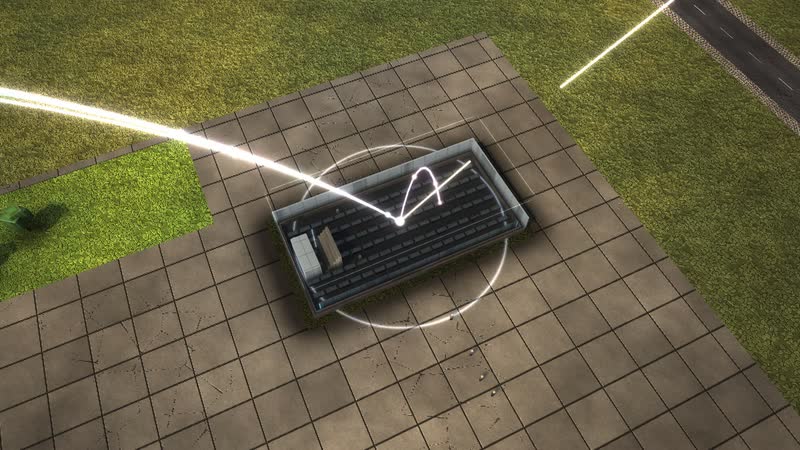
Just before sunset the floors drift apart – ‘PALVIQ headquarters’ opens up as the camera rises and circles the building until night falls.
-
Who reports to whom, who works with whom
Blue hour above the site: first the golden arcs of the structure, then the collaboration of the most connected department, finally the whole building.
-
A day in time-lapse
From ten in the morning to midnight in 26 seconds: the sun moves, the windows light up, at night the data lines glow.
-
Surge and system outage
In time-lapse: ‘Card testing’ brings more work, then ‘Ledger failure’ – the data arcs turn red. The control ‘Fraud rules’ set to ‘strict’ brings recovery.
-
Seven diagrams
Calculated live from the model: ‘Who works with whom’, ‘Year, week, day’, ‘Management levels as a staircase’, ‘How a case flows’, ‘What each control does’, ‘What the work depends on’, ‘Where it gets tight’.
-
Using the software
With the full interface: open a building, a department’s relations, ‘Card testing’, a control, diagrams with their panel, one case.
Departments in the model
-
Management
Runs the payment institution, responsible for risk and compliance.
-
Merchant sales
Wins online shops and stores as customers.
-
Onboarding
Checks new merchants: register, owners, sanctions lists.
-
Risk
Assigns merchants to risk classes, sets limits and reserves.
-
Fraud detection
Rules and learning models that score every payment in milliseconds.
-
Chargebacks
Handles cardholder disputes.
-
Settlement
Pays merchants and keeps customer funds separate from own money.
-
Platform operations
Gateway, data centres, control room – around the clock.
-
Security
Protects card data; few may enter the protected zone.
-
Compliance and AML
Enhanced checks of risky merchants, suspicious activity reports.
-
Finance
Fees, costs, liquidity.
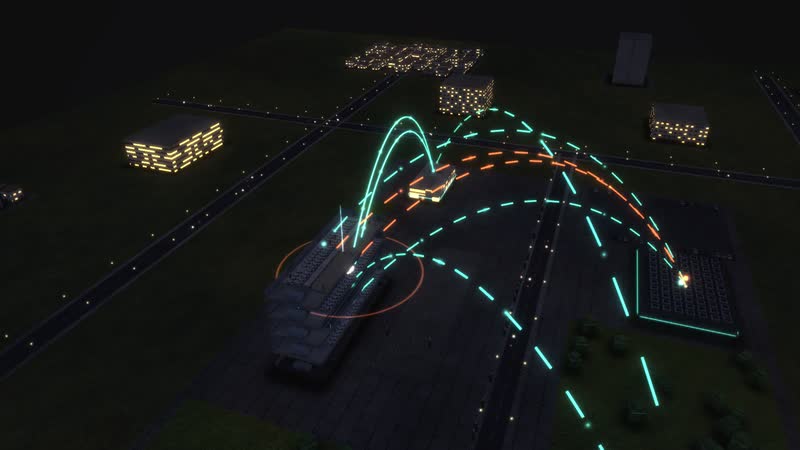
05
Ledger failure
The data arcs turn red and work stalls – the simulation shows where cases pile up and how long recovery takes.
06
A day in 26 seconds
From ten in the morning to midnight in time-lapse: commuters, moving light, windows switching on – and at night the data lines.
All processes in the model
A card payment becomes money for the merchant
- 01Checkout at the merchant: Someone shops online and enters a card.
- 02Gateway and tokenisation: The gateway replaces the card number with a token.
- 03Fraud scoring: A model scores the payment in milliseconds.
- 04Declined.
- 05Confirmation in the banking app: The cardholder confirms in their bank's app.
- 06Purchase abandoned.
- 07Authorisation via the card scheme: The request runs through the card scheme to the cardholder's bank.
- 08Decision by the cardholder's bank: The cardholder's bank checks funds and risk.
- 09Not approved.
- 10Response to the merchant: The merchant gets the approval – the purchase is done.
- 11Shipping and capture: When shipping, the merchant captures the amount.
- 12Clearing run to the schemes (10 pm): At night the settlement goes to the card schemes.
- 13Payout to merchants (6 am): In the morning the money minus fees goes to the merchant.
- 14With the merchant.
A merchant becomes a customer
- 01Online application: An online shop applies to accept cards.
- 02Register and owners automatically, website and sector by hand – at the same time.
- 03Automatic merchant check: Commercial register, beneficial owners, sanctions lists.
- 04Check of website and sector: What does the shop really sell?
- 05Checks done.
- 06Assign risk class: The risk team sets the risk class.
- 07Enhanced due diligence: Compliance checks in depth: source of funds, business model.
- 08Declined.
- 09Set limits and reserve: Limits and a reserve for possible chargebacks are set.
- 10Registration with the card scheme: The merchant is registered with the card scheme by sector.
- 11Integration in test mode: The merchant's developers integrate and test.
- 12Live.
A cardholder disputes
- 01Cardholder disputes with their bank: A cardholder tells their bank: goods never arrived.
- 02Review chargeback: The chargeback team assigns the case and debits the merchant.
- 03Merchant provides evidence: The merchant provides proof of delivery – or accepts.
- 04Refunded.
- 05Representment with evidence: The team contests with the evidence.
- 06Card scheme decides: The card scheme decides, if necessary in arbitration.
- 07Decided.
How a payment service provider can use the model
-
Internal communication
Merchant sales, onboarding, fraud detection, settlement and control functions on one site: everyone sees how their work hangs on the same payment.
For whomManagement, internal comms
-
Onboarding
The chain of a card payment in the processes view explains the four-party model to new colleagues: what merchant, card scheme and the cardholder's bank each do.
For whomNew staff in every department
-
Training
The disruption ‘Card testing’ shows an attack with thousands of tiny payments and how it is fended off: for six hours, one and a half times as many payments arrive.
For whomFraud prevention, new analysts
-
Explaining to customers
Merchants see when their money arrives: authorisation in milliseconds, clearing at 10 pm, payout at 6 am. ‘Year, week, day’ puts it all side by side.
For whomMerchant sales, merchant support, merchants
-
Strategic overview
The ‘Fraud rules’ control makes the trade-off between security and revenue visible, and ‘What the work depends on’ shows the impact of an outage per system.
For whomManagement, risk management, head of IT
07
Diagrams from the model
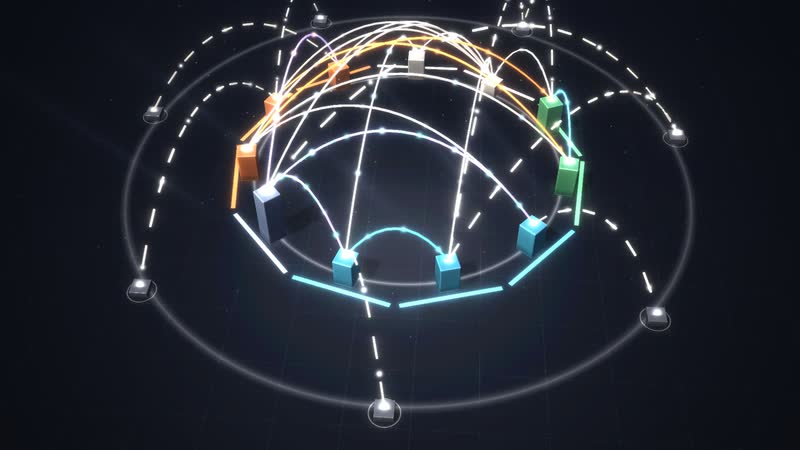
‘Who works with whom’ as a dome of arcs – one of 14 diagrams calculated live from the same data.
08
The whole software
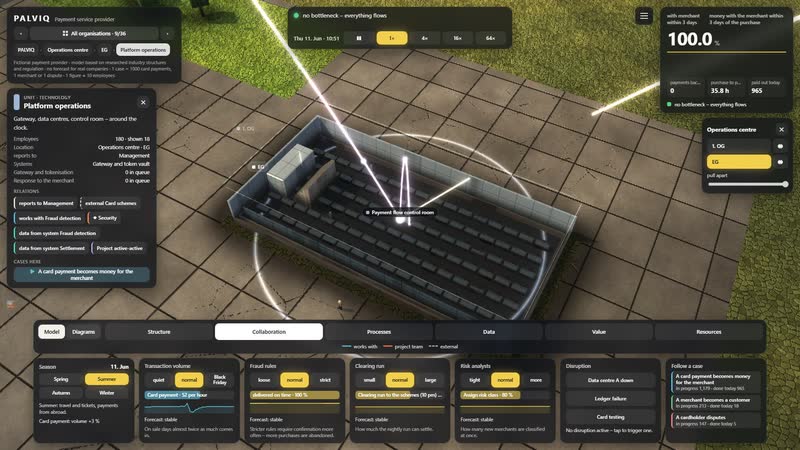
Situation, key figure, time-lapse, six views, controls and disruptions: one click on a department shows its task, location and all relations.
What you can change
Controls
- Transaction volume: On sale days almost twice as much comes in.
- Fraud rules: Stricter rules require confirmation more often – more purchases are abandoned.
- Clearing run: How much the nightly run can settle.
- Risk analysts: How many new merchants are classified at once.
Disruptions
- Data centre A down: For three hours everything runs via data centre B: responses get slower. Severe IT incidents must be reported.
- Ledger failure: Eight hours without the ledger: if a clearing or payout run falls into it, merchants wait a day longer.
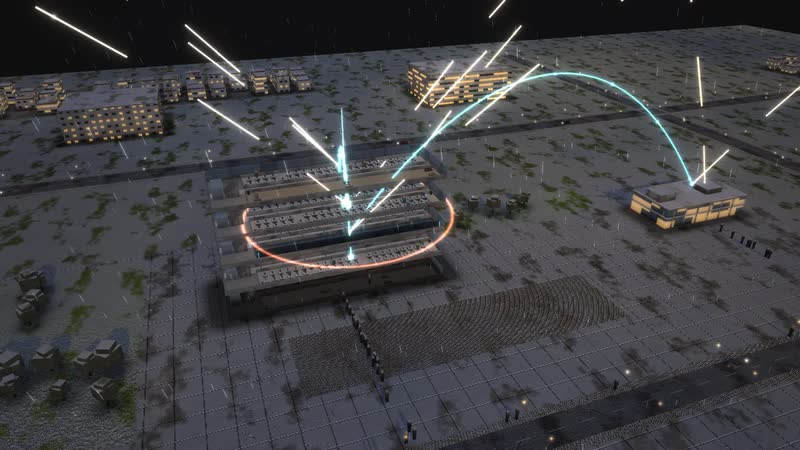
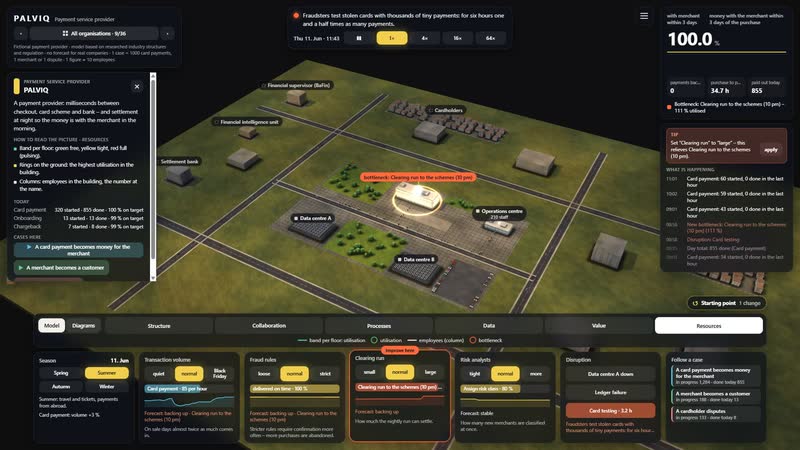
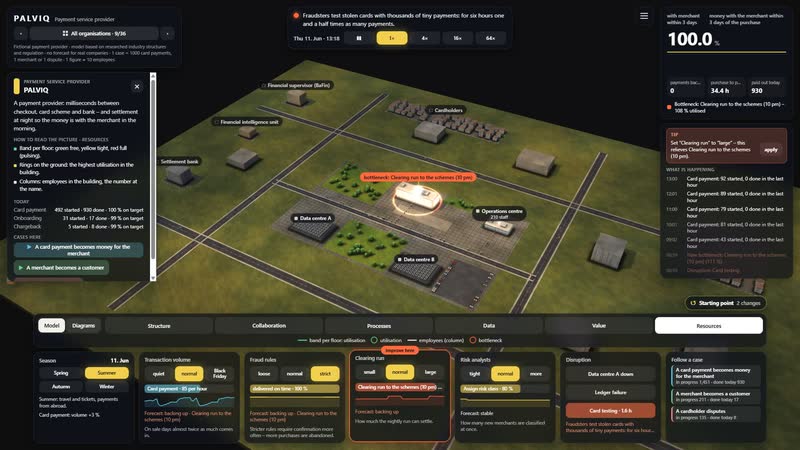
- Card testing: Fraudsters test stolen cards with thousands of tiny payments: for six hours one and a half times as many payments.
What the model gives a payment service provider
-
01
Milliseconds and one night
Authorisation, the nightly clearing run and the morning payout run in one model. You see why days pass between purchase and money.
-
02
A trade-off you can measure
Stricter fraud rules mean more confirmations and more abandoned purchases. ‘What each control does’ shows both together.
-
03
Play through outages
Data centre A, ledger, card testing: trigger each disruption. If the ledger failure falls on a clearing run, merchants wait a day longer.
-
04
Black Friday in advance
Set ‘Transaction volume’ to the sale day: almost twice as much. The simulation shows whether the nightly run keeps up before the day arrives.
-
05
Made to be shown
A walkable 3D model in the browser and on large projections – calm to look at, rather than one more wall of numbers.
-
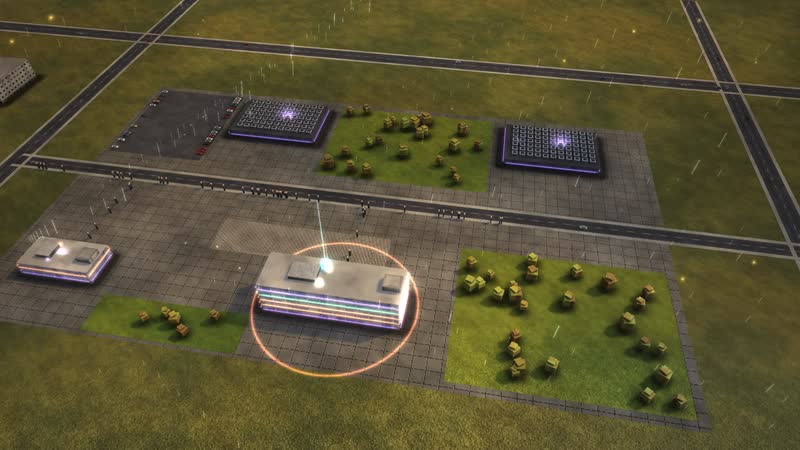
PALVIQ in the morning – low sun, long shadows, the first commuters on their way in. -
PALVIQ headquarters in evening light – golden arcs show who reports to whom. -
Just before eight – people stream from the car park and the street into the buildings. -
Blue hour – the windows of PALVIQ light up. -
At night from above – PALVIQ headquarters opened up, data lines glowing across the site. -
PALVIQ headquarters opened up – every floor with workplaces and people. -
Dusk, performance view – rings of light show how busy each department is. -
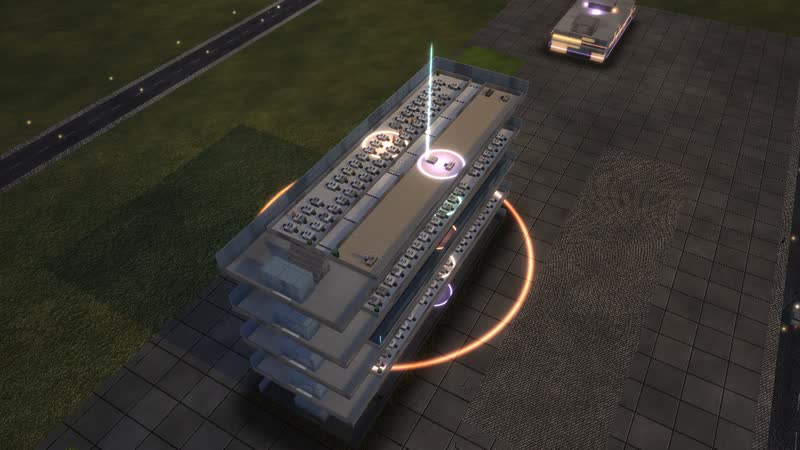
Looking into the floor of Platform operations – rows of desks, the floors above as outlines of light. -
A room of its own – Management. -
Operations centre opened up – every floor with workplaces and people. -
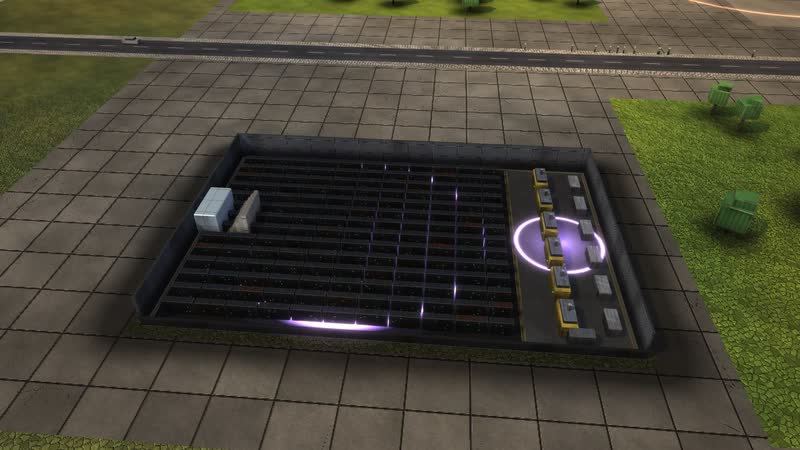
Data centre A – all floors at once, performance view. -
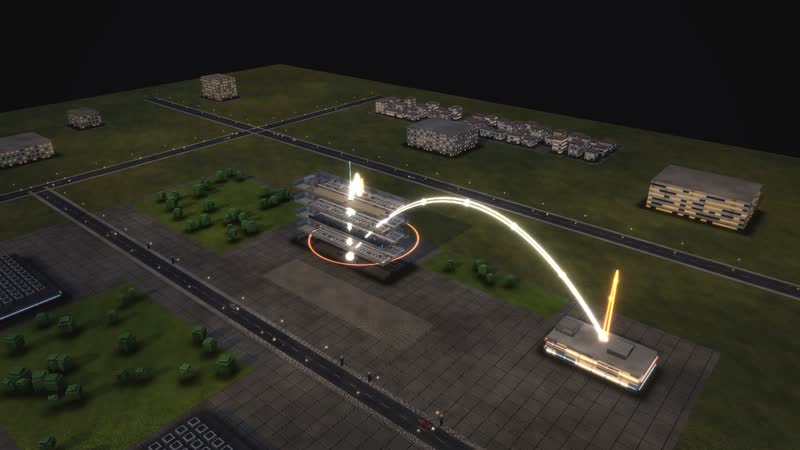
Structure at dusk – golden arcs from every floor to the buildings reporting to it. -
Collaboration – Platform operations with all 5 relations – to departments, buildings and partners. -
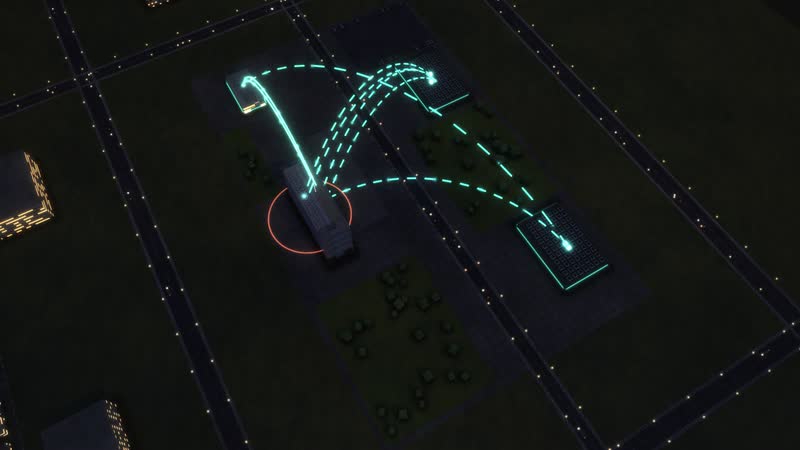
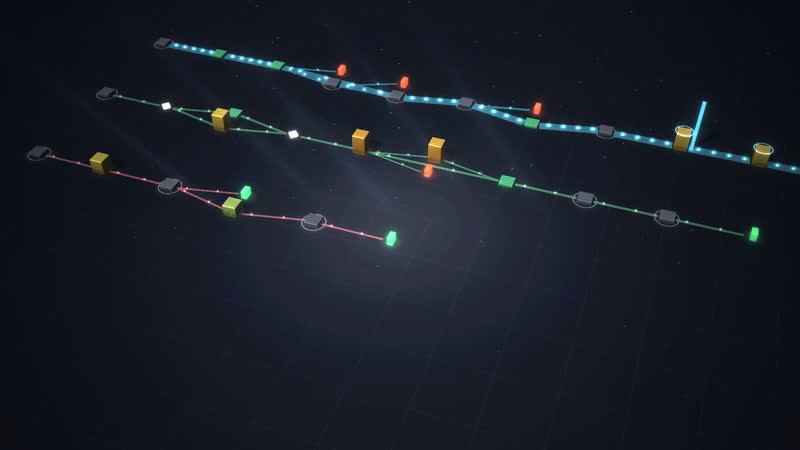
Data flows at night – systems and users linked by glowing lines. -
Data flows at dusk – which department uses which system. -
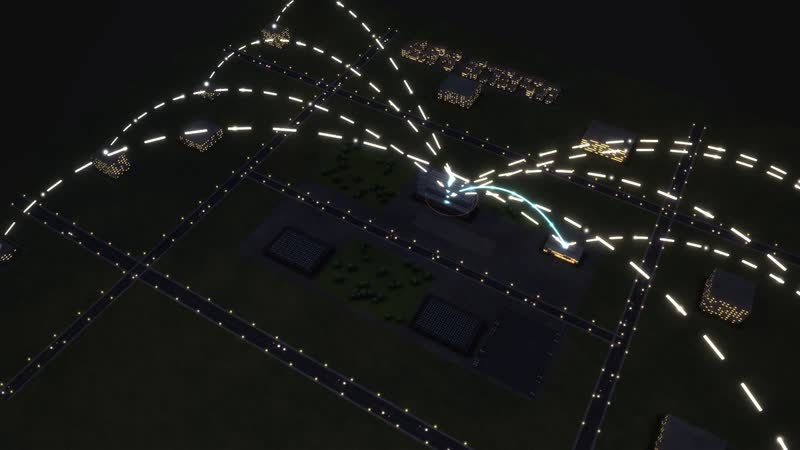
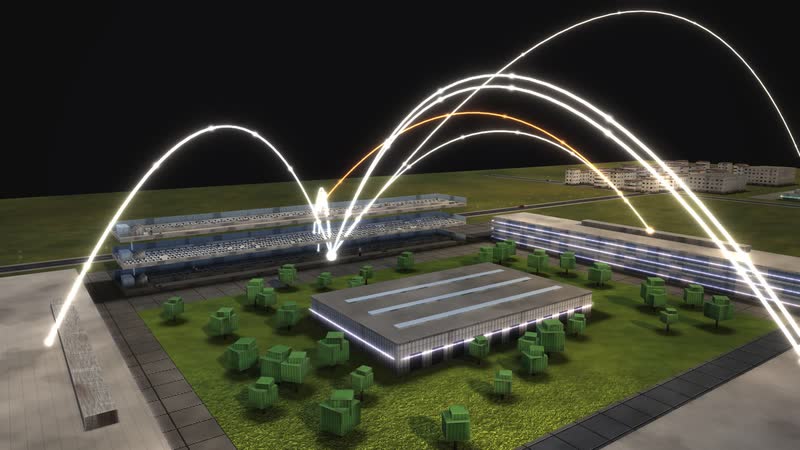
Structure across the whole site – reporting lines between the buildings. -
The whole network at night – collaboration inside and far beyond. -
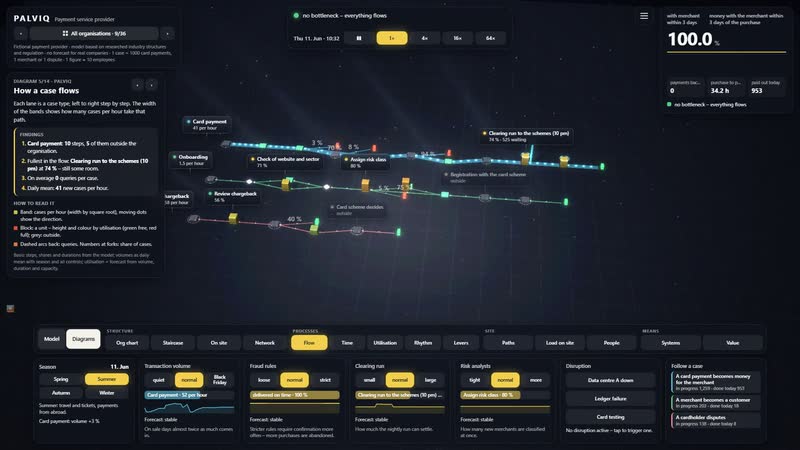
Every step labelled – name, how many are waiting, utilisation. -
Following one case – ‘A card payment becomes money for the merchant’ – step by step through the building. -
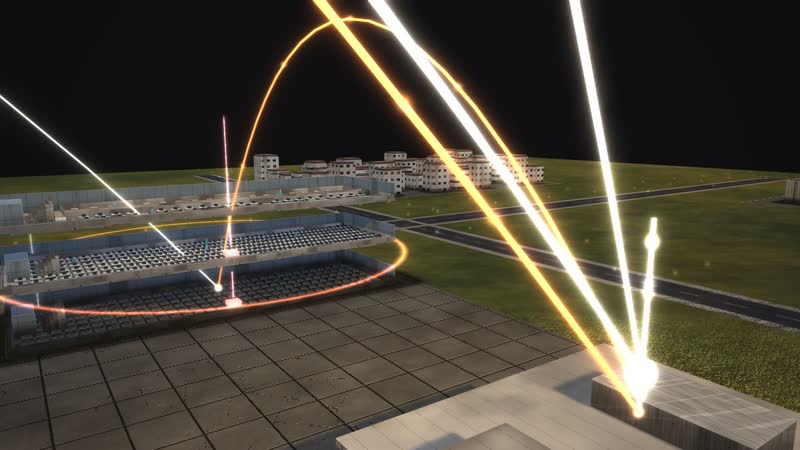
Card testing – resources view, the backlog grows floor by floor. -
Ledger failure – the data arcs turn red, work stalls. -
The lever – Fraud rules set to ‘strict’ – a flash shows where it acts. -
Spring at PALVIQ – PALVIQ headquarters opened up, rings show the workload. -
Summer evening – warm light, long shadows, golden arcs above the square. -
Autumn – leaves on the paths, performance view. -
Winter evening – snow on the site, PALVIQ headquarters open and lit, collaboration glowing. -
Diagram ‘Who works with whom’, calculated live from the model. -
Diagram ‘Year, week, day’, calculated live from the model. -
Diagram ‘Management levels as a staircase’, calculated live from the model. -
Diagram ‘How a case flows’, calculated live from the model. -
Diagram ‘What each control does’, calculated live from the model. -
Diagram ‘What the work depends on’, calculated live from the model. -
Diagram ‘Where it gets tight’, calculated live from the model. -
Diagram ‘Who leads whom’, calculated live from the model. -
The whole software – situation, key figure, time, views and the controls below. -
PALVIQ headquarters selected – floor list on the right, the floors drift apart. -
Platform operations – card with task, location and all relations. -
Card testing triggered – timeline, key figure and bottleneck react. -
Countering – Fraud rules increased – the tile shows the effect since the change. -
Diagram ‘How a case flows’ with its panel – findings in sentences. -
Diagram ‘Who works with whom’ with its panel. -
Follow a case – step, waiting time and target on the card. -
The tour leads through the software in eight steps. -
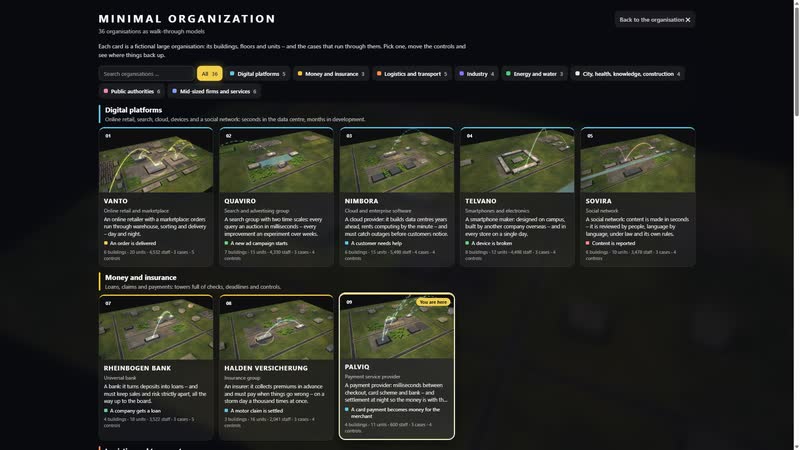
36 organisations to choose from, each with its own picture.





Your payments business as a model
Would you like to see your payment chain, merchant onboarding or clearing runs like this? Get in touch by email or phone and we'll work out which data belong in the model. We'll send the password to start PALVIQ on request.
cube4tec.de/spiele/minimal-organization/
Ask about this
Minimal Organization: Zahlungsdienstleister
Basis and limits
Fictional payment provider · model based on researched industry structures and regulation · no forecast for real companies
1 case = 1000 card payments, 1 merchant or 1 dispute · 1 figure ≈ 10 employees
All volumes, durations, rates and capacities are model assumptions, not values of a real payment provider.
Shares of challenges, abandonments and declines as well as chargeback deadlines are model assumptions; card scheme rules differ.
Documented: licensing, strong customer authentication with exemptions, safeguarding of customer funds, card data protection, four-party model.
Public sources the model is based on:
- Richtlinie (EU) 2015/2366 (PSD2)
- BaFin: Zahlungsinstitute und E-Geld-Institute
- Geldwäschegesetz
- PCI Security Standards Council
- Verordnung (EU) 2015/751 (Interchange)
- Delegierte Verordnung (EU) 2018/389 (starke Kundenauthentifizierung)
Similar business models
-
Bank
A bank as a walkable model: a business loan from first vote to disbursement, with sales and risk kept apart up to the board, in a running simulation.
-
Online retail
An order from click to doorstep as a walkable model: payment check, warehouse, packing, trucks, sortation and delivery in a running simulation.
-
Insurance company
An insurer as a walkable model: a motor claim runs straight through or via claims handler, loss adjuster and workshop to payment and recovery.
-
Cloud provider
A cloud provider as a walkable model: support cases, zone outages and new data centres on three time scales, in a running simulation.
-
Search engine
A search and advertising group as a walkable model: auctions in milliseconds, experiments over weeks, and a new ad campaign that waits for people.
-
Smartphone maker
A smartphone maker without its own factory as a walkable model: repairs, spare parts, supply chain and product launch in a running simulation.
-
Social network
A social network as a walkable model: how a report moves through triage, moderation, statement of reasons and appeal, language by language.
-
Semiconductor manufacturer
A chip fab as a walkable model: see where a wafer lot spends its weeks and why lithography sets the pace for the whole fab.

All data are fictional – PALVIQ does not exist. The model can be filled with your company's real data and then shows what is hard to see today: transactions per second, sale days included, or the runtime of the clearing run night after night.